






Top-rated rototilling pros.

Get matched with top rototilling pros in Bloom, ND

Enter your zip and get matched with up to 5 pros

Need a pro for your rototilling project in Bloom, ND?

Select your specific project to find the pro for you.

Find Rototilling pros in Bloom

No results for Rototilling pro in

Try adjusting your search criteria.
Rototilling questions, answered by experts

Yes, an excavation company is the best option for land grading and yard leveling. General landscapers might be able to tackle these projects, but an excavation company will do a better job because they’re used to operating the necessary heavy machinery. Landscapers might opt to do the work manually, which takes much longer and could cost you more in labor fees. Finally, excavation companies will understand local regulations and know when you need permits to legalize the work, while a landscaper might not.

An aboveground pool should be level within 1 inch—and it starts to become unsafe after a couple of inches. Any slope will lead to an uneven distribution of water, which will put pressure on your pool’s structure, wearing down the pool liner. In certain cases, it could cause your pool to collapse. Even if you’re within a safe window, you may still notice that the water level is uneven.

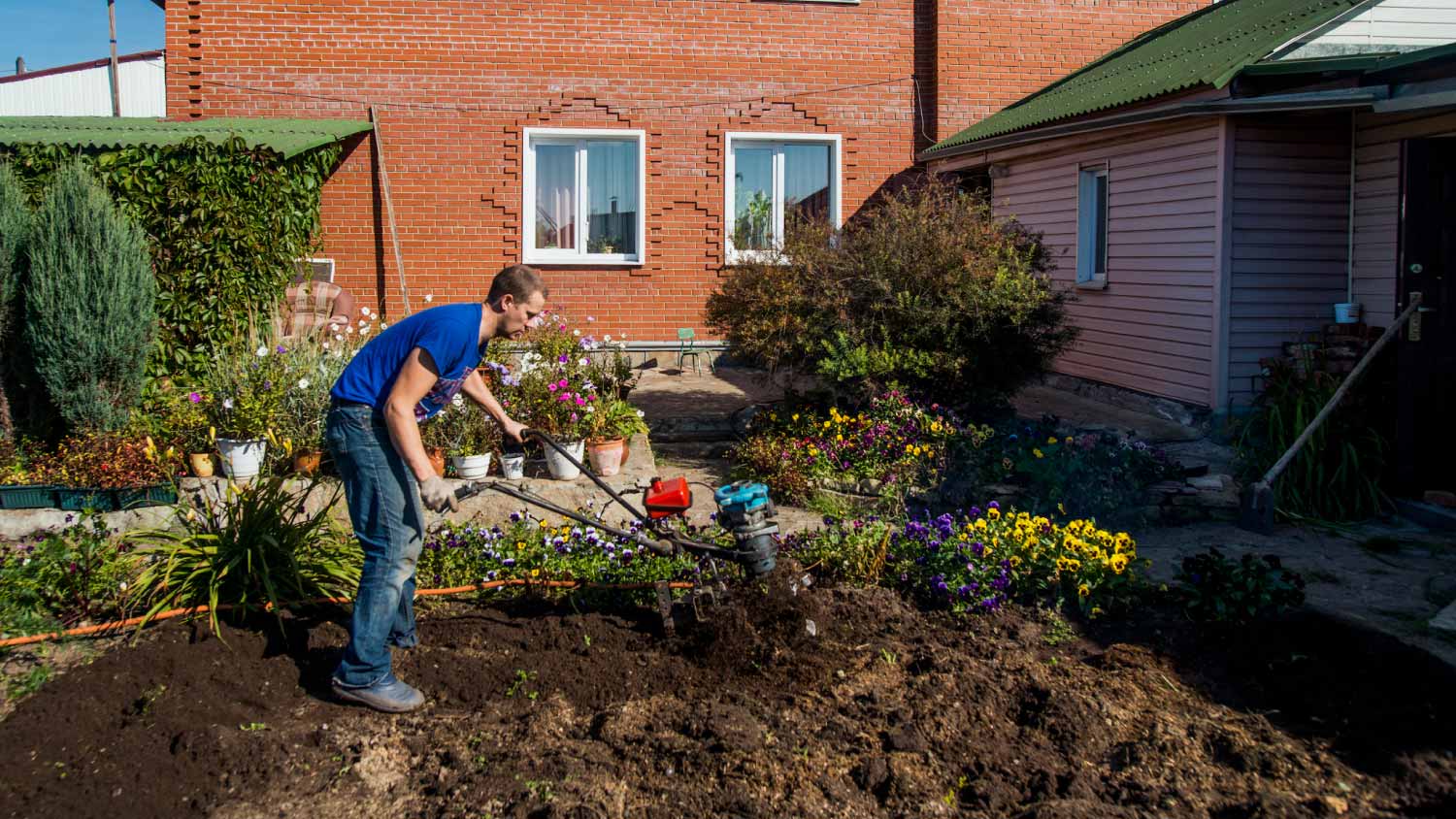
Yes, rototilling has many benefits. Rototilling is a great way to aerate the soil in your garden, introduce fertilizer, and remove weeds from your soil to prep it for planting, so it is very often a worthwhile expense. You can get by without rototilling if you’re willing to use manual tools, but the work will take much longer and is very labor-intensive. If you’re looking to prepare your garden for planting or your soil for new grass growth, rototilling is relatively inexpensive and almost always worth the money.

You should exercise care when deciding how to landscape over a leach field for your septic system. You typically want lightweight materials that won’t damage the drain field’s perforated pipes. When adding plants to the area, select plants with shallow roots, such as grass or flower gardens. Trees with deep roots could damage the pipes in the field.

A perc test takes an average of around two hours, but it can range from one hour up to around six hours. Perc tests that require wider or deeper holes and those that require multiple holes dug throughout your property will take longer because there’s more excavation involved. The actual filling of the hole and monitoring to gauge the rate of percolation should take under an hour per hole.

The homeowners guide to home care is here

From average costs to expert advice, get all the answers you need to get your job done.

What do you need done? We’ll find top pros.
  • 🌱 "Mow a small front yard"
  • 🛠 "Fix a leaking pipe under the sink"
  • 🏠 "Repair shingles on an asphalt roof"