


Top-rated tree service pros.

Get matched with top tree service pros in Tar Heel, NC

Enter your zip and get matched with up to 5 pros

Need a pro for your tree service project in Tar Heel, NC?

Select your specific project to find the pro for you.

TRUSTED BY TAR HEEL, NC HOMEOWNERS

  • Average homeowner rating star icon4.6
    Average homeowner rating
  • Verified reviews icon84
    Verified tree services reviews

Find Tree service pros in Tar Heel

Avatar for Joseph's Tree Removal & Yard Care LLC
Joseph's Tree Removal & Yard Care LLC
4.2(
50
)
Tree RemovalTree Removal - For BusinessTree Stump - Remove+5 more

Serving Tar Heel, NC and surrounding areas

Approved

In business since 2005

Emergency services offered

Warranties offered

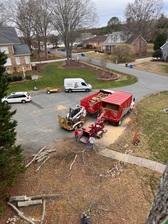
"A huge upper section of a very tall and large pine tree crashed onto my house and USAA promptly removed it but said the main tree was not covered though it was so damaged it clearly needed to be cut down before it too fell on the house. I called Joseph and he came out quickly and provided a very reasonable estimate and promised to return the following morning to cut it down. He and Drew arrived on time, worked hard and efficiently, were very careful not to damage our property, and cleaned up so well you could hardly tell they had been here. Joseph is a 14 year Army veteran who is still serving in the Reserves who takes pride in his work, knows his stuff, and goes the extra mile to ensure your satisfaction. Call him. I know you'll be glad you did!"
Additional Photos
Additional Photos
Additional Photos
Additional Photos
Additional Photos

+7

2 neighbors recently requested a quote
Recommended by100%of homeowners
...
Showing 1-10 of 91
Tree Service questions, answered by experts

Generally, homeowners do not need permission to cut down a tree on their own private property, but there are several exceptions where a permit may be required. You might need a permit if the tree is particularly large, old, or a protected species, such as a heritage tree. Trees located near public property or power lines can also be subject to special rules. Additionally, many local governments and homeowners associations (HOAs) have regulations controlling which trees can be removed to manage an area's appearance or prevent the spread of invasive species. To avoid hefty fines, it is crucial to check with your local government and HOA to determine if a permit is needed before you begin.

While the trees in your backyard are good for the environment and look beautiful, they could present a danger to your home under the wrong circumstances. This task is typically beyond the capabilities of the average homeowner due to its dangerous nature, so it’s best to leave this task to a professional. In some cities, it’s even illegal to remove a tree yourself.

There are several methods to hollow out a tree stump, and the best one depends on your tools, experience, and priorities. Common methods include using a chisel and hammer, a chainsaw, or burning.

  • Chisel and Hammer: This is often considered the easiest approach for those with limited tools or experience, though it is the most time-consuming.

  • Chainsaw: Using a chainsaw is the fastest method, but it comes with significant safety risks, especially for inexperienced users.

  • Burning: This can be an effective method, but it is not recommended unless you can first drill holes into the stump. Without holes, the stump will be difficult to light and may not burn completely through.

A power drill with at least a ⅜-inch diameter bit can make the job quicker and easier, regardless of the primary method. While you can use a chisel or chainsaw without a drill, it will require more time and effort. Always wear protective goggles and thick gloves, as splinters are an inevitable risk.

It's easy to misidentify trees that appear to be maple trees due to similarities in leaf shapes. Sweetgum, sycamore, and yellow poplar all have leaf shapes and appearances similar to maples. The fact that around a dozen maple tree varieties exist, only about half of which are considered common, makes misidentification an often typical occurrence.  

Absolutely. These steps are significantly easier, too, especially when it comes to preserving the root ball and moving the palm tree. However, you will want to make sure the tree has plenty of fertilizer to establish itself and start growing. Supports may also be more important, as it can take extra time for a potted palm to spread out its roots. If you are transferring a palm to another pot, you’ll want to move up a size or two to a larger pot. Make sure the pot has excellent drainage to keep the palm from getting waterlogged.

The Tar Heel, NC homeowners’ guide to tree services

From average costs to expert advice, get all the answers you need to get your job done.