


Top-rated radon detection and reduction specialists.

Get matched with top radon detection and reduction specialists in Rowland, NC

Enter your zip and get matched with up to 5 pros

Need a pro for your radon detection and reduction project in Rowland, NC?

Select your specific project to find the pro for you.

Find Radon detection and reduction specialists in Rowland

Avatar for All American Environmental Services, LLC
All American Environmental Services, LLC
5.0(
195
)

Serving Rowland, NC and surrounding areas

Approved

Super Service Award Winner

In business since 2020

Free estimates

Emergency services offered

"Alan was excellent. He explained everything about Radon and the Radon system we needed. He took the time to map out the best place to install our Radon system. We really appreciated his knowledge of Radon and the radon system. Alan will be our permanent Radon person. I highly recommend Alan and his company, you will not be disappointed !!!!!!!"
Radon Mitigation System

+4

Response time7 hrs
81 neighbors recently requested a quote
Recommended by93%of homeowners
Adam Cox
New to Angi

Serving Rowland, NC and surrounding areas

Approved

Small jobs welcome

Offers commercial services

Armed with more than 10 years of education, training, and hands-on experience in the environmental industry, I’m proud to provide professional environmental inspection services throughout North Carolina. I am licensed by the NC DHHS for asbestos inspections and certified in mold assessment, with additional experience in a wide range of environmental concerns and indoor air quality solutions.\n\nBecause I operate with low overhead costs, I’m able to offer high-quality services at fair and reasonable prices.\n\nFree consultations are always available — call today to discuss your project or concerns. Thanks for considering us!

Avatar for SWAT Environmental, Inc.
SWAT Environmental, Inc.
4.3(
63
)

Serving Rowland, NC and surrounding areas

In business since 2002

Free estimates

Credit card accepted

"I had done some self testing so was aware that work was needed. SWAT got back to me within minutes of making my selection. The appointment was within days. The technician was very clear about options of placement. I had already upgraded the fan and outside pipe. He went to work and did a neat job. The best part is that my tester indicates that radon has almost disappeared."
Recommended by89%of homeowners
Radon Detection and Reduction questions, answered by experts

The natural breakdown of uranium in soil, rock, and water can cause radon to appear in a home. The gas seeps into homes through cracks in foundations, walls, or floors, as well as through gaps around pipes or construction joints. Radon levels are influenced by soil composition, building materials, and ventilation. Poorly sealed or airtight homes can trap radon, allowing it to accumulate.

Keeping radon from getting into your home is much better than having to get rid of it once it's already indoors. While there may not be a way to fully prevent radon from getting into your home, there are things you can do to reduce the gas's ability to enter. 

Sealing foundation cracks and openings can help keep the gas from seeping inside. Improving air flow, such as by opening windows, can also be helpful. If you're building your home from scratch, talk to your contractor about using radon-resistant construction to keep the gas out.

Long-term exposure increases lung cancer risks. Prolonged homestay individuals and smokers encounter heightened vulnerability and exposure concerns.

No level of radon is technically safe, but since it is naturally present everywhere, it is impossible to avoid entirely. The average radon level in homes across the United States is 1.3 picocuries per liter (pCi/L). The Environmental Protection Agency (EPA) recommends taking action to reduce radon levels if your home's test results are between 2 and 4 pCi/L or higher.

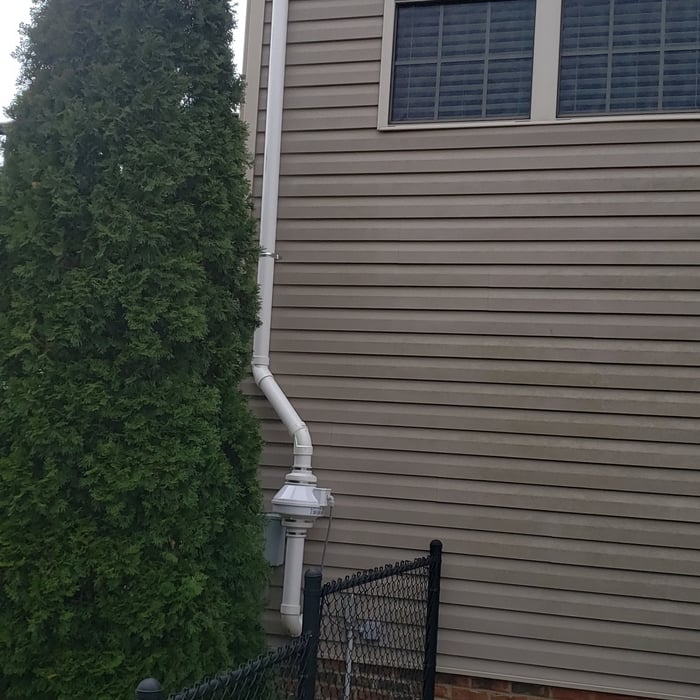
Your radon mitigation system may be loud because it’s time to replace it. Any sounds are usually from the inline fan that helps create the vacuum and resulting airflow. If you hear a new, loud mechanical or humming noise from your radon fan, it might be time to replace it. Most fans used in radon mitigation systems last up to 10 years, but may need to be replaced sooner.

The Rowland, NC homeowners’ guide to radon detection and reduction services

From average costs to expert advice, get all the answers you need to get your job done.