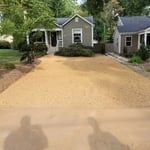
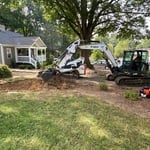
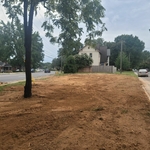
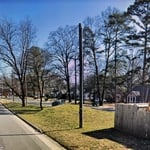
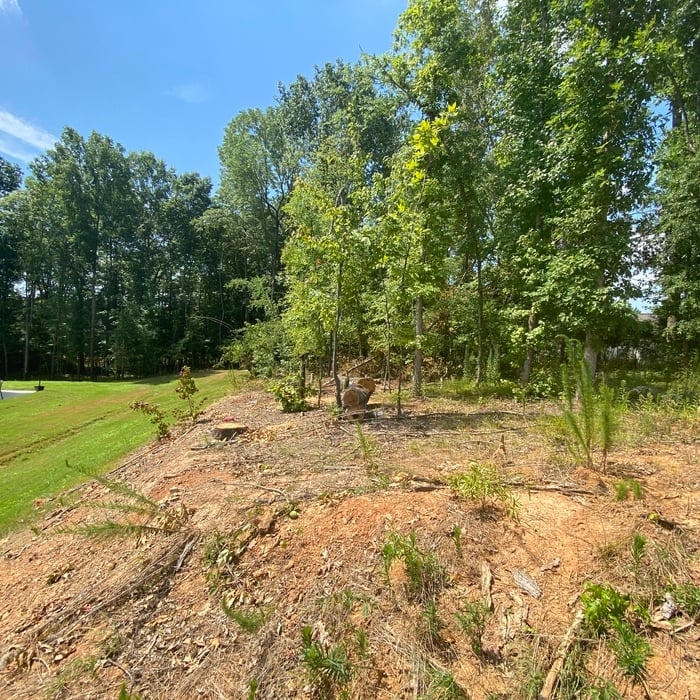
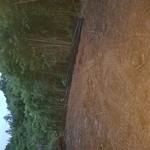
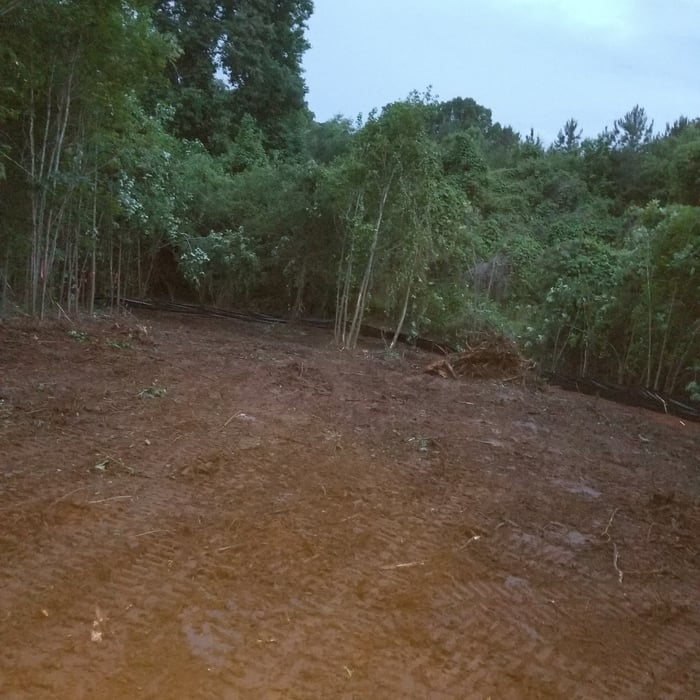
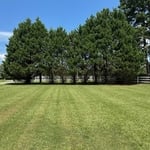
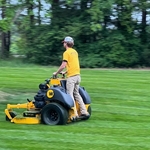
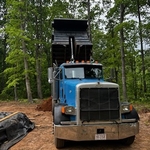
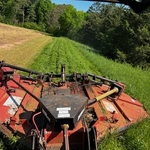
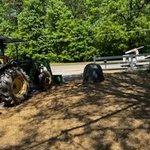
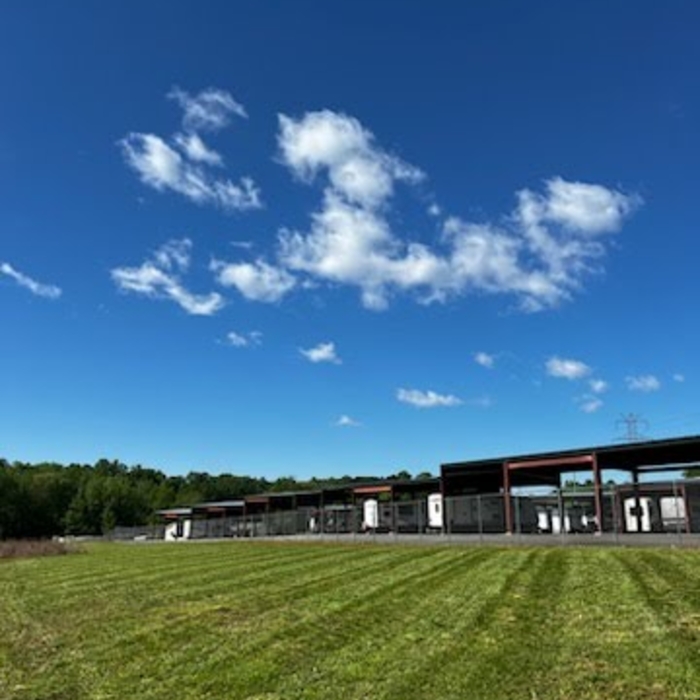
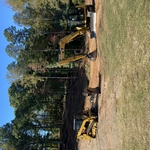
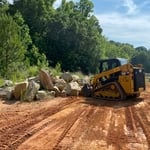
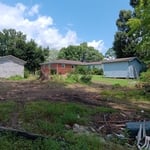
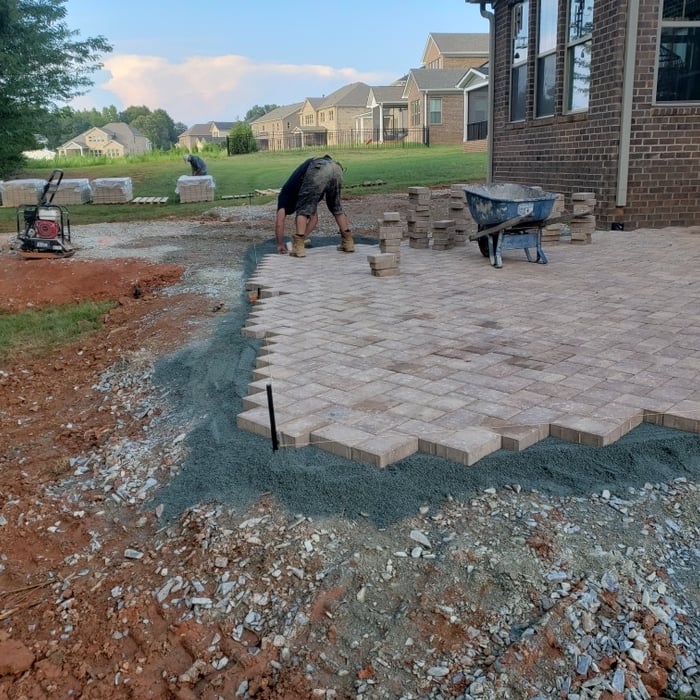
"Outstanding customer service. Excellent communicator. Kept me informed about when he was available and actually offered to come a few days early since he finished another job. The job was to level a 30x40 area so I could install a large wooden swing set. There was about a 20" drop from front to back. He cut the back and filled the front so he didn't have to bring in any new fill or haul any away. This saved a lot of money. When he was done it was within a 1/2". He made sure by checking it with a rotating laser. He has new and well maintained equipment and state of the art tools. I've been in construction for 40 years. Believe me, this guy knows his stufff."
"Jared and his team led three improvements to my home. First, the AC/heating units and all duct work were replaced. Jared coordinated, closely monitored and provided important direction to the subcontractors. The second was remediation of plumbing issues. This included replacing a water line to the house and reconfiguring it so that no further issues occurred. It also included remediation of water under my home. Jaredâ s persistence to ensure all was repaired was critical and included his personal oversight. Lastly, Jared and others with HC Barrett replaced my fence. Their work was carefully detailed and the fence is not only beautiful, but it provides safety for my dogs. I will continue to work with Jared and HC Barrett. Their commitment to excellence is a role model for others."
"We had a great experience working with FC Hardscape & Landscape. We needed a retaining wall built on a very steep slope in our backyard. Berto and his team built the wall, fixed our drainage issue, and we finally have a flat, usable backyard. They also laid new sod and put our fence back up. It was easy to communicate with Berto and Jennifer and we would definitely hire them again!"
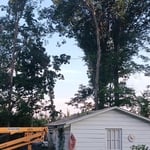
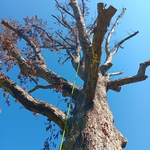
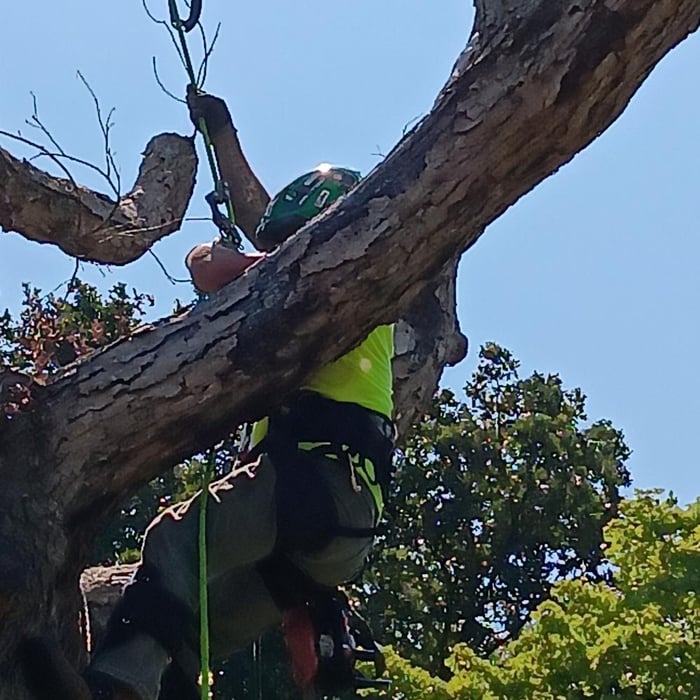
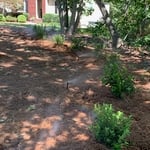
"We hired Charlotte Stump & Land to remove an old, overgrown landscape bed that had gotten completely out of control, and they did an awesome job. Mike was very responsive when I first left a voicemail. They removed all the bushes, plants, old edging, and cleaned everything up so we could start fresh. They showed up on time, worked hard, and treated our property like it was their own. I was honestly surprised by how clean everything looked when they finished. There wasn’t a pile of debris left behind or a mess to deal with. I have found it’s been hard to find contractors who actually communicate well and do exactly what they promise, but these guys did. Their pricing was fair, work was above and beyond, and they were super easy to talk to, schedule with, and ensured my yard looked exactly as I wanted. I’d definitely recommend Charlotte Stump & Land and will be using them again for future landscaping projects."
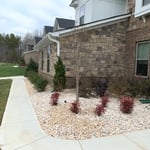
"10/10 recommend! We needed some landscape work done around our new home & reached out. So happy with the results! Eric was very professional and attentive to everything we asked for. Our yard looks fantastic!"
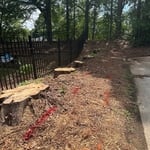
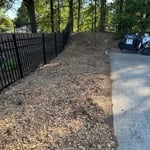
"Hired them to clear property lines for a fence install. They did such an amazing job that I then hired them to clear out the interior property. They exceeded my expectations and were so helpful and communicative during the entire process. I plan on bringing them back for further jobs on the future. Excellent service."
"Jose and his crew did an excellent job of demolishing and then filling in our in-ground pool. They landscaped the area to blend with surrounding yard. They were very professional, great customer service, and value for our money. We would highly recommend them."
"Great honest contractors. They did my bathrooms, hot water heater, unclogged my house drain and they did a French drain so my basement is not wet anymore. I already hired them to do my whole roof in the spring. I will hire them anytime."
If you’re planning to dig on your property, you’ll need to check for underground utility lines. Call the national call-before-you-dig 811 number. Once connected to an operator, you can schedule a site visit to mark underground lines. This way, you won’t accidentally dig into pipes and can cause major (read: costly) issues.
Preparation involves site assessment, clearing debris, grading surfaces, and compacting soil to support stable construction.
The average cost of excavation is approximately $3,200, with typical projects ranging from $500 to $15,000. Depending on the contractor, you may be charged between $50 and $200 per cubic yard or an hourly rate of $40 to $180 for an excavation specialist. The total cost is influenced by several factors, including the project size, the amount of soil to be removed, and the soil's condition. Hard soil, tree roots, or excessive rocks and clay can increase the price, potentially adding $200 to $1,200 to the final bill. Other factors that can drive up costs include the presence of nearby structures that complicate the work or tight spaces that require manual excavation instead of heavy machinery.
Trenches are typically 12 to 24 inches deep and 8 inches wide. However, the required depth depends on the specific project and local ordinances. For example, a French drain may need to be 18 inches deep, while a water pipe might require a depth of 24 inches and a drainage pipe 36 inches. Your city or county may have specific regulations, so it's wise to consult with an excavation professional to determine the correct depth for your project.
No, a ditch isn’t a trench. A ditch is an open, relatively shallow channel that’s carved out of the ground and used for drainage purposes. In contrast, a trench is a deeper excavation that’s entirely underground. Trenches have many uses, including gas lines, sewage systems, and electrical wiring. Unlike trenches, ditches don’t get filled back in with dirt after they’re dug.
The Kannapolis, NC homeowners’ guide to excavation services
From average costs to expert advice, get all the answers you need to get your job done.
Find out the average excavation cost in Charlotte, NC. Learn what you can expect to pay for local land clearing and grading services to start your project.
Excavation costs $1,500 to $6,300 for most residential projects—but it depends on factors like the size of the area. This guide will help you plan a budget.