







Top-rated arborists.

Get matched with top arborists in La Grange, MO

Enter your zip and get matched with up to 5 pros

Need a pro for your arboricultural service project in La Grange, MO?

Select your specific project to find the pro for you.

TRUSTED BY LA GRANGE, MO HOMEOWNERS

  • Average homeowner rating star icon4.8
    Average homeowner rating
  • Verified reviews icon44
    Verified arboricultural services reviews

Find Arborists in La Grange

Avatar for Dave's Construction
Dave's Construction
4.3(
13
)

Serving La Grange, MO and surrounding areas

In business since 2004

Free estimates

Credit card accepted

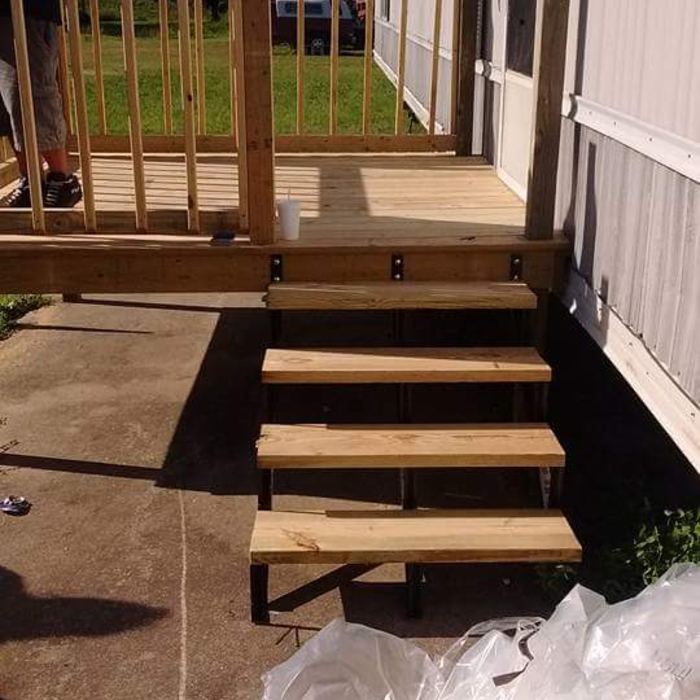
"dave did a great job, with paint and construction of a complete porch. painting of the exterior of our rental house, and next we are having him take a look at the interior of the house, after the renter moves out. thank you for giving us an opportunity to use DAVE'S CONSTRUCTION. a very polite young man."
kitchen
flooring
banaster
building new
new deck

+7

Response time8 hrs
Recommended by100%of homeowners
Avatar for Premium Tree Service
Premium Tree Service
5.0(
3
)

Serving La Grange, MO and surrounding areas

In business since 2023

Free estimates

Emergency services offered

"Outside of I would like them to start taking plastic for payments, I think they were excellent. My job was mainly manual labor and not complex but they worked efficiently and handled everything I asked for. We didnâ t quibble over small details and they were very agreeable to things I asked to complete the work maybe even beyond our original agreement. Very satisfied!!!"
Maple tree half removal
Removal/trim Booneville
Response time2 days
Recommended by66%of homeowners
Showing 1-10 of 34
Arborists questions, answered by experts

It depends on the type of tree. Typically, late spring on the cusp of winter is ideal for trees about to emerge from dormancy and produce new buds. That said, late fall is ideal for certain deciduous trees prone to bleeding sap. Avoid trimming trees in early spring, when they’re prone to disease.

The fastest ways to remove a tree stump are by grinding it or burning it.

Stump grinding is often the quickest method, with professionals able to chip away a stump and its roots within a single session. You have the option to hire a professional stump removal service or rent a stump grinder to do it yourself. However, it's important to note that these machines can be large, difficult to transport, and dangerous to operate without prior experience. For safety reasons, hiring a local arborist or landscape specialist is often recommended.

Burning is another fast option. Before you begin, check your local burn laws. The process involves drilling holes into the stump, filling them with vegetable oil, and waiting 24 to 48 hours. Afterward, you can add charcoal bricks to the surface and light the fire, which must be attended at all times.

For a more affordable but much slower alternative, you can use potassium nitrate pellets to accelerate the natural decomposition process. This method typically takes four to six months.

Some fast-acting products can rot a tree stump in four to six weeks. Keep in mind, these products contain harsh chemicals that may prevent regrowth in the area. Other products, like fertilizer that contains lots of nitrogen, can enhance the process and rot a stump in about a year. (This is compared to the ten years it can take naturally for a stump to rot.)

Unfortunately, palm tree stumps are one of the most difficult types to remove due to how their roots grow. Unlike other trees, palm tree roots grow horizontally and vertically. Palm tree roots grow as deep as three feet into the ground, although soil and growing conditions could mean they go as far as 50 inches into the earth. 

If you want to be able to repurpose the grass in the area where you removed a stump later, you’ll have to dig quite deep—and perhaps wide—to trim away all the roots.

The exact answer to this question depends on which region of the country you’re talking about, but according to various tree counts, some of the most common types of trees in the United States include red maple, Douglas fir, quaking aspen, loblolly pine, and sweetgum.

The La Grange, MO homeowners’ guide to arboricultural services

From average costs to expert advice, get all the answers you need to get your job done.