





Top-rated excavation pros.

Get matched with top excavation pros in Higginsville, MO

Enter your zip and get matched with up to 5 pros

Need a pro for your excavation project in Higginsville, MO?

Select your specific project to find the pro for you.

Find Excavation pros in Higginsville

Avatar for White Construction and Welding
White Construction and Welding
4.1(
14
)

Serving Higginsville, MO and surrounding areas

In business since 2014

Free estimates

"New deck looks great, however Andrew is not very good at returning phone calls. He also has a hard time showing up when he says he will be there. The deck was completed, like I said it looks great. Just wasn’t the best customer experience I’ve had."
Response time3 days
Recommended by91%of homeowners
Avatar for Royal Contracting Llc
Royal Contracting Llc
3.9(
24
)

Serving Higginsville, MO and surrounding areas

In business since 2015

Free estimates

Emergency services offered

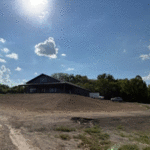
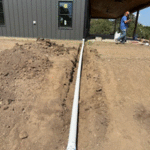
"They arrived early and started work on leveling the front and back yard with two loads of good MO farm soil. Removed two trenches on the east and west side of the house caused by rushing water. Raked the yard front and back and two side yards to incorporate new soil and make everything smooth and flat and level. Covered bare sweet gum maple roots. Removed all ruts and shallow holes in back yard creating a smooth flat surface the grandkids can play on. Seeded with quality, Kentucky Best grass seed and laid a layer of straw for protection. Cleaned off asphalt driveway cracks filled with weeds and debris. Sealed cracks in old asphalt (2.5 car) driveway. A layer of new asphalt was added for a smooth black clean surface. Cleaned off the curb on the street side of grass and weed debris. Installed drainage system to include 4 French drains using gravel line ditched, used drainage pipe from each corner end of the house which fed water underground and to the street. They also removed 11 Shepherd’s hooks which had hanging flowers and bird feeding stations to move the dirt and level the yard with heavy equipment. The bird feeding stations I could were deep in hard dry soil and the descendants of Roman gods made quick work of sheperds hooks and bird fountains. Now we can put them back once we have grass growing. Yes, we thought their price was higher than previous quotes from others. But we have been waiting a year plus to get this done and no one could get to it till January 2023. They were well recommended and completed the work in 7 hours with a great team of hard-working, very polite, and skilled young men."
Additional Photos
Additional Photos
Additional Photos
Additional Photos
Additional Photos

+22

Recommended by80%of homeowners
...
Showing 1-10 of 56
Excavating questions, answered by experts

Depth is not a qualifying component of evacuation. Any human-made cut, cavity, or depression in the earth’s surface is considered excavation. The hole from excavation can be any size, shape, or depth. Excavation is used to create foundations, reservoirs, drainage ditches, and roads. Long, narrow excavations are called trenches and are often used for underground utilities.

Trenching and boring are two distinct methods for installing underground utilities. Trenching involves digging a channel using equipment like an excavator, trencher, backhoe, or shovel. While it is a simpler process, it causes significant disruption to the surface, landscaping, and surrounding ecosystems.

Boring, also known as directional boring, is a less invasive alternative that uses a drill to create a tunnel for utility lines without disturbing the surface. This method is more precise and is ideal for installations that need to go underneath buildings, roads, or bodies of water. Although boring is less disruptive, it is generally more expensive than trenching.

A crawl space can be as little as 42 inches below the grade of your house, but this is not always recommended in flood-prone areas. At a minimum, there must be at least 16 inches of clearance between the ground and the floor joists to access the space in an emergency.

Call 811 to locate and mark the gas lines at least three days before digging. In many areas, you can dig within 18 inches of the lines, though in some locations, the distance may be further. Check local regulations, as you may need a utility company representative onsite when digging. Document your calls to 811 and precautions taken to avoid gas lines. A homeowner can be held liable for hitting a gas line in some cases, but contacting the proper authorities and following all guidelines can offer protection.

There are several methods to hollow out a tree stump, and the best one depends on your tools, experience, and priorities. Common methods include using a chisel and hammer, a chainsaw, or burning.

  • Chisel and Hammer: This is often considered the easiest approach for those with limited tools or experience, though it is the most time-consuming.

  • Chainsaw: Using a chainsaw is the fastest method, but it comes with significant safety risks, especially for inexperienced users.

  • Burning: This can be an effective method, but it is not recommended unless you can first drill holes into the stump. Without holes, the stump will be difficult to light and may not burn completely through.

A power drill with at least a ⅜-inch diameter bit can make the job quicker and easier, regardless of the primary method. While you can use a chisel or chainsaw without a drill, it will require more time and effort. Always wear protective goggles and thick gloves, as splinters are an inevitable risk.

The Higginsville, MO homeowners’ guide to excavation services

From average costs to expert advice, get all the answers you need to get your job done.