At JB's Welding & Repair, we pride ourselves on providing quality service that customers can believe in. Whether it's installs or repairs, we can take care of all your welding needs. Ask us about our service! We look forward to working with you!
Here at Kevs Portable Welding we are a full service welding company working with residential and commercial properties. No job is too large or small for us and we pride ourselves on our professionalism and skillset.
We take great pride in our experience, expertise, quality, and customer service that we provide to meet the consumer's needs. It is our mission to provide excellent workmanship and complete customer satisfaction from start to completion of a project. In order to understand the needs and expectations of our customers, we take great care to work and communicate with every customer in a professional manner. Our reputation is based on service, safety, and quality, regardless of how large or small the job.
Our mission at Hampton Enterprise LLC is to provide clients with superior customer service, quality work and speedy service in all aspects of their home improvement needs. Licensed, insured and trusted since 1989; come discover the Hampton difference today!\n\nWe specialize in the installation and repair of Windows, Doors, Flooring, Sinks, Bathtubs, Showers, Sprinkler Systems and much more. We also offer Interior and Exterior Home Painting, Custom Welding Fabrication and Carpentry.Localy in your area just call and i will call back with a local number thank you . from James Hampton\n\nAL.Dothan 334-648-3817,\nAL Birmingham 334-648-3817,\nAL Huntsville 334-648-3817,\nAL Mobile 334-648-3817,\nAL Tuscaloosa 334-648-3817,\nAL Montgomery 334-578-4761,\nAR Little Rock 334-648-3817,\nAZ Phoenix 334-648-3817,\nCA LosAngeles/Sacramento 334-648-3817,\nCO Denver/Colorado Springs 334-648-3817,\nCT Hartford 334-648-3817,\nDE Dover 334-648-3817,\nFL Tallahassee 334-648-3817,\nFL Cape Canaveral/ Cocoa 334-648-3817,\nFL. Destin 334-648-3817,\nFL Gainsville 334-648-3817\nFl Jacksonville 334-648-3817,\nFL Orlando 334-648-3817,\nFL Panama City 334-648-3817,\nFL Tampa 334-648-3817,\nFL Miami 334-648-3817,\nGA Atlanta 334-648-3817,\nGA Albany 334-648-3817,\nGA Augusta 334-648-3817,\nGA Columbus 334-648-3817,\nGA Macon 334-648-3817,\nGA Valdosta 334-648-3817,\nIA Des Moines 334-648-3817,\nID Boise 334-648-3817,\nIL Chicago/Springfield 334-648-3817,\nIN Indianapolis 334-648-3817,\nKS Levenworth/Topeka 334-648-3817,\nKY Frankfort 334-648-3817,\nLA New orleans/Baton Rouge 334-648-3817,\nMA Boston 334-648-3817,\nMD Annapolis 334-648-3817,\nME Augusta 334-648-3817,\nMI Detroit/Lansing 334-648-3817,\nMN Saint Paul 334-648-3817,\nMO kansas City/Jefferson City 334-648-3817,\nMS Jackson 334-648-3817,\nMS Biloxi 334-648-3817,\nMS Gulf Port 334-648-3817,\nMT helena 334-648-3817,\nNC Raleigh 334-648-3817,\nND Bismark 334-648-3817,\nNE Lincoln 334-648-3817, \nNJ Trenton 334-648-3817,\nNM Santa Fe 334-648-3817,\nNV Carson City 334-648-3817,\nNV Las Vegas 334-648-3817\nNY Albany 334-648-3817,\nOH Columbus 334-648-3817,\nOK Oklahoma Ciy 334-648-3817,\nOR Salem 334-648-3817,\nPA harrisburg 334-648-3817,\nRI Providence 334-648-3817,\nSC Columbia 334-648-3817,\nSD Pierre 334-648-3817,\nTN nashville 334-648-3817,\nTX Austin 334-648-3817,\nUT Salt Lake City 334-648-3817,\nVA Richmond 334-648-3817,\nVT montpelier 334-648-3817,\nWI Madison 334-648-3817,\nWV Charleston 334-648-3817,\nWY Cheyenne 334-648-3817
We are committed to excellence in every aspect of our business. We uphold a standard of integrity bound by fairness, honesty, and personal responsibility. Our distinction is the quality of service we bring to our customers. Accurate knowledge of our trade combined with ability is what makes us true professionals. Above all, we are watchful of our customers' interests, and make their concerns the basis of our business.
Mark Will Do It is committed to excellence in every aspect of our business. We uphold a standard of integrity bound by fairness, honesty, and personal responsibility. Our distinction is the quality of service we bring to our customers. Accurate knowledge of our trade combined with ability is what makes us true professionals. Above all, we are watchful of our customers' interests, and make their concerns the basis of our business.\n
We pride our company on reliability, great communication, integrity, and quality work. We are experts in our trade and will do our best to keep you as educated as we can on your particular task or project. We look forward to earning your business! Book with us online or feel free to give us a call today!
K John Custom Homes and Remodlers, room additions and remodels . We have been in business for over 7 years serving Minnesotta. We are family owned and operated. Our expertise assures your project coming in as budgeted. I We always take pride in our company name and we want you to rest easy knowing your home repair or remodeling job is in experienced hands. I would like to thank you in advance for considering K John Custom Homes and Remodlers and I look forward to working with you in the future.
We are a locally owned and operated company that values honesty and integrity and treats your home as if it were our own. We offer a variety of services that are customization to each individual project. You will find us to be competitively priced, paying close attention to the details of each and every project that we are involved with. We look forward to building lasting relationships and guarantee your satisfaction!
Felix Medrano is committed to excellence in every aspect of our business. We uphold a standard of integrity bound by fairness, honesty, and personal responsibility. Our distinction is the quality of service we bring to our customers. Accurate knowledge of our trade combined with ability is what makes us true professionals. Above all, we are watchful of our customers' interests, and make their concerns the basis of our business.
The average cost for a welding project is about $300, with typical costs ranging from $125 to $490. However, prices can be as low as $125 for very small jobs or exceed $1,200 for large or complex projects. Welders typically charge an hourly rate between $65 and $150, depending on their experience, and many charge a minimum fee to cover overhead and travel expenses. The total cost is influenced by several factors, including labor, the cost of materials like metal rods and shielding gas, the type of metal being welded, the project's size and complexity, and your geographic location. For a precise quote, it's best to ask a local welder for an estimate based on your specific project.
While a high-speed circular saw will cut through metal, and even cut through multiple sheets at once, the fast-spinning saw blades create a lot of heat. This heat can damage paint and other protective coatings, leading to serious problems like rust over time. The cost to paint a metal roof again to avoid this damage is typically an additional $0.50 to $1 per square foot.
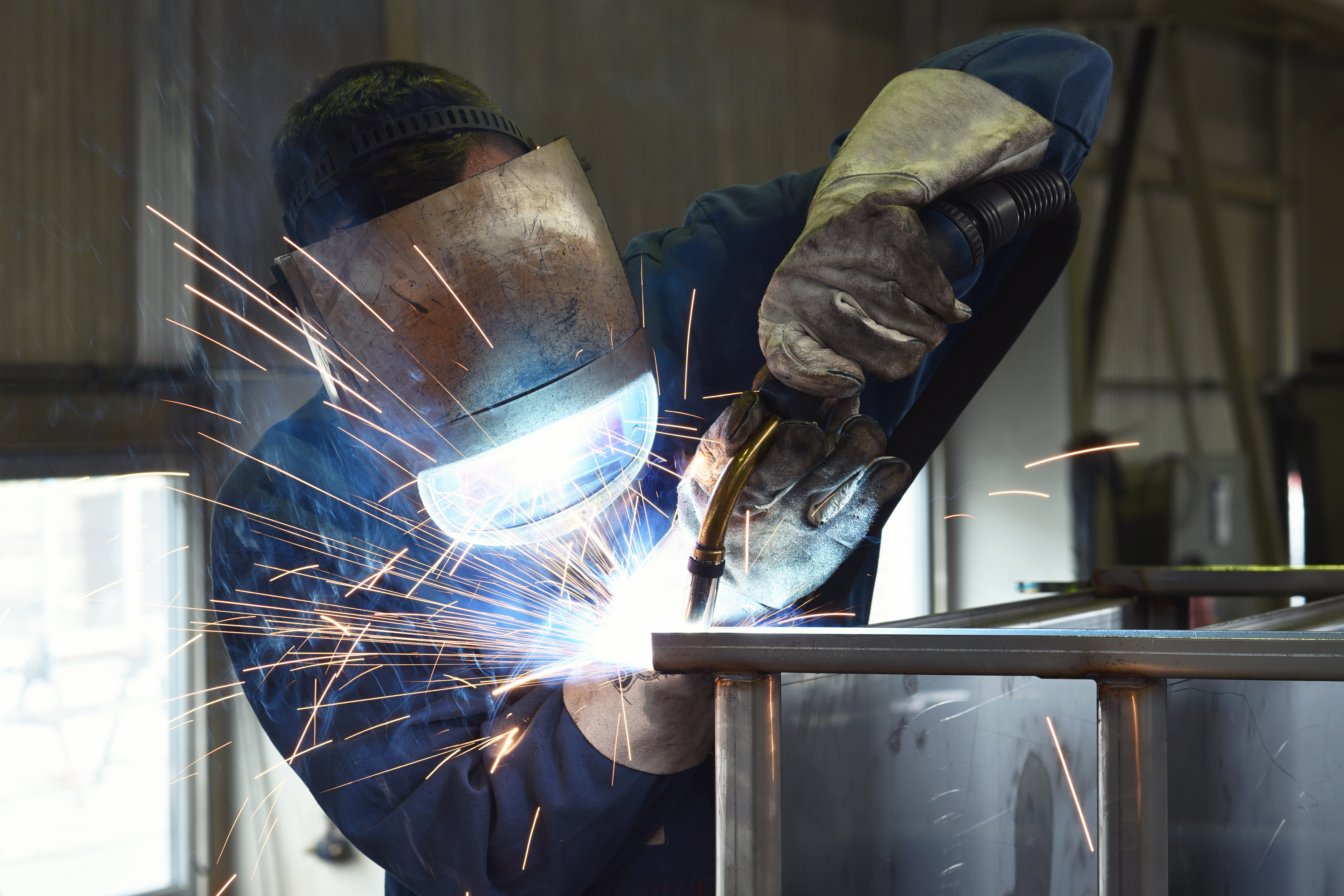
Welding is the process of using extreme heat—and, sometimes, pressure—to attach two pieces of metal. In contrast, metal fabrication is a more involved process that can include welding, sheet metal work, bending, and other forms of metal manipulation. Metal fabrication is a large-scale project that may or may not involve welding, while welding is more often a step in larger fabrication projects.
Your typical household tools will not cut a metal pipe. To cut a metal pipe, you’d need more specialized tools like a pipe cutter or circular saw. Do not attempt to use these tools without taking proper safety precautions and wearing safety gear. It’s usually safer to let a pro cut a metal pipe, especially if you’re not confident in your skills with a heavy-duty saw.
The cost to weld aluminum averages about $14 to $22 per pound. The type of metal factors into the overall cost of any welding project due to the cost of the materials and the expertise required to work with it.
Some of the most common metals used by welders include:
Magnesium alloy: $7–$16 per pound
Low-carbon steel: $11–$12 per pound
Stainless steel: $13–$15 per pound
Copper/brass: $24–$29 per pound
Cast iron: $38–$79 per pound
Titanium: $60–$85 per pound
The Virginia, MN homeowners’ guide to welding services
From average costs to expert advice, get all the answers you need to get your job done.
When you need help with a metal project and don’t have the expertise or the time, call an expert welder for your project. Here’s how to vet and hire a welder.