


Top-rated electricians.

Get matched with top electricians in South Haven, MN

Enter your zip and get matched with up to 5 pros

Need a pro for your electrical service project in South Haven, MN?

Select your specific project to find the pro for you.

TRUSTED BY SOUTH HAVEN, MN HOMEOWNERS

  • Average homeowner rating star icon4.7
    Average homeowner rating
  • Verified reviews icon149
    Verified electrical services reviews

Find Electricians in South Haven

S.P. Electric, Inc.
4.4(
75
)
Electrical Switches, Outlets & Fixtures - Install or RepairElectrical Wiring or Panel UpgradeCeiling Fan - Install+1 more

Serving South Haven, MN and surrounding areas

Approved

In business since 2004

Free estimates

Emergency services offered

"The electrical service was fantastic. The technician was fast, efficient, curteous, informative, and tidy. He listened to the problem, quickly diagnosed the situation, he had everything he needed in his tool belt, and even fixed some lingering issues that were 2 years old."
Response time4 hrs
5 neighbors recently requested a quote
Recommended by82%of homeowners
Avatar for Starlight Electric LLC
Starlight Electric LLC
5.0(
13
)
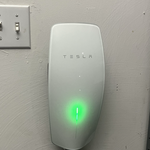
Electrical Switches, Outlets & Fixtures - Install or RepairCeiling Fan - InstallElectric Vehicle Charging Station Installation - Materials Not Provided+3 more

Serving South Haven, MN and surrounding areas

Approved

In business since 2023

Free estimates

Emergency services offered

"I called Starlight Electric and they were to my house in 2 hours. Diagnosed and fixed the issues I was having within 2 hours. The price and customer service were great but most of all they were very clean which was very important to my wife. I will be calling them for another electrical needs I need in the future."
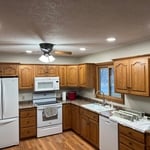
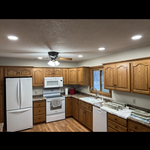
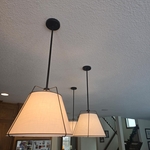
Kitchen Lighting project
Response time4 hrs
3 neighbors recently requested a quote
Recommended by76%of homeowners

Amplified Electric, Inc.
5.0(
11
)
Exterior Building Lighting - Repair - For BusinessElectric Vehicle Charging Station Installation - For Business - Materials Not ProvidedElectric Vehicle Charging Station Installation - For Business - Materials Provided by Consumer+4 more

Serving South Haven, MN and surrounding areas

Approved

In business since 2014

Free estimates

Credit card accepted

"Kyle did me a big favor, and repaired all the needed electrical so my house could by ready for an appraisal. He went over the call of duty and did it in record time.I was very impressed with his professionalism and he was very fair on his price I would highly recommend him to all my friends. Thanks again Kyle!"
1 neighbors recently requested a quote
Recommended by100%of homeowners
...
Showing 1-10 of 124
Electrical questions, answered by experts

Yes, pool pumps use a significant amount of electricity, making them one of the biggest energy consumers in a home. A pool pump can use up to three times as much electricity as a refrigerator. Typically, a residential pool pump consumes about 1 kilowatt-hour (kWh) for every hour it runs. Because pumps often need to run for about eight hours a day to properly filter the water, this can add up to an annual consumption of 3,000 to 5,000 kWh, which can cost between $480 and $800 per year based on average electricity rates.

The amount of electricity your pump uses depends on its size, energy efficiency, and daily run time. To lower your energy consumption, you can choose an energy-efficient or variable-speed pump, ensure it is correctly sized for your pool, and run it only for the minimum time required to keep the water clean.

While it’s not possible to put a main breaker in a main lug panel, it’s possible to convert a main lug to a main breaker. Converting to a main breaker panel offers increased safety, simplified control, compliance with building codes, and adaptation to changing electrical needs, especially when adding new circuits or upgrading the system.

Watts and volts represent distinct aspects of a light bulb’s functionality. Volts measure the electrical force that drives the current through the bulb, determining its compatibility with the power source. Watts, on the other hand, quantify the bulb’s power consumption and indicate its brightness level. Higher watts generally mean a brighter bulb.

Most standard residential water heaters, which are typically around 40 gallons and use 240 volts and between 3,500 and 5,500 watts, require a 30-amp, two-pole circuit breaker. For smaller, point-of-use water heaters using 120 volts and between 1,500 and 3,000 watts, a 30-amp breaker is also often adequate. However, some models may have different needs; units that use more watts than average may require a 40-amp breaker, while smaller units might only need a 20-amp breaker. Newer, tankless, or more energy-efficient models can also require a higher amperage. Having the correct breaker size is crucial for safe and efficient operation, so it's best to consult a licensed electrician to determine the specific needs of your water heater.

The standard copper wire gauge to use with any 30-amp circuit is a 10-gauge wire. The National Electric Code specifies a 10-gauge wire with appliances like water heaters running on 30 amps. If you try to use a smaller gauge wire, such as a 12 gauge, with a 30-amp breaker, you run the risk of the wire overheating and melting or causing a fire. Because of the safety hazards, the gauge of the wire is not an area to try to cut costs when connecting a 30-amp breaker to a water heater.

The South Haven, MN homeowners’ guide to electrical services

From average costs to expert advice, get all the answers you need to get your job done.