

Top-rated plaster repair specialists.

Get matched with top plaster repair specialists in Perham, MN

Enter your zip and get matched with up to 5 pros

Need a pro for your plaster repair project in Perham, MN?

Select your specific project to find the pro for you.

Find Plaster repair specialists in Perham

Tony Anderson
New to Angi
Plaster - Install - For BusinessPlaster - Repair - For Business

Serving Perham, MN and surrounding areas

In business since 2012

Free estimates

With years of experience in all phases of the drywall industry, we are confident that we can provide our clients with a professional drywall installation from start to finish. Owner Tony Anderson is personally involved in all aspects of each project and does most of the tape, finish, and texture work to insure that the highest quality standards are adhered to throughout the job.\n\nFree Estimates with Competitive Pricing\n\n

Plaster Repair questions, answered by experts

There are several warning signs that a ceiling crack is connected to a larger issue. For starters, if the crack is wider than 1/8 inch or longer than 12 inches, you might have a more serious problem. The same applies if you have multiple smaller cracks or cracks going across the ceiling and down the wall. In any of these situations, you should ask a professional to assess the damage.

Plaster is a pretty tough surface, but it can still sustain damage from things like bumping against it, water issues, dampness, extreme humidity changes, and plain old age. Most plaster walls last hundreds of years and will only be taken down to the base layer when major repairs are required. Being cautious around the wall, not placing furniture against it, and ensuring stable humidity are all great ways to reduce possible damage.

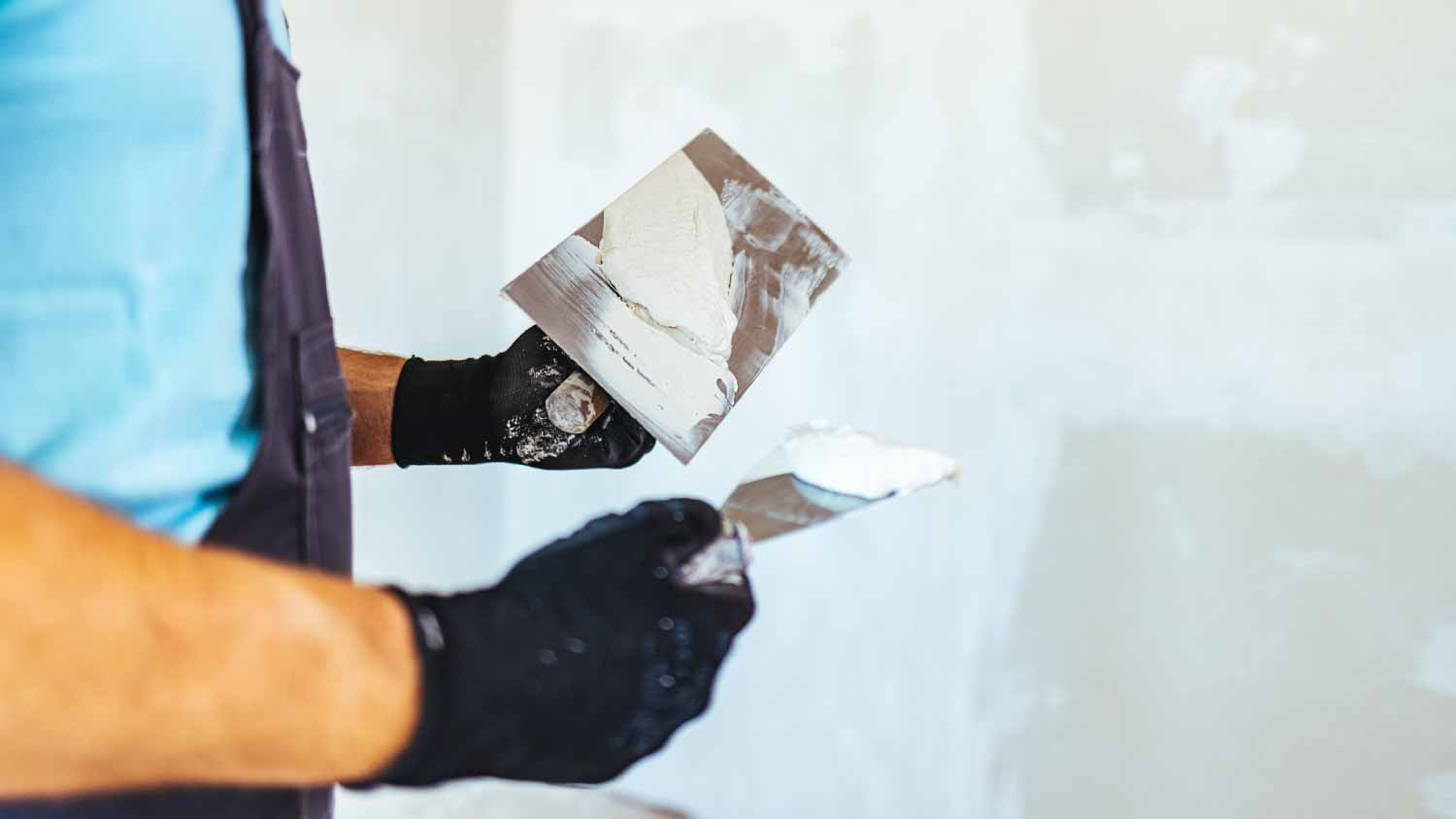
While it is possible to repair minor plaster cracks or holes yourself, it is generally not recommended for larger jobs or if you want a professional result. Plaster repair can be difficult in practice; proper wall preparation and achieving a smooth, seamless finish that blends with the existing wall requires experience, especially on textured surfaces. Hiring a professional ensures the repair will be durable and last longer, potentially saving you money over time. A pro can also determine if the cracks are from normal expansion or a more serious underlying issue.

Although they are used for similar tasks, spackle and joint compound are not the same. Joint compound, also known as drywall mud, consists of limestone and gypsum and is primarily used for large-scale projects like taping and finishing seams on new drywall. Spackle is composed of gypsum and binding agents, making it a thicker compound best suited for small wall repairs like filling nail holes or cracks, as it dries quickly and is easy to sand. For small repairs, either product can be suitable. However, you can use joint compound for small jobs in place of spackle, but you cannot use spackle for large-scale taping and mudding projects.

You can plaster over regular drywall, but it's essential to prepare the surface properly. Before plastering, the drywall should be clean, free of dust, and any loose or peeling paint should be removed. Applying a primer specifically designed for plastering can improve adhesion. Some professionals recommend applying a base coat of plaster or joint compound to create a better surface for the plaster to adhere to. Proper preparation ensures a smooth and durable plaster finish over regular drywall.

The Perham, MN homeowners’ guide to plaster repairs

From average costs to expert advice, get all the answers you need to get your job done.