Install Above Ground Pools FAQs, answered by experts
You can turn your aboveground chlorinated pool into a saltwater pool. The cost of a saltwater pool conversion is between $750 and $2,000, depending on your pool’s size. A saltwater pool offers benefits like less maintenance and water that is gentler on your skin. You’ll need to replace the salt every five years, but you won’t need to clean your pool as frequently.
You’ll need at least 50-by-10 feet for a residential lap pool. Endless pools need as little as 15-by-8 feet. Deciding which type of pool is right for you and your family will depend heavily on the size of your backyard and what can comfortably fit. Don’t forget to leave room for other structures and activities in your yard, such as a swing set, shed, garden, or outdoor grill.
You should avoid filling your pool overnight—just as a precaution. You’ll want someone around to check on the progress. If your hose springs a leak or you overfill your pool, you could end up with some costly water damage. At worst, you could flood your home’s foundation. For this reason, ensure someone is home and awake, even if your pool takes a couple of days to fill.
Pool remodel costs average over $9,000, so what about converting your pool to salt water instead? It is certainly an investment on the front end, but homeowners stand to save money on maintenance by switching to a saltwater pool. You will need to replace the salt cell every five years or so, but you will not have to clean your pool as frequently, either. The smell of chlorine also will not be on your swimsuits or skin, which is a benefit many appreciate.
Calcium lumps in a pool are calcium deposits that form when a pool's water parameters are not in the normal range. They can float around on the surface of the pool water, making it look and feel dirty. The most common causes of calcium lumps in pools are calcium hardness above 1,000 ppm, alkalinity over 120, and a pH over 7.8. Keeping your pool’s calcium levels, alkalinity, and pH levels within the normal, safe ranges is the best way to prevent calcium lumps and other problems, including damage to the pool surface.
The Madison, MN homeowners’ guide to above ground pool installation services
From average costs to expert advice, get all the answers you need to get your job done.
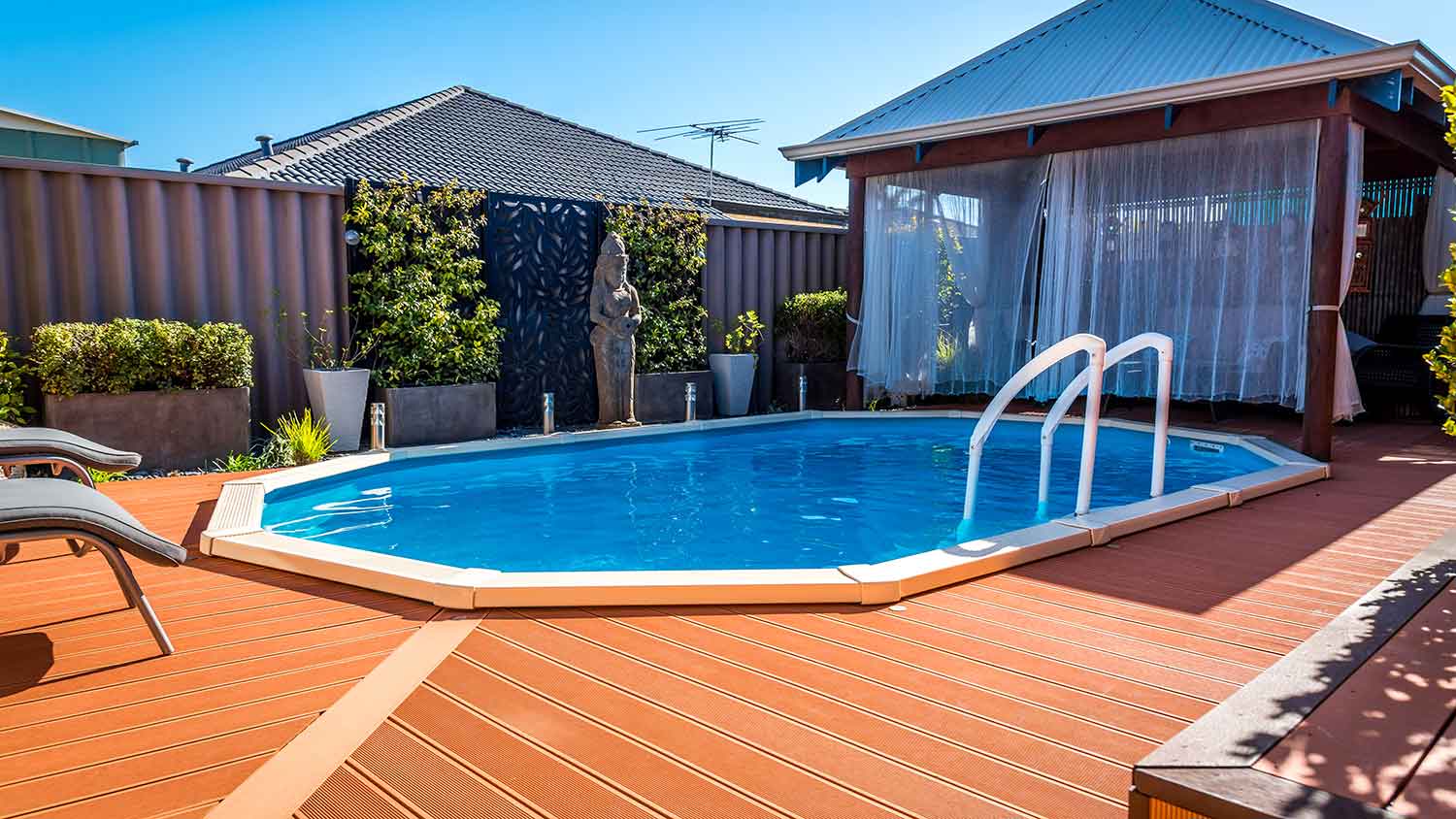
Ready for a backyard oasis? Learn everything about above ground pool installation, including average costs, site prep, and how to hire local pool installers.
Above ground pools are more affordable than inground pools, so can you put an above ground pool in the ground to save money? Learn when it’s safe to do so.