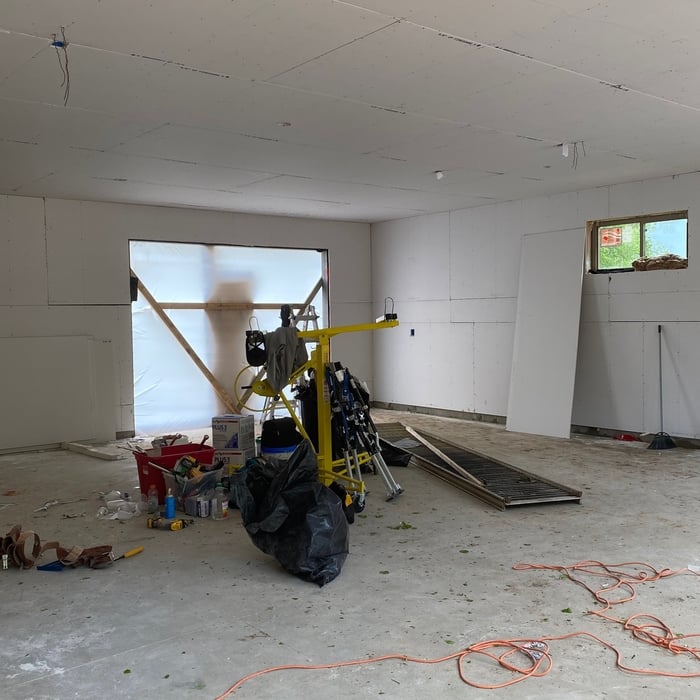
"The team was prompt and very detailed, was able to pivot and suggest little changes that improved the overall look. They reconstructed a soffit and several bathroom and bedroom walls to enhance the appearance. I asked for non textured ceilings and they are flawless. Great communication throughout the job…I will rehire again in the future!!"
We pride our company on reliability, great communication, integrity, and quality work. We are experts in our trade and will do our best to keep you as educated as we can on your particular task or project. We look forward to earning your business!
Zachary Vig Construction has been in business since 2026, with over 10 years of experience! We specialize in all your home improvement multiple small project needs, and guarantee you a job well done! Whether it be a ceiling fan that needs to be installed, or a door that needs repaired, we are your guys! We strive to exceed the homeowner's expectations each and every time, and get the job done the way you want it. We work in a timely fashion and always pay attention to detail. Proudly serving Hallock & surrounding areas. Free estimates. Call today!\n
At Earthscape, our uncompromising dedication to quality craftsmanship ensures that every project is approached individually, creating a personal masterpiece that meets the needs and expectations of our clients, from design to completion. We specialize in landscape and architectual stone masonry (interior & exterior). Examples of our work include: Fireplaces(indoor & outdoor), walls, flooring, facing, patios, and pool decks. We also make custom birch and stone furniture and furnishings. Let our team go to work and add the beauty and strength of natural stone to your home and landscape, creating your perfect little corner of the world.\n \n
Yes, you can technically make a crawl space liveable, but the only way to do so is by converting it into a basement. While some crawl spaces are big enough to walk through and store large items, they lack appropriate insulation and space to be liveable.
Underground downspouts refer to the sections of downspout extensions that lead away from your home and gutter system. While they cost more than traditional extensions, they can provide several benefits, such as less frequent damage and no need to move them for lawn care tasks. Whether they're worth it or not depends on your budget at installation time and how much convenience they'll add to your situation.
To drill a shallow well, you may be able to use a drive well point. This is a tapered point that is driven into the ground. A drill bit at the end of PVC pipe may be another option to consider. A lot of the cost depends on what tools are available near you.
Septic drain lines (or leach lines) are typically buried between 18 and 36 inches underground, and should be at least 6 inches below the surface. These pipes are perforated and surrounded by filtering materials like sand or gravel. Burying the lines at this depth helps minimize odors and allows bacteria and other biological processes in the soil to effectively treat the wastewater. Burying lines too close to the surface can cause issues unless the soil is very compact and stable.
The cost to repair a crawl space runs between $1,500 and $15,000, depending on the extent of the damage. Major flooding or water repairs can cost up to $10,000 for removal and repairs. If you simply need to clean your crawl space, expect to pay between $2,000 and $6,000 for a major cleanout. Replacing a crawl space beam due to rot or damage can cost between $1,500 and $5,000, while removing and replacing damaged insulation costs between $1,000 and $4,000.
The Badger, MN homeowners’ guide to excavation services
From average costs to expert advice, get all the answers you need to get your job done.
Excavation costs $1,500 to $6,300 for most residential projects—but it depends on factors like the size of the area. This guide will help you plan a budget.
You can't have an in-ground pool without digging into the ground. How much does pool excavation cost, and can you take it on yourself? Our guide explains.