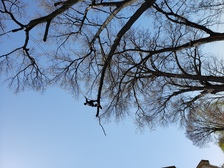

Top-rated tree service pros.

Get matched with top tree service pros in West Bloomfield, MI

Enter your zip and get matched with up to 5 pros

Need a pro for your tree service project in West Bloomfield, MI?

Select your specific project to find the pro for you.

TRUSTED BY WEST BLOOMFIELD, MI HOMEOWNERS

  • Average homeowner rating star icon4.5
    Average homeowner rating
  • Verified reviews icon1.2k+
    Verified tree services reviews

Find Tree service pros in West Bloomfield

Avatar for Independence Tree Care
Independence Tree Care
4.9(
36
)
Tree TrimmingTree RemovalTree Removal - For Business+5 more

Serving West Bloomfield, MI and surrounding areas

Approved

In business since 2002

Free estimates

Emergency services offered

"I would certainly recommend Independence. They did a great job trimming exactly the branches I wanted removed. They cleaned out the dead wood and were very careful not to damage the bushes below or my lawn. They were very professional and cleaned every thing up nicely. All at a very reasonable price."
Response time2 days
Response rate100%
1 neighbors recently requested a quote
Avatar for Lamphere's Tree Service
Lamphere's Tree Service
4.9(
22
)
Tree RemovalTree TrimmingTree Stump - Remove+3 more

Serving West Bloomfield, MI and surrounding areas

Approved

In business since 1961

Free estimates

Emergency services offered

"Quality service overall, people were nice,but they didn't finish in my opinion because I wanted more of the tree cut that was done. The equipment was gone by the time they came and got me for the final walk through, that was the only disappointing part."
Response time1 day
67 neighbors recently requested a quote
Recommended by76%of homeowners
...
Showing 1-10 of 457
Tree Service questions, answered by experts

Yes, it’s okay to trim low branches on a tree, also known as limbing up or raising the crown. Essentially, you’ll trim the lower third of the tree (trunk) and leave the upper two-thirds of the tree (crown). Arborists recommend trimming 20% of a tree’s leaves per season for two to three seasons. Trimming low branches allows light to flow through the tree, increasing circulation and making the tree stronger and healthier.

In nature, there are many things that can cause a tree to die, including diseases, insects, and natural disasters such as fires or droughts. Non-natural methods of killing a tree include herbicides or manual intervention, such as cutting it down. Consult a tree removal professional about your options for naturally killing a tree.

It is possible to cut down a tree on your property yourself, but it is generally not recommended unless specific conditions are met. You should only consider this project if the tree is small (e.g., under 4-5 inches in diameter and short enough that you don't need a ladder to reach the branches), and you are experienced in handling a chainsaw. The tree must also be located far from any power lines, fences, homes, or other structures. Even for small trees, the work can be dangerous, and it's always advisable to have a spotter to ensure the tree falls correctly and no branches fall on you.

For any tree that is large, requires a ladder to access, or is near electrical lines or structures, you should always hire a professional. Attempting to remove a large tree yourself is extremely dangerous, poses a risk of serious injury, and could result in significant damage to your property.

Before any tree removal, it's also important to check your local and state regulations to ensure the tree is not historic or otherwise protected by your city.

You may be looking to identify maple trees to use for home improvement projects. In that case, you can tell hard maples by looking at their leaves. Leaves will have a U-shaped dip, or sinus, between the points, or lobes, of the leaves. Leaves of soft maples tend to have V-shaped sinuses.

If you already have the cut wood in front of you, look for a light, uniform color to identify hard maple wood and check for variations of red, gray, or brown streaks and an overall darker color in soft maple wood.

Generally speaking, you’ll want to avoid flush cuts, which are cuts made as extremely close to the trunk or main branch. These cuts can weaken your tree, lower its natural defense mechanisms, and even cause decay. You’ll also want to avoid tree topping, which is the total removal of the leader and upper main branches of a tree. 

Most pros will advise against either of these methods, which is why hiring a pro is often the best choice when it comes to tree trimming.

The West Bloomfield, MI homeowners’ guide to tree services

From average costs to expert advice, get all the answers you need to get your job done.