





Top-rated deck cleaning pros.

Best deck cleaning pros near Saint Louis, MI

Enter your zip and get matched with up to 5 pros

Need a pro for your deck cleaning project in Saint Louis, MI?

Select your specific project to find the pro for you.

Top-Rated Deck cleaning pros in Saint Louis - Updated Nov 2026

Avatar for Preferred Power Wash, LLC
Preferred Power Wash, LLC
3.8(
89
)
Deck, Fence, Patio or Porch - Clean and Seal

Serving Saint Louis, MI and surrounding areas

In business since 1993

Free estimates

Credit card accepted

"They kept me informed when they would arrive- the two young men were very professional, and did excellent work. They also cleaned up after they were done. I would definately recommend this company."
soft washing professional

+9

Response time1 day
Response rate93%
Recommended by84%of homeowners
Showing 1-10 of 43
Deck Cleaning FAQs, answered by experts

Yes, Ipe is more expensive than Trex decking—both in terms of materials and installation (plus, Ipe trees are endangered). On average, Ipe decking costs $10 to $25 per square foot, while Trex decking costs $5 to $12 per square foot. Because Ipe is harder to work with, the price of installation is higher, too. For Ipe decking, you’ll pay between $20 and $45 per square foot for labor. However, with Trex decking, the labor costs range from $8 to $22 per square foot.

To flatten a cupped deck board, start by ensuring it’s dry. Then, try flipping the board over so the cupped side faces down and reattach it. If that’s not possible, you can use screws to pull it tighter to the joists or plane the edges slightly to reduce the cup. It’s best to replace severely cupped boards.

When deciding if you should use 2x6 or 2x8 deck joists, consider the size of the deck, joist spacing, and materials. Larger decks, larger-spaced joists, and weaker wood all require more support, meaning they need larger joists. For example, 2x8 redwood joists spaced 16 inches apart can only safely span up to 10 feet and 7 inches. On the other hand, 2x10 southern pine joists spaced 12 inches apart can be as big as 16 feet and 2 inches. If you aren’t sure what size joist is best for your project, speak with your deck builder.

Composite decking boards aren't your only options for building a deck. There are several other types of materials for decks, including wood and aluminum decking. Wood decking comes in many different wood species, offering natural beauty and classy timelessness to your yard. Aluminum is a lightweight, water-resistant, and low-maintenance material that is also non-slip.
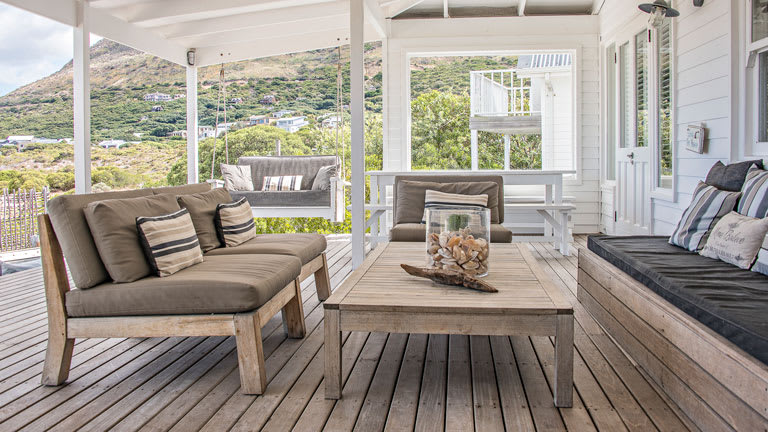

The choice between Trex, a brand of composite decking, and PVC decking depends on your priorities regarding budget, appearance, and environmental impact. Both materials are durable and resistant to moisture and insects. Trex is often considered more eco-friendly because it contains recycled wood and plastic and is 25% recyclable, while PVC is fully synthetic and harder to recycle. Aesthetically, Trex is designed to look more like real wood, whereas PVC often has a glossier, more plastic-like finish. In terms of cost, Trex is typically less expensive than PVC.

The Saint Louis, MI homeowners’ guide to deck cleaning services

From average costs to expert advice, get all the answers you need to get your job done.