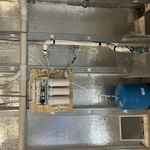
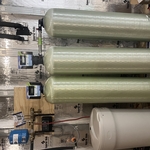
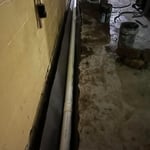
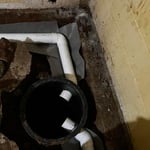
As a family owned and operated business for three generations, we pride ourselves on our extreme professionalism and attention to detail. Give us a call today, we look forward to working with you!
"Company was on time. Communicated with us on the project. Very professional. Cleaned area of work. We had a leak outside, and they did a very good job. Would recommend them for service."
American Aqua is an established provider of water treatment systems throughout Southeast Michigan. Locally operated for over thirty years, American Aqua specializes in treating poor water conditions-high iron, arsenic, PFAS and more. Our team of Certified Water Specialists (CWS) provides installation and service for softening, filtration, deionization (DI) and reverse osmosis (RO) applications. Our product line includes salt and water delivery for home or office, to large capacity water softening and filtration systems for high-purity and industrial applications. American Aqua's service response times lead the industry.
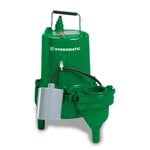
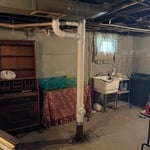
"It went very well. Kael is very considerate and hardworking. We now have water running to the sump, and the pumping system is verified and updated properly."
IRONpro is a family-owned and operated water treatment company, founded in 1995. We offer a complete spectrum of custom water-treatment solutions to fit the individual needs of each applicant. Our certified water specialists have decades of experience in treating problem water throughout Northwest Ohio and Southeastern Michigan. We strive to provide the highest-quality, most cost-effective, and environmentally-friendly water treatments to meet your needs.
"The expert they sent out determined that I had two cracks in my basement wall. Other vendors said I would need a interior water drain system installed. Stay Dry fix the problem for a fraction of the cost."
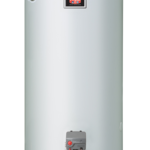
"He was able to quickly diagnose that the water leak from the water heater was a result of a ruptured tank, resulting in the need to replace the entire water heater."
Selecting the right system depends on testing your water to understand the contaminants present and considering your household's water usage and specific needs, such as removing specific contaminants.
Installing a water softener could help reduce calcium buildup in your pool if your pool has high calcium hardness as a result of hard drinking water in your home. Pool softeners work by exchanging calcium and magnesium for sodium, so if you use softened water to top off your pool, it may help keep calcium hardness from rising over time. However, it won’t lower the calcium hardness of the water already in your pool and isn’t a practical way to control pool calcium levels. The average water softener installation cost is between $200 and $6,000.
Routine maintenance involves recharging the resin bed with salt or potassium, cleaning components, and periodic inspection.
It’s not a good idea to oversize your water softener. Doing so will mean the tank doesn’t get full, which can lead to channeling. This leads to a large portion of the resin beads not being utilized and the beads at the bottom of the tank being overused. Over time, this will reduce the efficiency of your system, not to mention that the upfront cost of an oversized softener is unnecessarily high. If you have a timed regeneration cycle rather than a demand-based one, you’ll also spend far more on replacing salt than you need to.
There are many possibilities for why your shower’s water pressure is low. It might be a simple-to-fix issue like the water valves being partially turned off, a dirty showerhead or hose, leaks in the plumbing, or an old showerhead. However, low water pressure in the shower could also indicate a larger issue with your home’s plumbing system.
The Riga, MI homeowners’ guide to water softener services
From average costs to expert advice, get all the answers you need to get your job done.
Water softeners work to remove unwanted minerals from hard water through a filtration and recharge cycle. Keep reading to learn how a water softener works.
There are four common softener alternatives available on the market today. We compare and contrast each one to help you find your best-fit solution in this blog.
Water softeners rid your home of hard minerals and, well, soften your water. Even better, the regeneration process is an automatic cycle that works when you’re least likely to use it.
Water softeners remove hard minerals from your tap water, improving plumbing systems and water-using appliances. Here are the most efficient water softeners out there.