







Top-rated plaster repair specialists.

Get matched with top plaster repair specialists in Ridgeway, MI

Enter your zip and get matched with up to 5 pros

Need a pro for your plaster repair project in Ridgeway, MI?

Select your specific project to find the pro for you.

TRUSTED BY RIDGEWAY, MI HOMEOWNERS

  • Average homeowner rating star icon4.5
    Average homeowner rating
  • Verified reviews icon31
    Verified plaster repairs reviews

Find Plaster repair specialists in Ridgeway

Avatar for Renaissance Restorations, Inc.
Renaissance Restorations, Inc.
4.4(
16
)
Plaster - RepairPlaster - Install

Serving Ridgeway, MI and surrounding areas

Approved

In business since 1998

Free estimates

Warranties offered

"Entire house 2,000 sq ft up and down colonial needed facia boards replaced and painted. Also staff removed several wasp nests at no charge. House looks great and passed city inspections"
Broader view of kitchen working together.
Pantry, oven, backsplash, under cabinet lighting.
Fixtures and kitchen.
Island, microwave, stove, Cambria Quartz and under cabinet lighting.
Island, color contrast

+90

28 neighbors recently requested a quote
Recommended by100%of homeowners
Tues Improvement
New to Angi
Plaster - InstallPlaster - Repair

Serving Ridgeway, MI and surrounding areas

Approved

Free estimates

Small jobs welcome

Credit card accepted

I am a highly skilled and versatile construction professional with hands-on experience in remodeling, renovations, new construction, and a wide range of trades. My strength goes beyond knowing how to build—I have the ability to look at a project, understand how everything comes together, identify challenges, and develop practical solutions to get the job done right.\nFrom framing and structural work to kitchens, bathrooms, flooring, drywall, trim, decks, additions, and complete remodels, I have built a broad skill set through real-world experience. I learn quickly, think mechanically, adapt to challenges, and take pride in finding solutions where others may see obstacles.\nI consider myself more than a contractor. I am a builder, craftsman, project manager, and problem solver who brings knowledge, determination, versatility, and a strong work ethic to every project from the initial idea through completion.

Deck project
Deck project
Deck project
Deck project
Deck project

+26

Done up
New to Angi
Plaster - InstallPlaster - Install - For BusinessPlaster - Repair+1 more

Serving Ridgeway, MI and surrounding areas

Approved

Free estimates

Emergency services offered

Warranties offered

I’m a one-stop shop for all your maintenance needs, with a knack for tech and a wide range of skills in various trades. Nothing too big to tackle and nothing too simple I won’t accept. Not to mention I can promise to beat larger companies and there estimates every single time\n\n

1 neighbors recently requested a quote

...
Showing 1-10 of 52
Plaster Repair questions, answered by experts

Although they are used for similar tasks, spackle and joint compound are not the same. Joint compound, also known as drywall mud, consists of limestone and gypsum and is primarily used for large-scale projects like taping and finishing seams on new drywall. Spackle is composed of gypsum and binding agents, making it a thicker compound best suited for small wall repairs like filling nail holes or cracks, as it dries quickly and is easy to sand. For small repairs, either product can be suitable. However, you can use joint compound for small jobs in place of spackle, but you cannot use spackle for large-scale taping and mudding projects.

Common causes of ceiling cracks along drywall seams include poor drywall installation techniques, structural issues, truss uplift, and foundation problems. Temperature and humidity also play major roles in ceiling cracks flush with the wall. As the drywall shrinks and expands from major temperature changes or extreme humidity shifts, this can cause the drywall to crack.

Plastering and skimming are two different techniques for finishing walls. Plastering involves applying a thick layer of a plaster mixture—typically containing gypsum, lime, cement, sand, and water—to create a new surface. This process often requires multiple coats and is used for repairing significant damage or creating decorative textures. Skimming, on the other hand, is a technique that involves applying a thin layer of drywall compound or joint compound over an existing surface to smooth it out, covering minor imperfections, small cracks, or uneven textures for a polished look. Plastering is generally more costly and labor-intensive than skimming. Although some people use the terms interchangeably, they refer to different processes and materials.

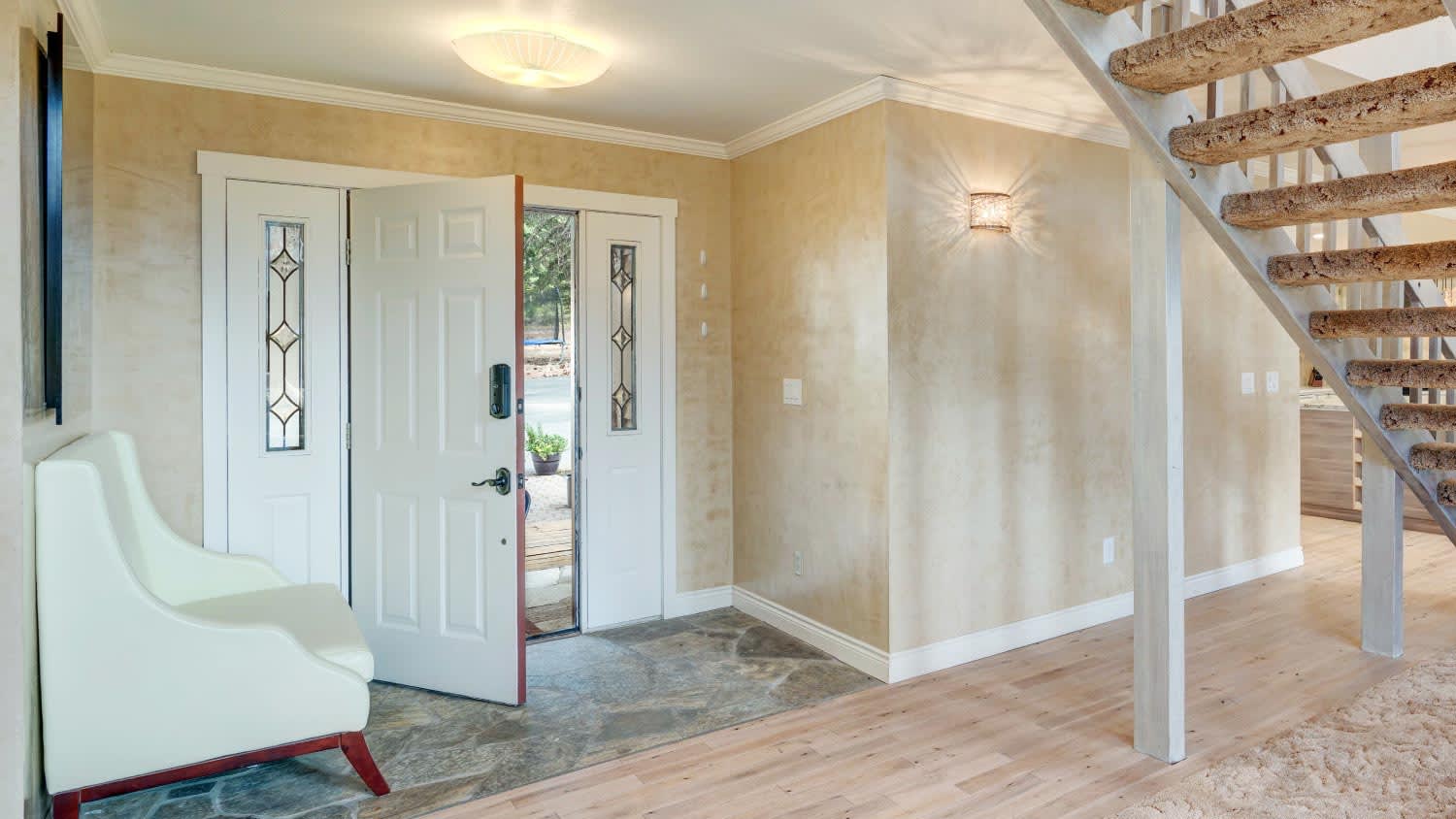
The allure of Venetian plaster lies in its unique appearance and individual characteristics in a home. It’s sophisticated and multidimensional and has a rich history dating back to Ancient Rome. This type of plaster finish is durable and represents a style of luxury that has been practiced for thousands of years. Many designers pair the texture of Venetian plaster with modern furnishings, resulting in an elegant and refined aesthetic.

Smaller is better when patching holes with spackle. Any holes wider than four to six inches in diameter tend to be too wide to repair with spackle alone. You'll likely want to patch bigger holes with a drywall panel. 

Even holes measuring up to 6 inches may be challenging to fill with spackle alone. For best results, purchase a wall repair patch made from wire mesh. Cut the patch to fit over the hole, then use the spackle to hold it in place. Apply the spackle over the patch as you would for a smaller hole.

The Ridgeway, MI homeowners’ guide to plaster repairs

From average costs to expert advice, get all the answers you need to get your job done.