




Top-rated ceiling fan pros.

Get matched with top ceiling fan pros in Lachine, MI

Enter your zip and get matched with up to 5 pros

Need a pro for your ceiling fan service project in Lachine, MI?

Select your specific project to find the pro for you.

Find Ceiling fan pros in Lachine

Avatar for American Home Shield – Home Warranty
American Home Shield – Home Warranty
3.5(
5,688
)

Serving Lachine, MI and surrounding areas

In business since 1971

Credit card accepted

"I love American Shield.  I love American Shield.  I love them. We have 2 homes; this home is 30 years old, our home in California is twenty years old and we have used them in both places.
A, number 1, plus, plus!"
Additional Photos
Additional Photos
Additional Photos
Additional Photos
Additional Photos

+2

Recommended by65%of homeowners
Ceiling Fans questions, answered by experts

Identifying the source of noises is your first step to soundproofing a room without overspending. Generally, sound comes from inside or outside of the house. Inside noises include creaking floors, living noises like TVs in the living room, cooking sounds, or kids being kids. External noises generally include incremental weather, disturbing neighbors, and street traffic. Inside noises require you to soundproof floors, ceilings, and doors, whereas outside noises may require you to soundproof your attic, windows, and walls facing the streets.

In short, no. You can use the square footage range chart in this article to determine the right size ceiling fan for both indoor and outdoor spaces. However, weather elements can damage types of ceiling fans that aren't designed for outdoor use, so your ceiling fan should be weather-resistant if you plan to install it outside.

The direction your ceiling fan spins helps create comfortable airflow in your home and can also help cut down on energy costs. 

During summer, your ceiling fan should spin counterclockwise. This will push cooler air downward in a column and help lower your room’s air temperature. In the winter, set your ceiling fan to spin clockwise and at the lowest speed setting. This will pull cool air upwards, displacing the warm air that pools towards the top of your ceiling and bringing it down towards the floor.

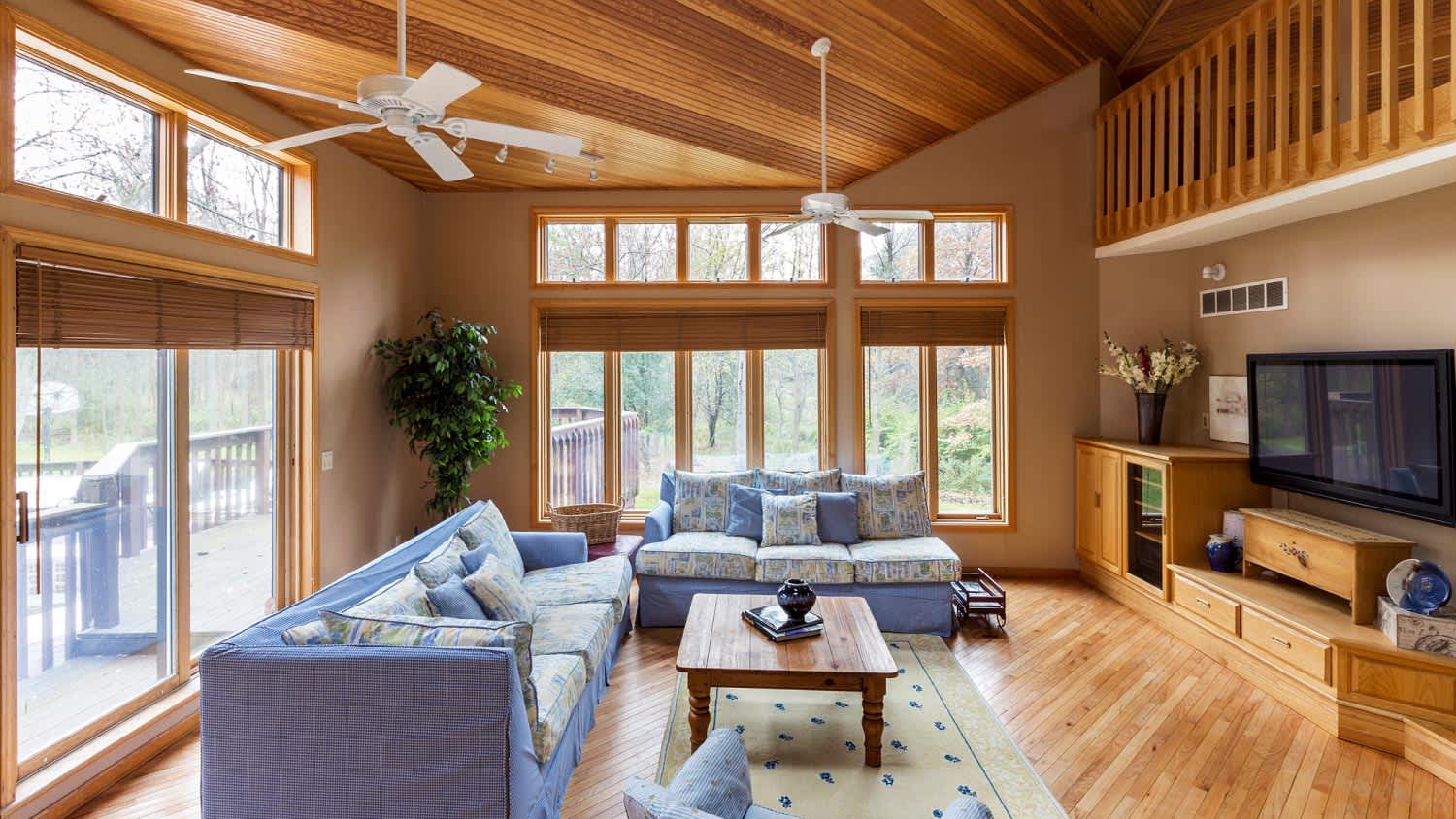
When choosing a mounting bracket, you have the option between flush mounts and downrod mounts. Flush mounts are the better option for low ceilings as they feature a lower profile. Downrod mounts are the optimal choice for rooms with high ceilings as they offer a pole that adjusts the height of the fan.

Yes, you can install a ceiling fan where a standard light fixture is, as the electrical wiring is often similar and may not need to be replaced. The most important step is to ensure the ceiling can support the fan's weight and motion. You will need to replace the existing light fixture's electrical box with a fan-rated electrical box, which is specifically designed to handle the extra weight and vibration. These boxes will be labeled as suitable for ceiling fan support and will indicate the maximum weight they can hold. Before you begin, also consider if you need an extension rod for a high ceiling or a special mount for an angled ceiling.

The Lachine, MI homeowners’ guide to ceiling fan services

From average costs to expert advice, get all the answers you need to get your job done.