




Top-rated deck maintenance specialists.

Get matched with top deck maintenance specialists in Old Town, ME

Enter your zip and get matched with up to 5 pros

Need a pro for your deck maintenance project in Old Town, ME?

Select your specific project to find the pro for you.

Find Deck maintenance specialists in Old Town

Sean Gleason Home Improvements
5.0(
45
)
Deck, Fence, Patio or Porch - Clean and Seal

Serving Old Town, ME and surrounding areas

Approved

In business since 1990

Free estimates

Credit card accepted

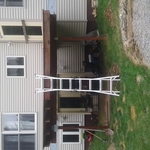
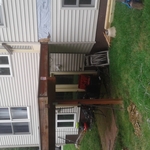
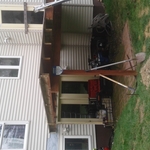
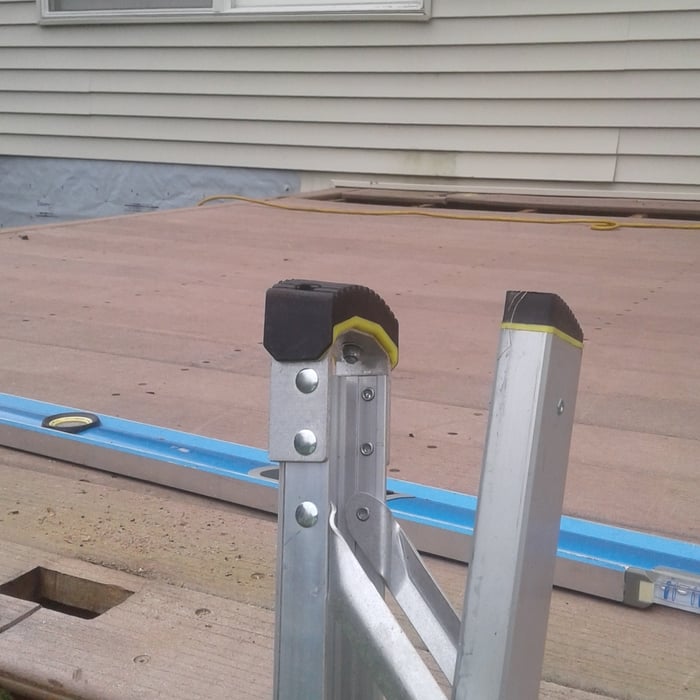
"Job was done when scheduled. Had to have a large covered deck leveled. The foreman Ron was excellent. Originally scheduled for 1-1/2 days got it all done by finishing after 5:30 p.m in one day. Sean Gleason came by while the job was being done to check on things and made recommendations to make sure everything was perfect and oversaw what was happening. He came back again the next day and checked the work one last time to make sure the job was completed and I was satisfied. Said that in the spring after any other movement of the deck to check and make sure it was level. Had a level on the deck while doing the job to make sure it was completely level. Doors and windows all open and close easily now. Job well done!"
Response time1 day
Recommended by87%of homeowners

Avatar for wedoitpropertycare
wedoitpropertycare
5.0(
2
)
Deck, Fence, Patio or Porch - Clean and Seal

Serving Old Town, ME and surrounding areas

Free estimates

Emergency services offered

Warranties offered

we specialize in lawncare but so many services to offer for property care.At we do it we offer clean ups,clean outs,junk removal,light tree work,tractor work and property maintenance and repairs for residential and commercial homes,camps and rentals and capiable of more that is needed.

Showing 1-10 of 37
Deck Maintenance questions, answered by experts

It’s best to prime composite decking before painting. This promotes better paint adhesion, helps create a smooth finish, and can mean the paint job will last longer. Always follow the manufacturer’s instructions for application, allow ample primer drying time before painting (typically 24 to 48 hours), and thoroughly clean the deck boards to promote the best adhesion.

The best direction for a gate to swing depends on its location and purpose, but swinging inward is the general rule. An inward swing is often considered safer, prevents the gate from opening into public spaces like a sidewalk, and may be required by local building codes.

There are exceptions and specific considerations. If your property is on a slope, an inward swing might not be possible. For a deck gate, it's safest to have it swing away from any steps. In a backyard, the direction can be a matter of preference, though an inward swing can be helpful when carrying heavy items like a wheelbarrow into a garden.

Regardless of direction, ensure the gate can open fully without hitting any objects or blocking spaces. While an inward swing is standard, a gate that can swing both in and out offers the most flexibility if your setup allows for it.
The proper height for a stair riser or deck step is between four and seven inches, with seven inches often considered the most comfortable. Building your stairs to this height ensures a strain-free step position and minimizes the risk of trip and fall injuries. For optimal safety and comfort, especially on deck stairs, a rise of around seven inches should be paired with a tread depth (or run) of at least 10 to 12 inches. While it is possible to design stairs with risers up to 12 inches, this height can be challenging for children, pets, or individuals with mobility issues. Always check with your local building codes, as they may mandate specific dimensions that differ from these general recommendations.
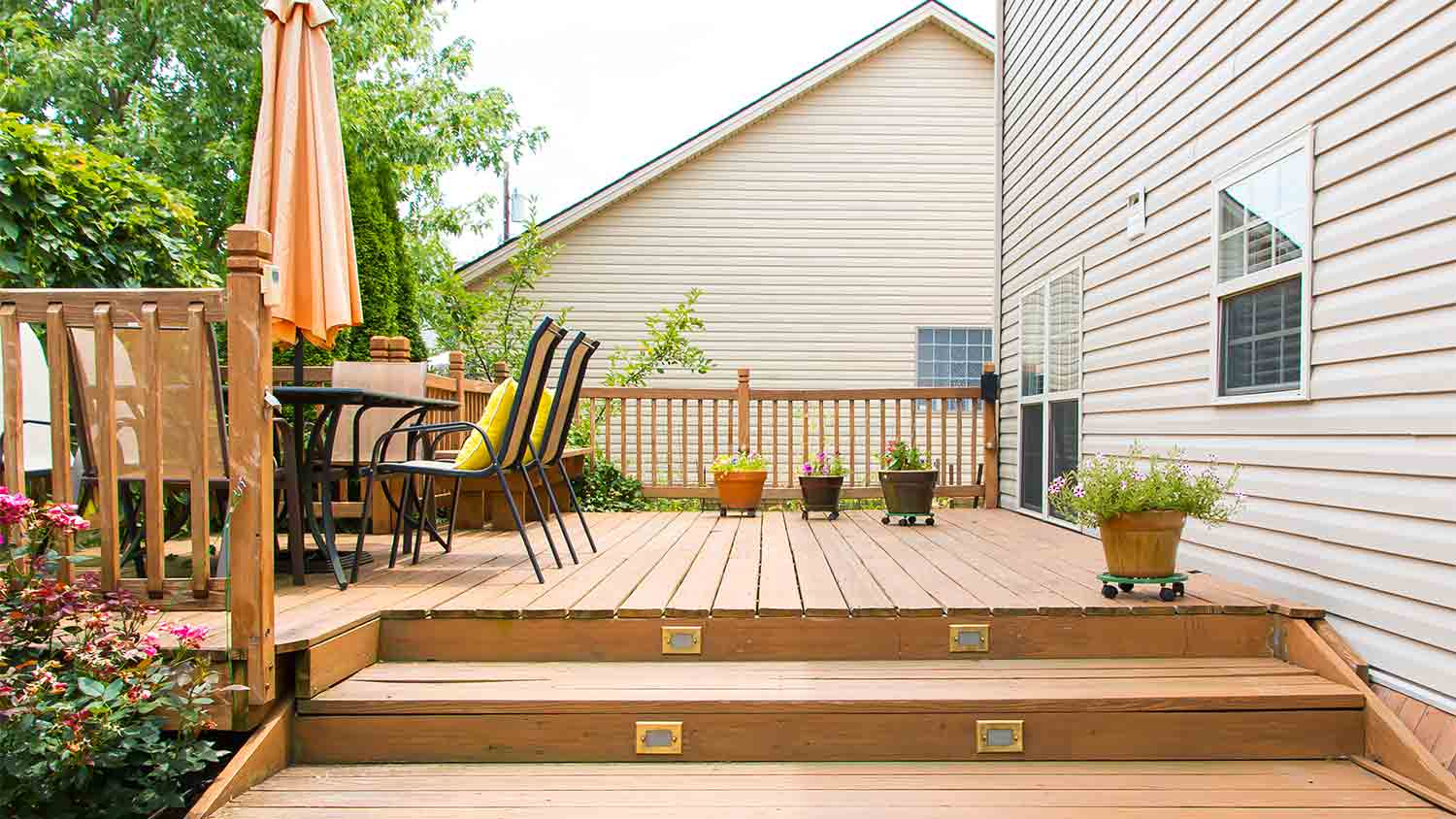
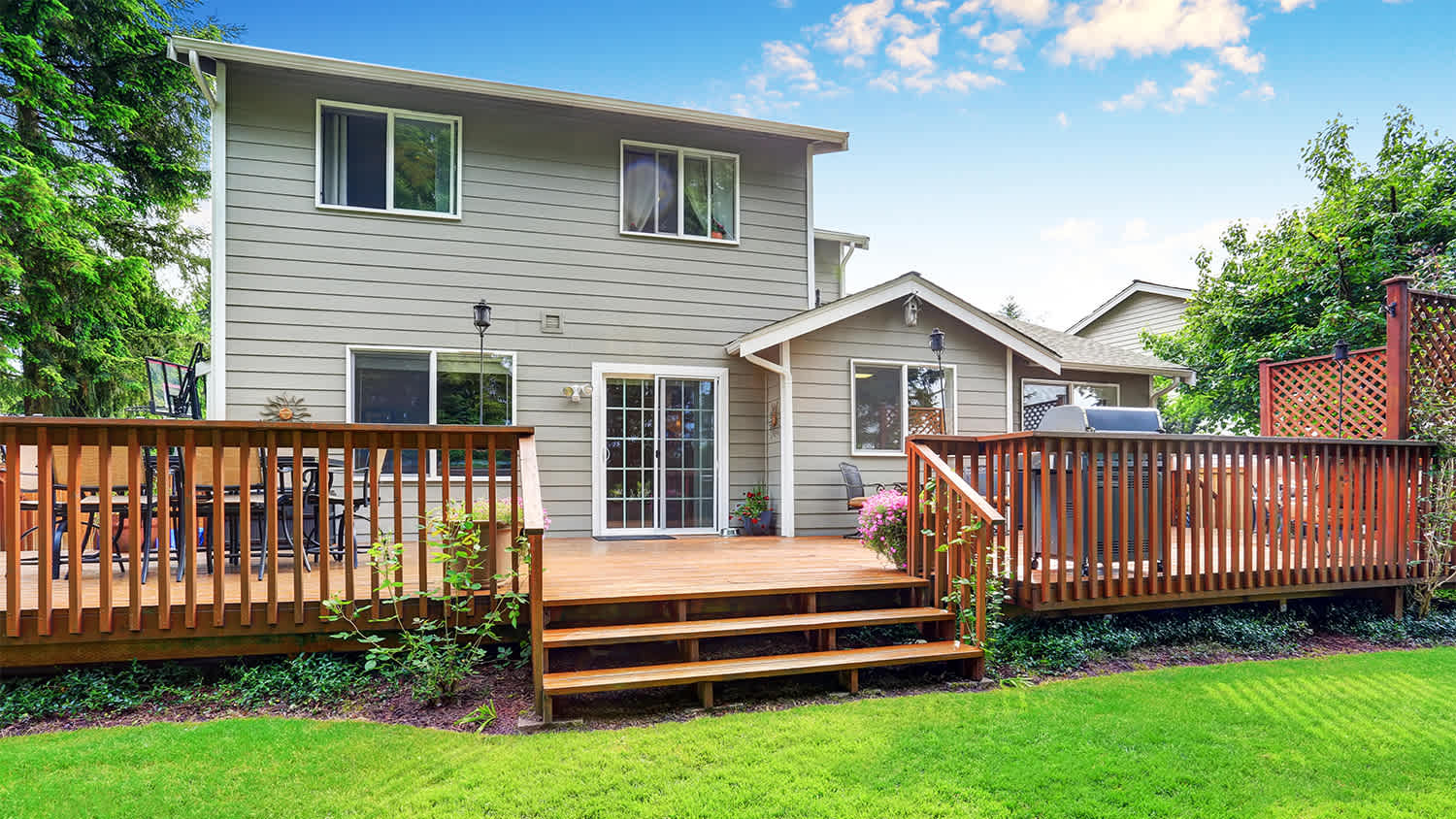
Composite decking requires a solid foundation or substructure for support. This base is typically a frame composed of posts, beams, joists, and footings. The frame can be built from various materials, such as composite, plastic, timber, or metal, depending on your budget, deck type, and environmental conditions. For maximum stability, a professional deck builder may recommend installing this frame on top of a solid concrete base. It is best to discuss the most suitable substructure design and materials for your specific project with a professional.

In many areas, a floating deck that isn’t connected to your home and stays under 200 square feet and below 30 inches in height may not need a permit. These freestanding structures are often considered low-risk, which can simplify the building process. However, building codes vary greatly based on location. Before investing in any home improvement project, check with your local permitting office for deck-building guidelines.

The Old Town, ME homeowners’ guide to deck maintenance services

From average costs to expert advice, get all the answers you need to get your job done.