




Top-rated arborists.

Get matched with top arborists in Columbia, LA

Enter your zip and get matched with up to 5 pros

Need a pro for your arboricultural service project in Columbia, LA?

Select your specific project to find the pro for you.

Find Arborists in Columbia

Avatar for Toler's Tree Service
Toler's Tree Service
5.0(
3
)

Serving Columbia, LA and surrounding areas

In business since 2023

Free estimates

Offers commercial services

"Had a great experience. Good trustworthy people to work for you. They are there when they say they will be and go above and beyond what you ask of them. Pleasure to deal with them."
Joyce, La
Joyce, La
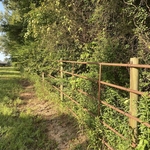
Fence Before
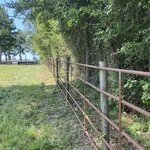
Fence After
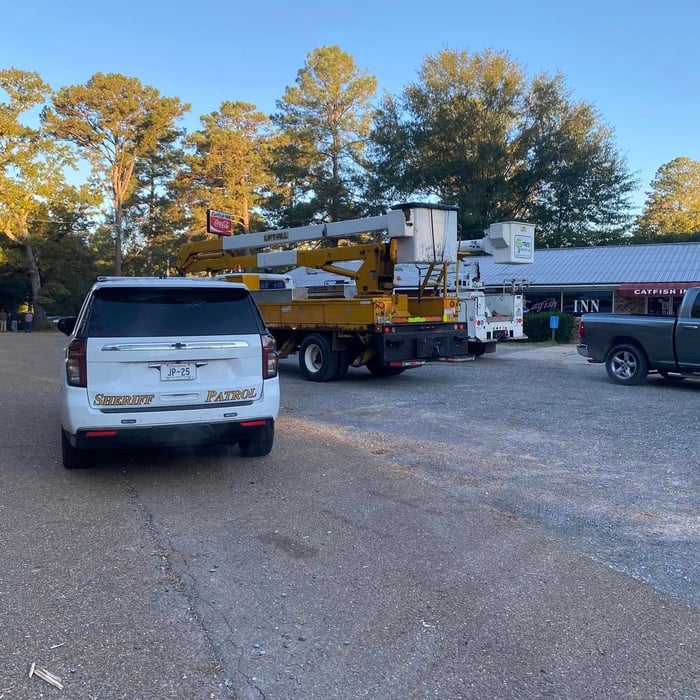
Catfish Inn

+11

Response time10 mins
Response rate100%
Recommended by100%of homeowners
Avatar for McDaniel Farms & Land Renovations
McDaniel Farms & Land Renovations
5.0(
1
)

Serving Columbia, LA and surrounding areas

In business since 2019

Free estimates

We're a locally owned and operated company that values honesty and integrity and treats your home as if it were our own. Our services are customized to the individual project, paying close attention to the details of each project that we're involved with. We pride ourselves on the quality of our work as well as our commitment to outstanding results. We look forward to building lasting relationships and guaranteeing your satisfaction!

Recommended by100%of homeowners
Showing 1-10 of 40
Arborists questions, answered by experts

If a tree stump is removed properly, the chances of a tree growing back are low. However, if a tree has a robust root system, roots can sometimes sprout and someday grow into a tree. The chance of regrowth will depend on several factors such as the type of tree, soil quality, and strength of the root system. In general, it is not recommended to plant a tree where a stump was removed.

You can never truly stop a maple tree from growing taller, but you can rein in its growth by pruning. Proper pruning helps maintain a safe size for your tree without causing permanent damage. It’s important to start pruning a tree while it’s young, long before it becomes a problem. Otherwise, you may be left with too many hazardous branches to remove at once.

The amount of time it takes for a tree trunk to rot depends on several factors, including the tree’s size, species, and environmental conditions. It can take anywhere from a few years to several decades for a tree’s trunk to rot. A tree stump, on the other hand, can take up to 10 years to disappear after it’s decayed naturally.

Early signs that a tree is struggling include premature leaf shedding and lesions or other strange markings. Peeling bark, dead or rotten branches on the ground, and a conspicuous lack of leaves can all be signs that a tree has started to die. By the time a tree starts leaning, it’s usually too far gone to save.

Completely topping a plum tree is a risky business. Cut too much, and you’ll kill your tree. That said, you do need to trim the top of your tree to encourage bushy growth, maintain your tree’s vase shape, and limit size. 

A plum tree's central leader (or trunk) should never extend more than 3 feet above the highest branch. When you first plant your tree, cut the central leader so it’s 2 to 3 feet tall. As it grows, cut it back 12 to 20 inches until it reaches its desired height. Never prune more than one-third of the new growth.

The Columbia, LA homeowners’ guide to arboricultural services

From average costs to expert advice, get all the answers you need to get your job done.