

Top-rated paving pros.

Best paving pros near Pewee Valley, KY

Enter your zip and get matched with up to 5 pros

Need a pro for your paving service project in Pewee Valley, KY?

Select your specific project to find the pro for you.

TRUSTED BY PEWEE VALLEY, KY HOMEOWNERS

  • Average homeowner rating star icon4.4
    Average homeowner rating
  • Verified reviews icon216
    Verified paving services reviews

Top-Rated Paving pros in Pewee Valley - Updated Nov 2026

Avatar for JVE Renovation
JVE Renovation
5.0(
10
)
Interlocking Pavers for Patios, Walks & Steps - Install

Serving Pewee Valley, KY and surrounding areas

Approved

Super Service Award Winner

In business since 2013

Free estimates

Warranties offered

"Excellent service and quality, and very timely. A very professional team helped us with new ideas. We are very satisfied. Thank you guys for your service and understanding what we needed during the remodel."
Pavers
Pavers
Pavers
Retaining wall
Outdoor kitchen

+6

Response time10 hrs
Response rate94%
4 neighbors recently requested a quote

...
Showing 1-10 of 118
Paving Services FAQs, answered by experts

Whether you should resurface or replace your asphalt driveway heavily depends on its condition. If the foundation is solid and the damage is minor, resurfacing is your best bet because it’s more affordable and faster than replacing the driveway. But if your driveway has foundational problems and/or severe damage, like large, deep cracks and potholes, then it makes more sense to replace it. 

Driveways should be sloped with a minimum 2% slope—anything lower will cause precipitation and runoff to collect. A 2% slope is the equivalent of a 2-foot rise over 100 feet. One quick way to check the integrity of your driveway’s slope: no more than four inches of water should collect on the surface longer than 15 minutes after rain.

Generally speaking, tiles are for indoor use, while pavers are for outdoor use. The main difference between travertine tiles and pavers is their thickness. Tiles are around 1/2 inch thick, and pavers are 1 1/4 inches to 2 inches thick.

Pavers are more rugged and can handle different weather. The extra thickness on pavers also makes them ideal for high-traffic areas.

Asphalt and tarmac are not the same thing. Traditional tarmac, short for tarmacadam, uses tar as a binder to hold crushed stone together. Asphalt uses bitumen—a byproduct of crude oil—to bind aggregate. Though tarmac was once a go-to for roads, asphalt has become the modern standard. And these days, most surfaces referred to as “tarmac” are actually asphalt. So, while the names may overlap, the key distinction lies in the binder—tar for tarmac and bitumen for asphalt.

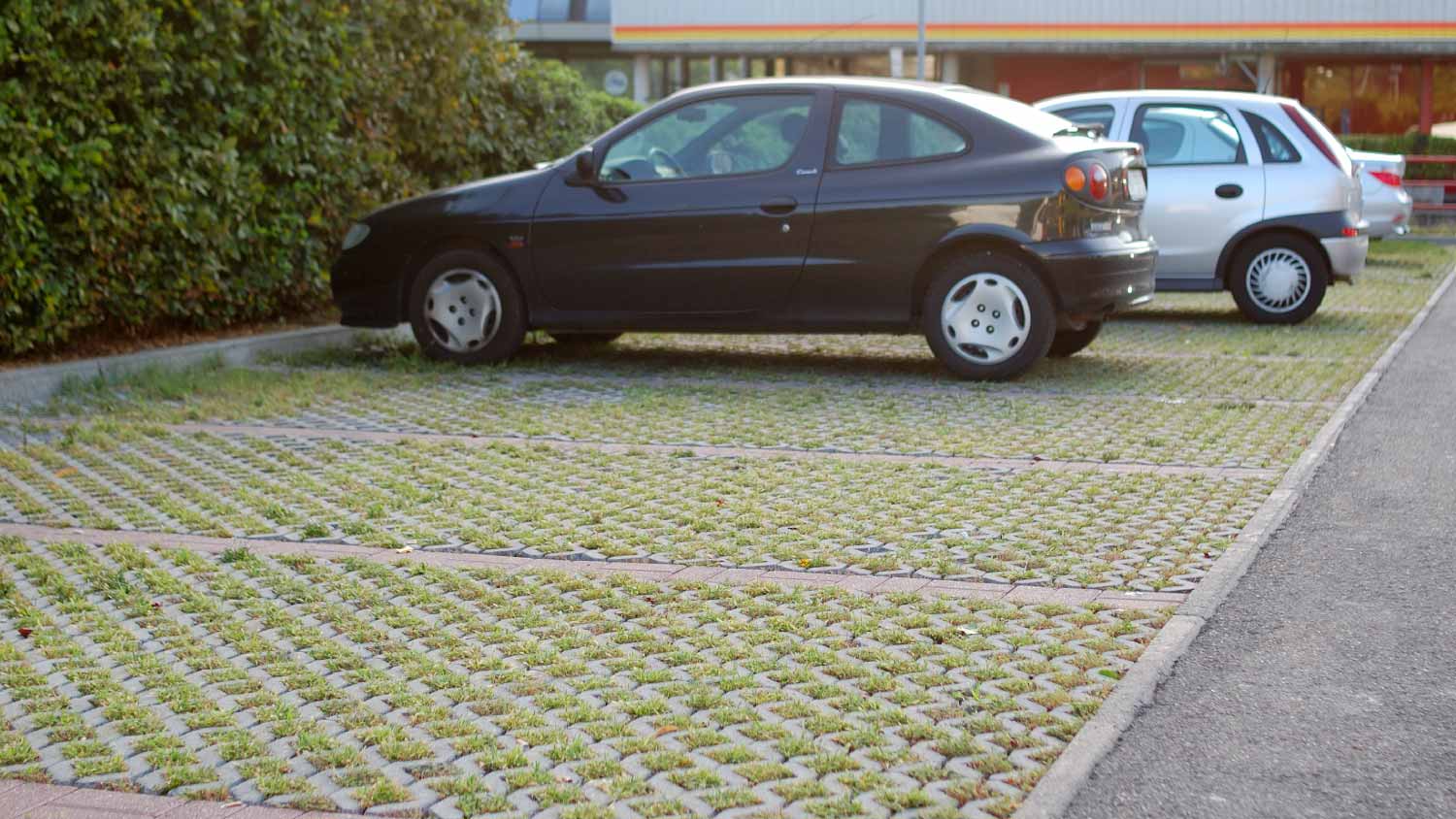
If you're designing a new patio in an area with poor drainage, permeable pavers made from porous materials may help prevent water issues. Most permeable pavers feature a gravel-only aggregate base instead of a concrete base to allow water to flow through instead of getting trapped. While beneficial in some cases, permeable pavers come with higher initial costs and greater load-bearing limitations compared to traditional pavers.
The Pewee Valley, KY homeowners’ guide to paving services

From average costs to expert advice, get all the answers you need to get your job done.