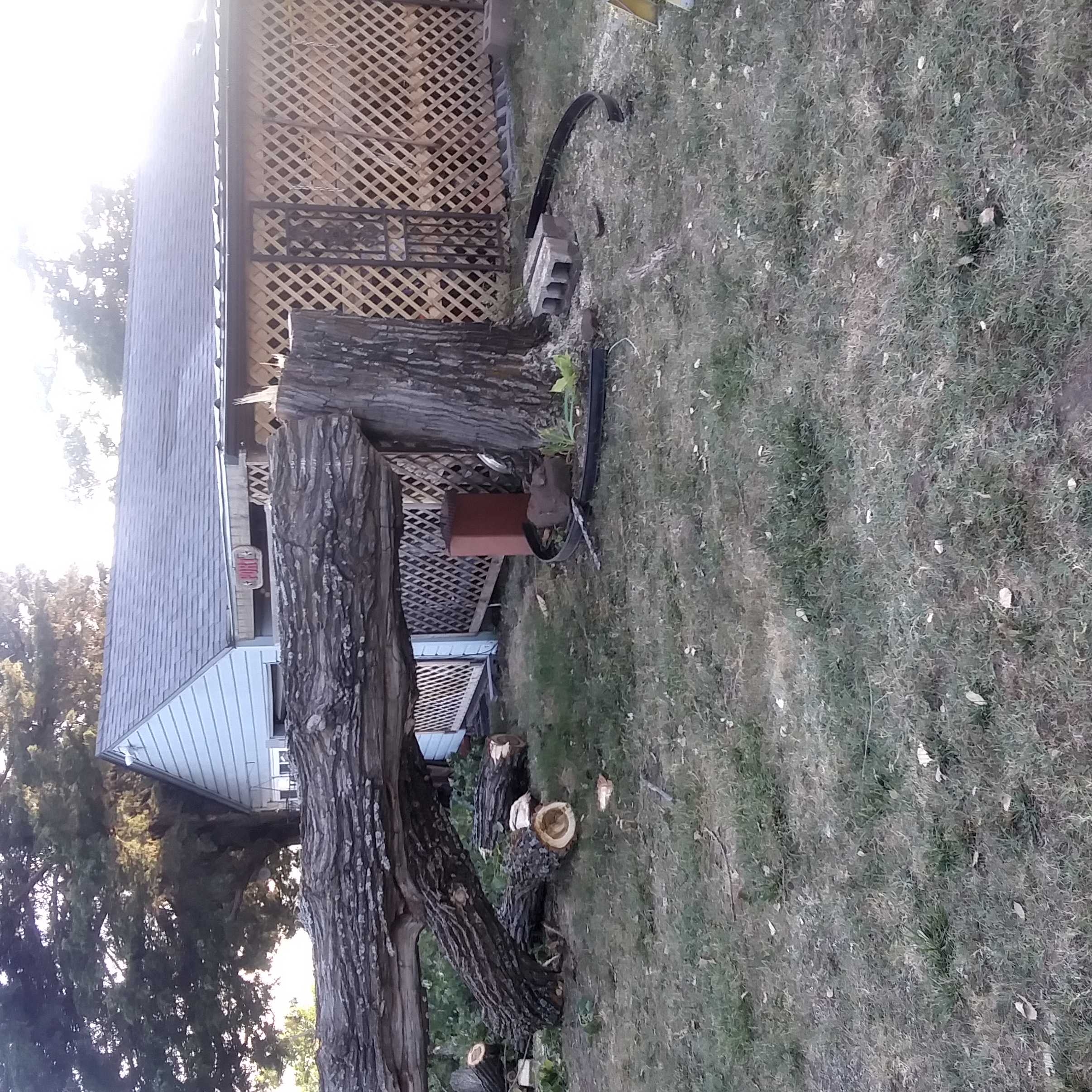
"Called Mr. Frazer on a Saturday and left a message of what I needed done. Talked to my wife and we decided we needed something different done when I left orginal message. Called him back to leave another voice mail but he answered the phone and said he could come down now and give estimate in which he did, I agreed to price and he said he would be here Tuesday. Crew showed up, took out the one tree and then went on trimming other tree. Did an EXCELLENT job, in fact trimmed the tree a lot better then I expected. Cleaned it all up. Will use the service again, and highly recommend to anyone that needs tree work done.
"Some service was performed. I was quoted for two trees at a total of $500. They took care of the one that was on our house. But they said they would be back to pick up the stump and to finish the other tree. that was about Three weeks ago."
Ron's Tree Service is a locally owned and operated business since 2005 with a combined product knowledge spanning over the last 12 years. Able to help you with all your home's tree and lawn needs. \n
Customer service and honesty are the most important aspects of our business and your satisfaction is always guaranteed. Please call us today for an estimate. We look forward to working with you.
We are a locally owned and operated company with over 19 years of industry experience. We value honesty and integrity in all aspects of our business. We offer services that are customizable to each individual project. We specialize in both residential and commercial tree removal and tree trimming. We are disaster register and FEMA trained. All crew have attended and completed saw school and safety training. One of out technicians is an EMT and two others are fire fighters. \nWe pride ourselves on the quality of our work as well as our commitment to outstanding results. We look forward to building lasting relationships with our clients and guarantee your satisfaction! \n\n\n\n
"When I first contacted solar installers, they asked for two items: address of my property a digital copy of my utility bill From my address they can survey the property using Google Maps. They use the satellite view to assess whether I have enough area on my roof to install an adequate number of solar panels, and whether the roof is unobstructed most of the day (by other buildings, trees, etc). Using my electric bill, they can assess my monthly payment and electricity usage. Once they size a system for me, they can then estimate my monthly savings. If this savings meets or exceeds the payment I will make for financing the solar panels, they consider the project to be economically worthwhile, and move forward with a proposal. Once a proposal was ready a sales rep from our installer visited my home, told us what we could expect and asked us to sign papers. Once signed, they were able to schedule installation, which was completed in under two months. The financing we signed was designed to avoid out-of-pocket costs. Payments were waived for the first three months, anticipating that the solar panels would not be ready before then. We were allowed to hold the full balance for up to 15 months, then the finance company expected a large payment approximately equal to the federal tax credit. Then monthly payments would continue to apply to both interest and principal, with the intent that monthly payments would not exceed the savings in electric power. It was structured as a 15-year loan, although we paid ours in full after 2 years, since the interest rate was fairly high (nearly 6%). On installation day a crew of 4 men arrived with a truck. They prepared my roof for mounting hardware, dug a trench for electrical conduit (needed for DC wiring from my detached garage), mounted the power inverter on the outside wall of my home, installed panels, wired up everything and tested. The whole installation needed about six hours to complete. Post installation, the company scheduled a city inspection. An electrical inspection and building inspection were both needed to verify the installation complied with building codes. The last step was for our electrical company to visit, test the system, install a new power meter, and begin our net metering service. In our state, we are credited for excess power that flows into the grid at the same rate as power we use from the grid. So we pay only for the “net” power we use (this is commonly known as “net metering”). Our monthly utility bill shows our inflow, outflow, how much we pay for our net usage (if any), or if we generate excess power for the month, how much we bank for later use. In the first full year, the system generated about 5,000 kWh of electricity, worth about $750 at typical electrical rates in our region. We paid $20k for the system, of which a third was refunded to us on our federal taxes (applying a credit for new solar generation capacity), so we financed around $13k. It would take 17 years to break even, assuming the system does not lose efficiency. However the solar panels add to the home’s value, so we would probably replace much of our investment if we choose to sell the home in 5–10 years. At our latitude, winter days are short (about 8 hours at the solstice) and the sun is at a lower angle in the sky, limiting daily generation to about 8 kWh when sunny. But in the summer, our days are nearly 16 hours, and we see close to 30 kWh generated on a sunny day. Fortunately peak generation also corresponds to our peak usage (due to air conditioning) so we pay little electricity in summer months. Here is a monthly breakdown I estimated for 2018 based on actual meter readings: In May we had an excess of power (before the days became hot enough for A/C). September was our peak usage. Our electricity costs for the year were under $600. In summary: Was the project a financial slam-dunk? Not really. In the long term it will pay for itself, but the savings are not enormous. Would we do it again? Absolutely, it feels good to have clean, renewable power at home, that we can generate ourselves, and be at least partly free from the electrical grid."
We take great pride in our experience, expertise, quality, and customer service that we provide to meet the consumers needs. It is our mission to provide excellent workmanship and complete customer satisfaction from start to completion of a project. In order to understand the needs and expectations of our customers, we take great care to work and communicate with every customer in a professional manner. Our reputation is based on service, safety, and quality, regardless of how large or small the job.
JD landscaping is committed to excellence in every aspect of our business. We uphold a standard of integrity bound by fairness, honesty, and personal responsibility. Our distinction is the quality of service we bring to our customers. Accurate knowledge of our trade combined with ability is what makes us true professionals. Above all, we are watchful of our customers' interests, and make their concerns the basis of our business.\n
We take great pride in our experience, expertise, quality, and customer service that we provide to meet the consumer's needs. It is our mission to provide excellent workmanship and complete customer satisfaction from start to completion of a project. In order to understand the needs and expectations of our customers, we take great care to work and communicate with every customer in a professional manner. Our reputation is based on service, safety, and quality, regardless of how large or small the job.
It takes anywhere from three to seven years for a stump to decompose on its own. This timeframe can depend on the kind of tree and your climate. The lower to the ground the stump is, the faster it rots. If you kill a tree stump with salt, boiling water, herbicide, light deprivation, or burning, the tree stump decomposes faster.
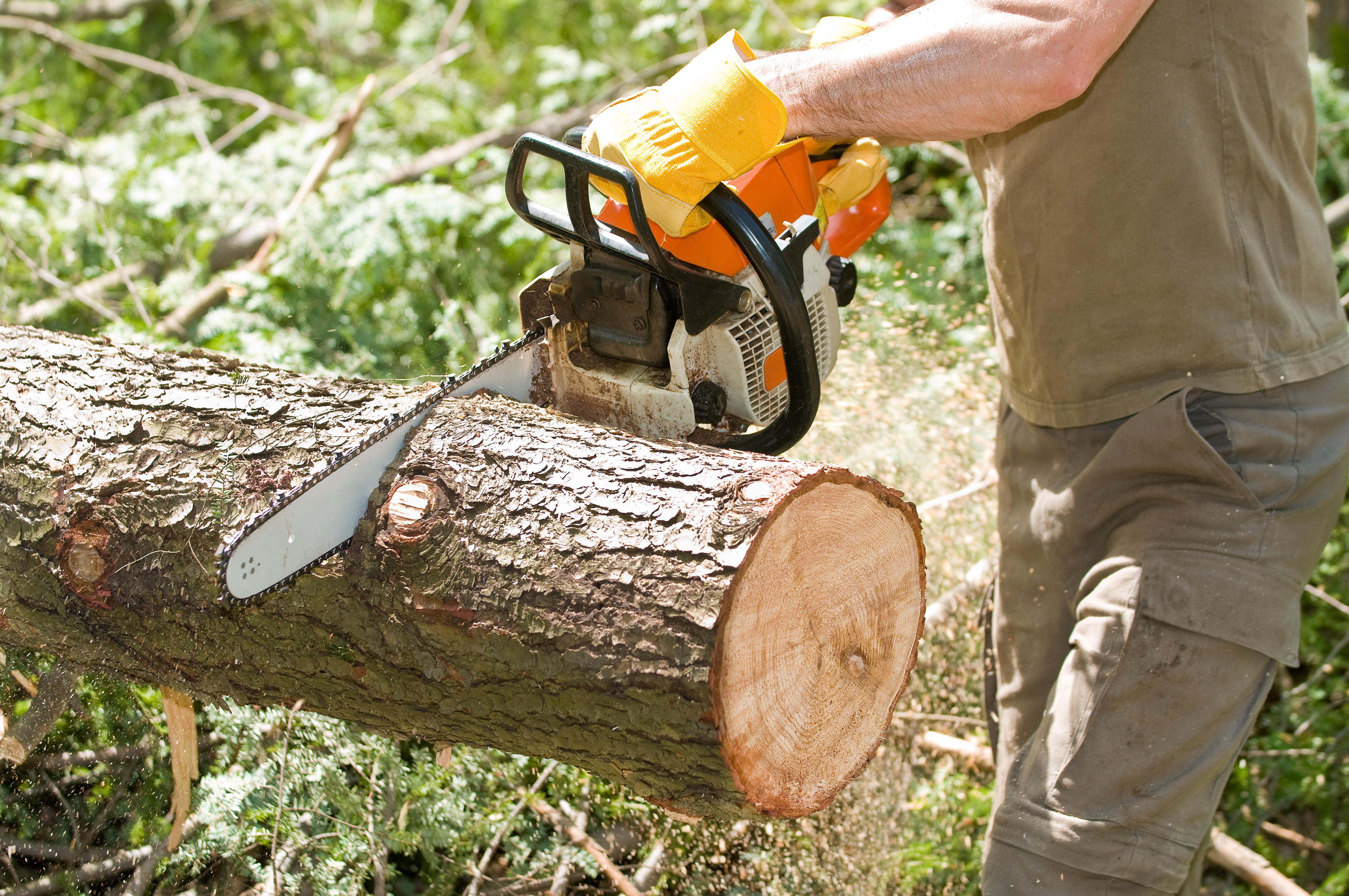
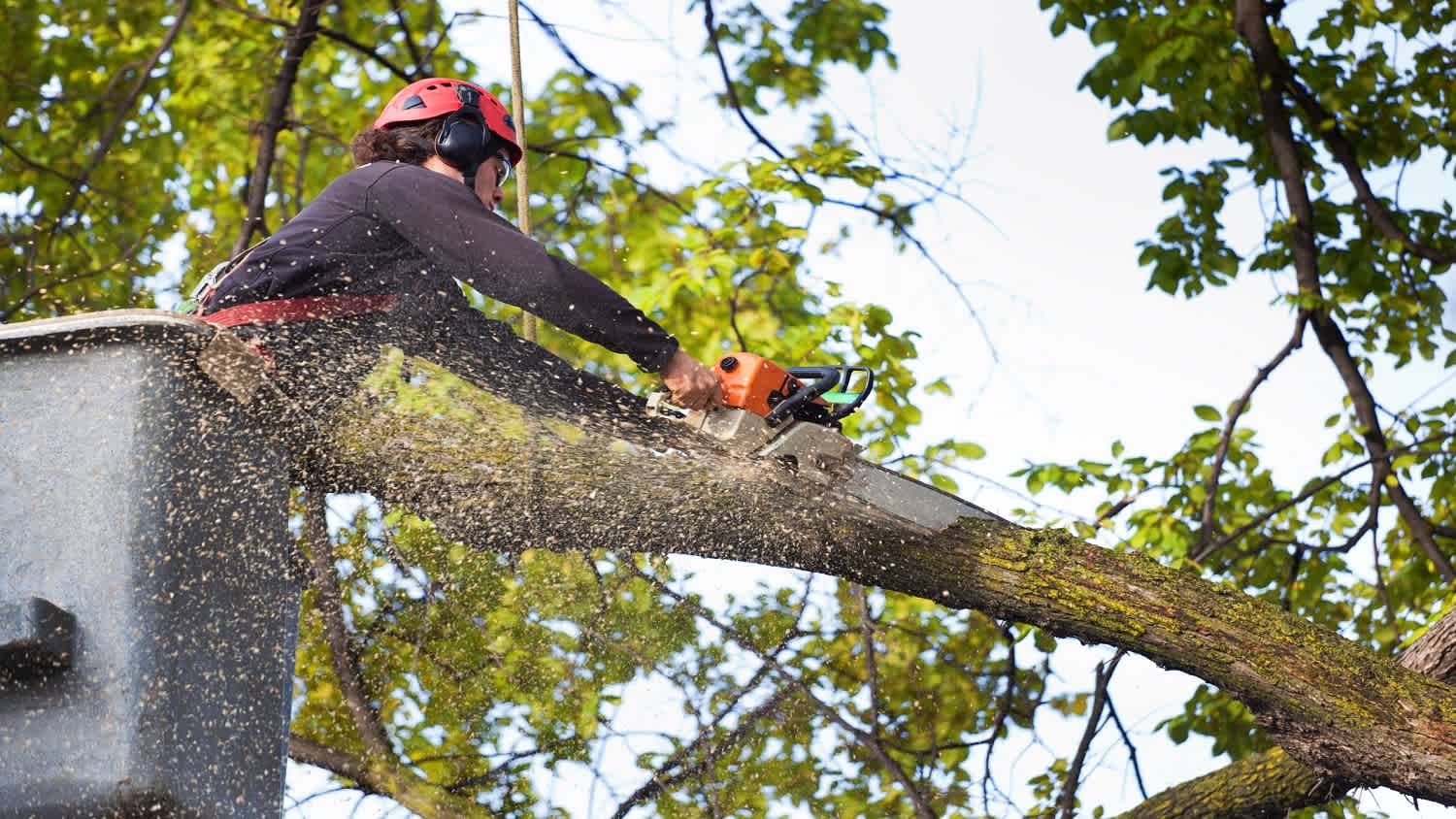
The best tool to cut trees is a chain saw. You can adjust your chain saw to the correct size based on the size of the branches, offering you the fastest and cleanest cut for medium- to large-sized trees. Depending on the type of chainsaw you use, you can cut through larger trees than you would with a more manual tool like an ax.
It’s not as common for Dutch elm disease to affect other types of trees, especially if the surrounding trees aren’t elms. However, it is possible for DED to spread to other trees, particularly in northern states, like Minnesota. In fact, it’s a good idea to use geography to identify wood and determine which types of trees are in your yard.
Unfortunately, the complex and shallow root system of elm trees makes surrounding elm trees particularly vulnerable to DED. Early discovery is key!
The fastest ways to remove a tree stump are by grinding it or burning it.
Stump grinding is often the quickest method, with professionals able to chip away a stump and its roots within a single session. You have the option to hire a professional stump removal service or rent a stump grinder to do it yourself. However, it's important to note that these machines can be large, difficult to transport, and dangerous to operate without prior experience. For safety reasons, hiring a local arborist or landscape specialist is often recommended.
Burning is another fast option. Before you begin, check your local burn laws. The process involves drilling holes into the stump, filling them with vegetable oil, and waiting 24 to 48 hours. Afterward, you can add charcoal bricks to the surface and light the fire, which must be attended at all times.
For a more affordable but much slower alternative, you can use potassium nitrate pellets to accelerate the natural decomposition process. This method typically takes four to six months.
Ideally, you should wait to prune until trees have gone dormant in late fall to early winter. The worst times to prune trees are early fall and late summer, as pruning them so close to dormancy makes it difficult for the tree recover before it goes dormant for the season.
The Anthony, KS homeowners’ guide to tree services
From average costs to expert advice, get all the answers you need to get your job done.
If you're dreaming of rocking around your—professionally decorated—tree this season, this is how much a Christmas tree decorating service will cost you.
How much does an arborist cost? This guide explains the cost of different services, ongoing expenses, and other factors to consider when hiring an arborist.
Get a clear estimate of palm tree maintenance cost, including trimming, fertilization, and pest control, so you can keep your palms healthy and your budget on track.
You suspect that the leaning oak tree in the back needs to come down, but can you just handle it yourself? Here are the pros and cons of calling a tree service.
Are there insurance requirements for tree services? Whether you’re having your trees trimmed or finally removing that old oak from your front yard, you’ll want to make sure your tree company or contractor has these two types of insurance, at minimum.