






Top-rated radon detection and reduction specialists.

Get matched with top radon detection and reduction specialists in Oxford, IN

Enter your zip and get matched with up to 5 pros

Need a pro for your radon detection and reduction project in Oxford, IN?

Select your specific project to find the pro for you.

Find Radon detection and reduction specialists in Oxford

Avatar for HomeTeam Inspection Service of Northwest Indiana
HomeTeam Inspection Service of Northwest Indiana
5.0(
13
)
Radon Gas - Testing

Serving Oxford, IN and surrounding areas

Approved

In business since 2020

Emergency services offered

Warranties offered

We bring years of expertise and dedication to every project. With a strong background in customer service and technical proficiency, we prioritize delivering top-notch results that exceed expectations. Our commitment to continuous learning ensures that I stay updated with the latest industry trends and best practices. Whether it's troubleshooting complex issues or providing routine maintenance, we approach each task with precision and professionalism. Our goal is to build lasting relationships with clients based on trust, reliability, and exceptional service delivery.\n

4 neighbors recently requested a quote
Recommended by100%of homeowners
Swat Group, Inc.
4.4(
152
)
Radon Gas - Abatement

Serving Oxford, IN and surrounding areas

In business since 1988

Free estimates

Credit card accepted

"I wanted to have the fan for a Radon mitigation system installed in the attic area above my garage, but knew that access from my basement to the garage would require routing of the mitigation pipe above a dropped ceiling in the finished portion of my basement. Only two of the four companies that I'd contacted were willing to quote a garage attic fan installation, and SWAT Environmental's quoted cost was lower than that of their competitor. As a consequence, I suggested that SWAT send a representative to review my installation to ensure that the cost that they'd quoted for a garage attic fan installation wouldn't need to be adjusted. SWAT's representative, Jayme, arrived at my home at the scheduled time, reviewed the installation and agreed that a garage attic fan installation could be accomplished for the quoted price, but indicated that I'd have to call the office to schedule an appointment because his schedule (and those of other installers) was already booked. I called and was able to schedule an appointment for Jayme to perform an installation a couple of weeks later. Despite a later than expected arrival, Jayme was able to complete the majority of the installation (pipe routing, wiring and fan installation) before he had to leave. He returned to complete the installation (cover and seal the sump pump pit) about a week later when a second appointment could be scheduled. I initiated the post-mitigation Radon level test with the kit that had been left with me a week after the mitigation installation was completed and ran the test for five days. The report from the test lab indicated that the radon level in the "living space" area of my basement had dropped from a high reading of 8 pCi/L (in pre-mitigation tests) to 1.2 pCi/L and this post-mitigation value was confirmed by comparison with a Radon monitor that I'd purchased through amazon.com that indicated a "long-term average" of 1.24 pCi/L for the same five days. It's apparent that the Radon mitigation effort in my home was successful. I'd have no concerns about recommending SWAT Environmental to others for Radon mitigation."
Response time1 day
Recommended by94%of homeowners

Radon Detection and Reduction questions, answered by experts

Radon enters your home when warm air begins to rise and exits through the roof, creating a vacuum that pulls cooler air from under the foundation. Part of that air is radon, which is an invisible, odorless gas that develops naturally when radioactive particles are deep within the ground. Those particles usually come from decaying matter in soil and rocks.

No level of radon is technically safe, but since it is present everywhere, complete avoidance is impossible. The average radon level in homes across the United States is 1.3 picocuries per liter (pCi/L). The Environmental Protection Agency (EPA) recommends taking preventative measures if your home's radon levels are between 2 and 4 pCi/L or higher.

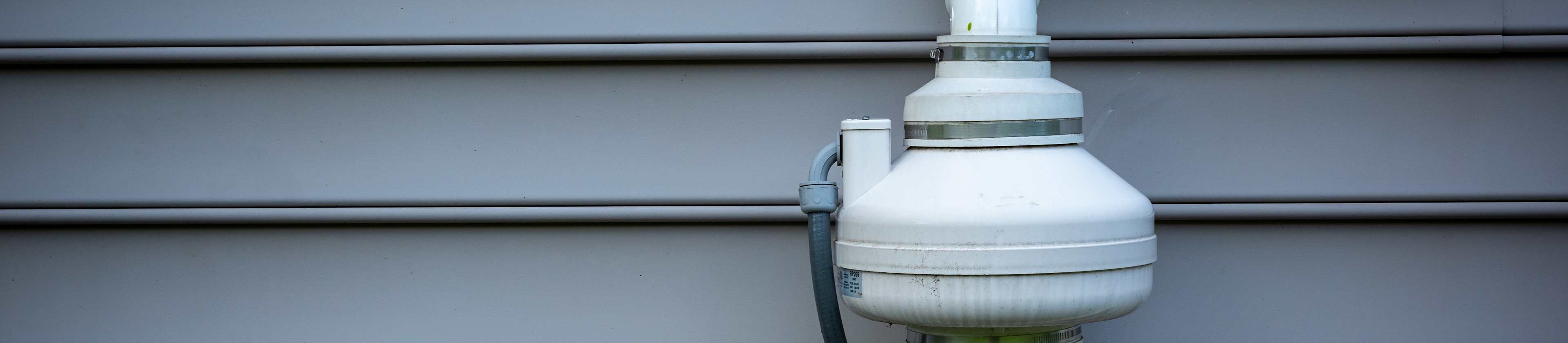
Your radon mitigation system may be loud because it’s time to replace it. Any sounds are usually from the inline fan that helps create the vacuum and resulting airflow. If you hear a new, loud mechanical or humming noise from your radon fan, it might be time to replace it. Most fans used in radon mitigation systems last up to 10 years, but may need to be replaced sooner.

A homeowner can install a radon mitigation system on their own. But it’s a challenging DIY that requires a lot of knowledge about radon mitigation as well as familiarity with local regulations. You do not want to risk an improper installation that leaves the system unable to detect radon or gives it a shortened life span. Relying on a professional is the surest way to guarantee a successful installation.

Long-term exposure increases lung cancer risks. Prolonged homestay individuals and smokers encounter heightened vulnerability and exposure concerns.

The Oxford, IN homeowners’ guide to radon detection and reduction services

From average costs to expert advice, get all the answers you need to get your job done.



