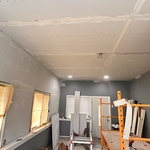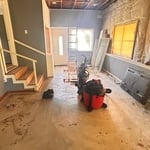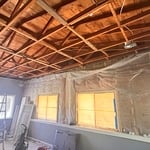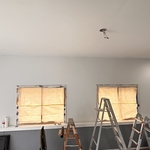

Top-rated drywall pros.

Get matched with top drywall pros in Newburgh, IN

Enter your zip and get matched with up to 5 pros

Need a pro for your drywall service project in Newburgh, IN?

Select your specific project to find the pro for you.

TRUSTED BY NEWBURGH, IN HOMEOWNERS

  • Average homeowner rating star icon4.7
    Average homeowner rating
  • Verified reviews icon55
    Verified drywall services reviews

Find Drywall pros in Newburgh

Avatar for B&W Handyman Service
B&W Handyman Service
4.5(
8
)
Drywall - Repair

Serving Newburgh, IN and surrounding areas

Approved

Super Service Award Winner

In business since 2024

Free estimates

Credit card accepted

"B&W Handyman was great to work with today. I received prompt and regular communication and was given flexible options on when to get my work done. He arrived promptly and worked efficiently. He gave me a clear budget before the work was completed and stuck to it. I am very happy to have my new garage shelves installed and trust the safety of them as well."
Response time2 days
30 neighbors recently requested a quote

Firm Foundation Creating Spaces
New to Angi
Drywall - InstallDrywall - Repair

Serving Newburgh, IN and surrounding areas

Approved

Free estimates

Small jobs welcome

My wife and I with the help of a few friends designed and built our log home. We have since, remodeled a house built in 1895 back to original as much as possible. We also pastor a church in our town. We are all about the restoration process. I love taken a space and creating something new, fresh, and with purpose and life. To take a space and make it useable once again. We love working with clients that want to see transformation. The clients vision and input is so important and we will implement every possible detail they desire.

Daniel Wallace
New to Angi
Drywall - InstallDrywall - Repair

Serving Newburgh, IN and surrounding areas

Approved

I’m a hardworking person who doesn’t like to leave projects half finished or looking sloppy, I can be a bit of a perfectionist. I’ve always fixed and built almost everything I needed myself and I take pride in being self sufficient. I’ve been an electrician for a year and half now and before that I was fabricating aerators for private residences. I have a wife and two children, so I can handle the chaos of a whole house remodel even if you decide to alter any details halfway through.

...
Showing 1-10 of 117
Drywall questions, answered by experts

The two most common drywall thicknesses for ceilings are 1/2-inch and 5/8-inch. For most standard residential applications, 1/2-inch drywall is sufficient and widely used. It provides adequate support and is lighter and easier to handle during installation compared to thicker sheets. However, 5/8-inch drywall is often used for specific cases where additional benefits are needed. It is heavier but provides superior sound dampening and fire resistance. You should consider using 5/8-inch drywall for ceilings in commercial buildings, between a garage and a living space, or above a finished basement to meet building codes or for enhanced soundproofing.

Although they have similar applications, spackle and joint compound are not the same. Their primary differences lie in their composition, consistency, and ideal use cases.

Spackle is composed of gypsum and binding agents, making it thicker than joint compound. It dries quickly and is easy to sand, which makes it ideal for small wall repair projects like filling nail holes or patching minor damage.

Joint compound, also known as drywall mud, consists of limestone and gypsum. It is primarily used for large-scale projects, such as taping and finishing the seams on newly installed drywall. It tends to shrink more than spackle and can be more difficult to spread.

While both products can be used to fill small depressions and cracks, spackle cannot replace joint compound for taping and mudding new drywall. Conversely, you can often use joint compound for small patching jobs typically done with spackle.

While every home has its own unique needs, ceiling drywall installation typically follows a staggered or stepped pattern to enhance structural integrity and reduce the visibility of seams. Starting from one corner, sheets are placed perpendicular to the ceiling joists, with the ends of adjacent sheets meeting along the center of the joist. The next row begins with a half sheet, ensuring joints don't align vertically. This alternating pattern, combined with proper taping and mudding, creates a seamless appearance and strengthens the ceiling structure, minimizing the risk of cracks over time.

There is no way to cut drywall without making dust, but you can reduce the amount of dust and especially the dangerous airborne particles by using manual cutting tools. Using a utility knife to score and snap your drywall will minimize dust production, and a jab saw for cutting cutouts for boxes and fixtures will generate almost no airborne dust. Even if you use these methods, you should still wear a respirator and safety goggles to avoid damage to your lungs and eyes.

Yes, it is possible to rewire a house without removing the drywall, but this doesn’t work in all homes. You can pull out old wires and insert new ones if you have access to the wiring system via the ceiling or through a crawl space. Some pros can also use a magnetic kit to fish the old wire out of the wall through a hole cavity and install the new wires. Just keep in mind that doing this is less stable than removing drywall, as you won’t be able to staple the wires into the framing.

The Newburgh, IN homeowners’ guide to drywall services

From average costs to expert advice, get all the answers you need to get your job done.