



Swat Group, Inc.
Radon Gas - Abatement
Serving New Harmony, IN and surrounding areas
In business since 1988
Free estimates
Credit card accepted
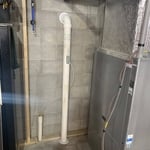
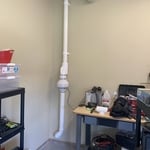
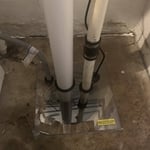
"I wanted to have the fan for a Radon mitigation system installed in the attic area above my garage, but knew that access from my basement to the garage would require routing of the mitigation pipe above a dropped ceiling in the finished portion of my basement. Only two of the four companies that I'd contacted were willing to quote a garage attic fan installation, and SWAT Environmental's quoted cost was lower than that of their competitor. As a consequence, I suggested that SWAT send a representative to review my installation to ensure that the cost that they'd quoted for a garage attic fan installation wouldn't need to be adjusted. SWAT's representative, Jayme, arrived at my home at the scheduled time, reviewed the installation and agreed that a garage attic fan installation could be accomplished for the quoted price, but indicated that I'd have to call the office to schedule an appointment because his schedule (and those of other installers) was already booked. I called and was able to schedule an appointment for Jayme to perform an installation a couple of weeks later. Despite a later than expected arrival, Jayme was able to complete the majority of the installation (pipe routing, wiring and fan installation) before he had to leave. He returned to complete the installation (cover and seal the sump pump pit) about a week later when a second appointment could be scheduled. I initiated the post-mitigation Radon level test with the kit that had been left with me a week after the mitigation installation was completed and ran the test for five days. The report from the test lab indicated that the radon level in the "living space" area of my basement had dropped from a high reading of 8 pCi/L (in pre-mitigation tests) to 1.2 pCi/L and this post-mitigation value was confirmed by comparison with a Radon monitor that I'd purchased through amazon.com that indicated a "long-term average" of 1.24 pCi/L for the same five days. It's apparent that the Radon mitigation effort in my home was successful. I'd have no concerns about recommending SWAT Environmental to others for Radon mitigation."
Response time1 day
Recommended by94%of homeowners