




Top-rated paving pros.

Get matched with top paving pros in Hanover, IN

Enter your zip and get matched with up to 5 pros

Need a pro for your paving service project in Hanover, IN?

Select your specific project to find the pro for you.

Find Paving pros in Hanover

Avatar for Verde Care Lawn
Verde Care Lawn
5.0(
4
)
Interlocking Pavers for Patios, Walks & Steps - Install

Serving Hanover, IN and surrounding areas

In business since 2021

Free estimates

"Performed bid same day of request, job was scheduled within 48 hrs, they arrived at the time communicated and took care of all requested and then some. Excellent workmanship; very kind people, hard workers and amazing prices! Yeniel and his team were great!"
Mulch
Landscaping Project
Mulch
Landscaping Project
Mulch

+31

Recommended by100%of homeowners
Avatar for Countryside
Countryside
5.0(
5
)
Interlocking Pavers for Patios, Walks & Steps - Install

Serving Hanover, IN and surrounding areas

In business since 2008

Emergency services offered

Credit card accepted

"It went very well! They were fast, clean and friendly. They went above and beyond to give us the landscape of our dreams. I would reccomend them to anyone. Their pricing is very affordable. We will definitely be having them do more work for us in the future!"
Additional Photos
Additional Photos
Additional Photos
Additional Photos
Additional Photos

+4

Recommended by100%of homeowners

Showing 1-10 of 46
Paving Services questions, answered by experts

Wet cutting is usually the preferred method. It controls dust, which helps protect your lungs and makes for a cleaner working environment. Plus, the water cools the blade, preventing overheating and prolonging its life while providing smoother, more precise cuts. The downside is the mess—water and asphalt sludge can be messy to clean. Dry cutting, though convenient if water isn’t available, creates a lot of dust, which can be harmful. This also increases the risk of blade damage due to overheating. So, if you have the option, wet cutting is the better method for most asphalt jobs.

Asphalt and tarmac are not the same thing. Traditional tarmac, short for tarmacadam, uses tar as a binder to hold crushed stone together. Asphalt uses bitumen—a byproduct of crude oil—to bind aggregate. Though tarmac was once a go-to for roads, asphalt has become the modern standard. And these days, most surfaces referred to as “tarmac” are actually asphalt. So, while the names may overlap, the key distinction lies in the binder—tar for tarmac and bitumen for asphalt.

Yes, you should lightly wet the sand with a hose before laying the pavers on top. This activates the bonding agents in the sand, ensuring that your pavers don’t shift around during the installation process. However, you should make sure that the sand is not soaked; overwatering can cause the sand and pavers to not set properly.

One advantage of selecting a resin bound driveway over concrete or asphalt is that homeowners have a variety of colors to choose from. Manufacturers customize aggregate materials, so customers can choose browns, golds, greens, blues, reds, and blacks. Some manufacturers also offer metallic shades.

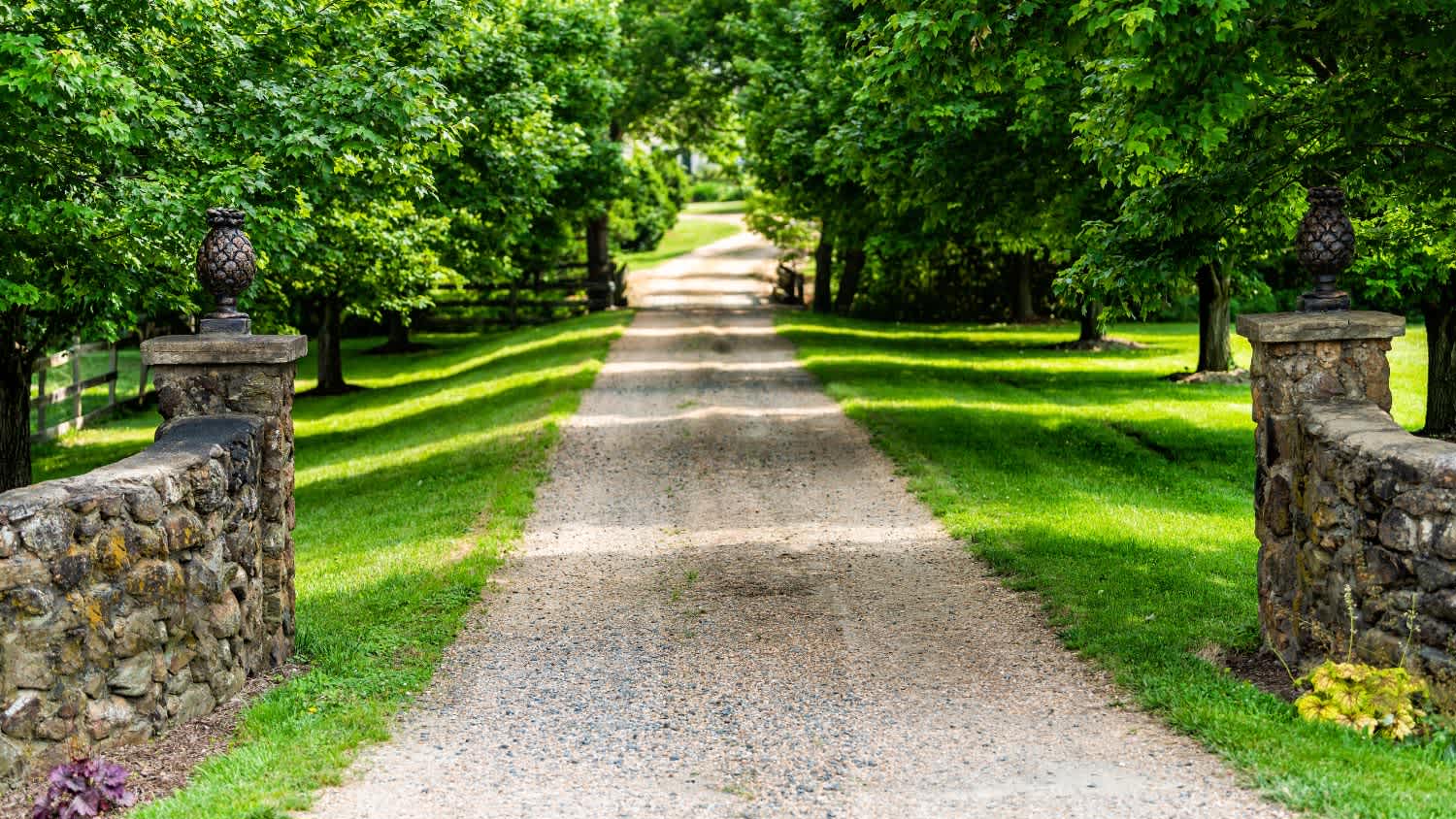

Maintaining a driveway depends on its material. For concrete and asphalt, it's best to clean the surface thoroughly twice a year with a stiff broom and a pressure washer to remove accumulated dirt and debris. Sealing the driveway is crucial to protect it from water damage and freeze-thaw cycles. Before applying a sealant, pressure wash the surface to remove any loose sealant, dirt, or stains, as sealing over them will trap them. Any cracks or expansion joints should be filled with a flexible polyurethane caulk or asphalt sealer. In colder climates, use sand instead of salt for de-icing. Sand helps melt snow and ice without accelerating the freeze-thaw process, which can cause cracks.

The Hanover, IN homeowners’ guide to paving services

From average costs to expert advice, get all the answers you need to get your job done.