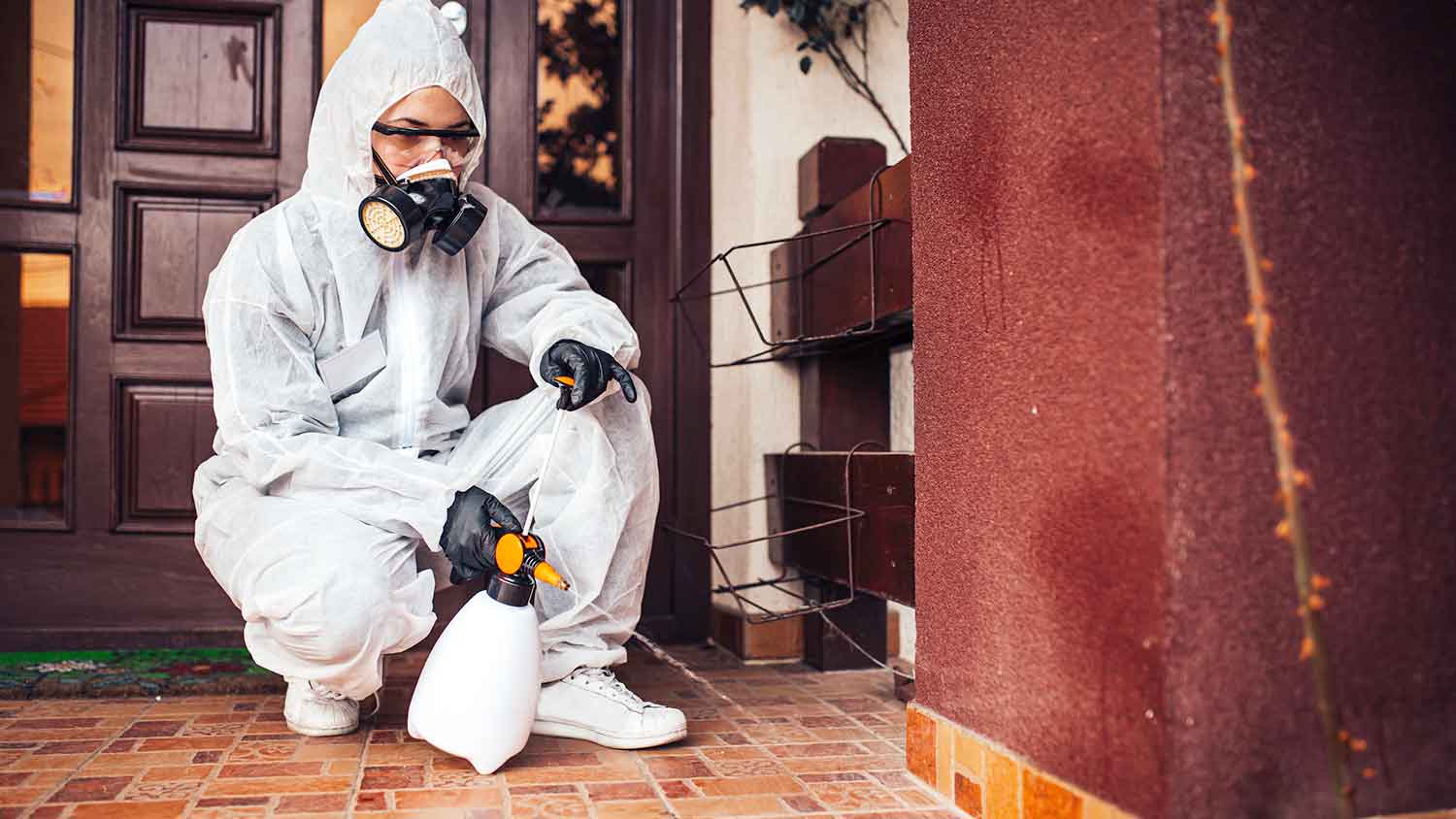
When pests show up, so do we.\n\nFor nearly a century, Terminix® has been one of America's most trusted names in pest control. Every day, our exterminators serve thousands of homes and businesses nationwide, combining national service with local knowledge to provide best-in-class, proactive pest management solutions. We stop problems before they start and respond quickly if issues arise, keeping your property protected.\n\nAnd for extra peace of mind, if pests come back, so do we — guaranteed.\n\nThe Terminix It Guarantee means that if pests come back, so do we, to re-treat at no additional cost. No excuses, just a commitment to care for your home like it's our own with protection you can trust.
"Communicated with us clearly and timely. Professional, experienced. Bought a package to help control any pests year round. Great pricing, offered to come back soon if any problems exsisted. I like that! Dan was a great person to deal with."
"I have a contract with them so I have to use them again. It pays for itself eventually if you get good repair people. You don't control who they send."
Wasps don’t sleep in, but they are relatively inactive at night, sticking to the confines of the nest, in what’s known as a dormant state. Additionally, female wasps hibernate throughout the winter. That’s why evenings are the best time of the day to attack wasp nests.
Some suggest mothballs as a deterrent for iguanas, but they are ineffective and harmful. Mothballs contain chemicals like naphthalene or paradichlorobenzene, which are toxic to humans and animals, including iguanas. The fumes can cause respiratory problems, skin irritation, and other health issues. Moreover, using mothballs outdoors is not recommended, as they contaminate soil and water sources.
Roof rats can carry a variety of pathogens and parasites, including salmonellosis (food contamination), leptospirosis, trichinosis, rat-bite fever, murine typhus, plague, and toxoplasmosis. Diseases can be spread via urine, droppings, or saliva. To prevent transmission, it’s essential to promptly address a roof rat infestation and avoid direct contact with the animals where possible.
No, wasps only attack when they feel threatened. A sting may seem unprovoked to us, but we likely got too close to a nest. Threatened wasps do, however, send out a strong pheromone that instantly attracts any other wasps in the area.
Carpenter ants don’t eat wood. It’s a common misconception because many kinds of termites eat wood as well as live inside it. Carpenter ants, however, are omnivores and only chew into wood to create pathways and nests, discarding the chewed wood as frass which is a major indicator of a carpenter ant problem. They prefer to eat smaller insects, sweet things like spilled honey, and sources of protein like pet food.
The Lovington, IL homeowners’ guide to pest control services
From average costs to expert advice, get all the answers you need to get your job done.
You’re not alone if you’re hoping to avoid harmful pesticides around your home to keep out pests. Here’s what you need to know about green-friendly pest control.