


Top-rated excavation pros.

Get matched with top excavation pros in Fulton, IL

Enter your zip and get matched with up to 5 pros

Need a pro for your excavation project in Fulton, IL?

Select your specific project to find the pro for you.

Find Excavation pros in Fulton

Avatar for Ground Line Company, LLC
Ground Line Company, LLC
5.0(
3
)
Excavation - Major Grading or ReslopingExcavation - Major Grading or Resloping - For BusinessLandscape - Minor Grading or Resloping

Serving Fulton, IL and surrounding areas

Approved

In business since 2024

Free estimates

"I highly recommend Ground Line Company for any excavation or utility prep work. I’ve partnered with them on multiple jobs, and their attention to detail is top-tier. They are precise with their depths and layouts, which is critical for electrical inspections and code compliance."
Tree Clearing
Tree Clearing
Tree Clearing
Grading
Response time6 hrs
Response rate100%
2 neighbors recently requested a quote
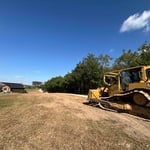
Willowbrook Drainage & Excavation
New to Angi
Building Site - Preparation and ClearingBuilding Site - Preparation and Clearing - For BusinessExcavation - Major Grading or Resloping+2 more

Serving Fulton, IL and surrounding areas

Approved

In business since 2021

Free estimates

Emergency services offered

At Willowbrook Drainage & Excavation we pride ourselves on being the best home improvement company in the Kent area. We've built an excellent reputation for customer satisfaction by providing quick estimates, a great attention to detail, and competitive pricing. Being a screened and approved professional gives you the peace of mind you need to allow us to give your home the attention it deserves. Call us today and let's get started!\n

4 neighbors recently requested a quote
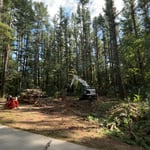
Avatar for McDonagh & Sons Plumbing & Sewer Inc
McDonagh & Sons Plumbing & Sewer Inc
4.1(
69
)
Building Site - Preparation and ClearingBuilding Site - Preparation and Clearing - For BusinessExcavation - Major Grading or Resloping+2 more

Serving Fulton, IL and surrounding areas

In business since 2010

Free estimates

Emergency services offered

"Provider was prompt, professional and friendly.  Arrived at the agreed upon time for a free estimate and performed work same-day after we agreed to the price.  He stuck to the price despite taking longer than expected and more work than usual due to worn-rusted pipes in my home.  Cleaned-up after himself and left no sign that work was done other than our new, working toilets.  We are very pleased and reccomend McDonagh & Sons Plumbing & Sewer Inc.


"
Recommended by96%of homeowners
Showing 1-10 of 29
Excavating questions, answered by experts

The best way to protect tree roots is to avoid the roots entirely by excavating outside the root radius of the tree. For nearby projects, it’s a good idea to construct a temporary retaining wall. But that’s not always possible, depending on the project and the root system. In these cases, consider using alternative equipment like an auger to tunnel under the ground.

Remember, tree roots can damage nearby cement foundations as they grow. If a tree is close enough to interfere with large excavations, it may be better to remove the tree than risk future problems.

Excavation is priced in cubic yards, so you’ll need to find the volume of the area in order to calculate costs. Multiply the length, width, and proposed depth of your excavation site, then convert it into yards to get the volume. Multiply this figure by the price per cubic yard.

Most homeowners can measure by hand to get a rough estimate, even if it’s tedious. You may want to pull out a tape measure or use a string to help mark the area.

Hard soil could be a sign of overly dry dirt, either from poor drainage or drought. It's important to test the nutrient levels, density, and drainage capacity of your soil to see if it's absorbing water properly. Begin by adding a light layer of water and observing how long the soil retains moisture. If you experience a good deal of runoff, you may need to aerate your lawn, apply a wetting agent, or hire a professional for a closer look.

Water lines are buried at various depths, depending on the type of line. For example, most sprinkler lines are buried between four and 12 inches underground. On the other hand, water mains usually sit between one and 3 feet below ground. However, they can go even deeper in cold climates to prevent freezing.

A trench that is less than 5 feet deep often doesn't require a protective system. Most residential trenches will not go this deep (the typical residential drainage trench is just 18 inches deep). In the event that an excavator needs to dig more than 5 feet beneath the surface, a protective system is required unless the excavation is in entirely stable rock.

The Fulton, IL homeowners’ guide to excavation services

From average costs to expert advice, get all the answers you need to get your job done.