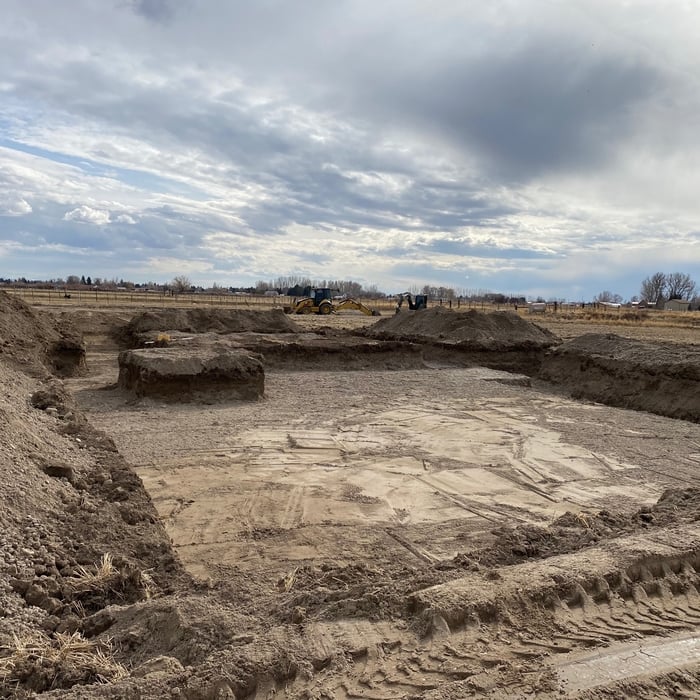

Top-rated excavation pros.

Get matched with top excavation pros in Saint Anthony, ID

Enter your zip and get matched with up to 5 pros

Need a pro for your excavation project in Saint Anthony, ID?

Select your specific project to find the pro for you.

Find Excavation pros in Saint Anthony

Avatar for Shuler Contracting and Excavation LLC
Shuler Contracting and Excavation LLC
5.0(
1
)

Serving Saint Anthony, ID and surrounding areas

Approved

Free estimates

Credit card accepted

Offers commercial services

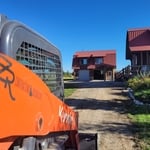
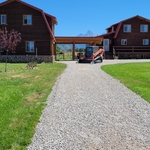
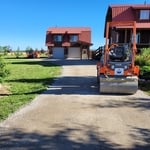
"It was easy to work with incredibly knowledgeable and his craft, set up level, had to take out a retaining wall near my structure was really grateful. He knew exactly what he was doing. Was able to trust the entire process with a large piece of equipment up against the house went flawlessly graded it perfectly level"
Photos
19 neighbors recently requested a quote
The Service Company of Idaho
New to Angi

Serving Saint Anthony, ID and surrounding areas

Approved

In business since 2013

Free estimates

Offers commercial services

We are committed to excellence in every aspect of our business. We uphold a standard of integrity bound by fairness, honesty, and personal responsibility. Our distinction is the quality of service we bring to our customers. Accurate knowledge of our trade combined with ability is what makes us true professionals. Above all, we are watchful of our customers' interests, and make their concerns the basis of our business.

Response time10 mins
Showing 1-10 of 20
Excavating questions, answered by experts

Professional installers often include a deep layer of crushed gravel under permeable pavers to allow more runoff to soak through into the soil below. Many installations will include multiple layers of gravel, with coarser aggregate at the base and finer aggregate that sits on top of that bottom layer. Above the gravel, you’ll often find coarse sand that helps reduce paver shifting over time. Some permeable paver designs include a water collection system set into the gravel layer to route runoff to a safe area for disposal.

The best way to protect tree roots is to avoid the roots entirely by excavating outside the root radius of the tree. For nearby projects, it’s a good idea to construct a temporary retaining wall. But that’s not always possible, depending on the project and the root system. In these cases, consider using alternative equipment like an auger to tunnel under the ground.

Remember, tree roots can damage nearby cement foundations as they grow. If a tree is close enough to interfere with large excavations, it may be better to remove the tree than risk future problems.

You should dig 3 to 6 inches deep for plastic edging. Dig as wide as you need to fit your plastic edging into it—2 inches is usually sufficient.

It’s possible to transplant trees as tall as 50 feet when an experienced tree planting service uses the right equipment. However, a tree with a trunk larger than two or three inches in diameter needs to be handled by a professional in order to yield successful transplanting results. Consulting a tree planting professional is the best way to tell if your large tree can be safely transplanted.

Water lines are buried at various depths, depending on the type of line. For example, most sprinkler lines are buried between four and 12 inches underground. On the other hand, water mains usually sit between one and 3 feet below ground. However, they can go even deeper in cold climates to prevent freezing.

The Saint Anthony, ID homeowners’ guide to excavation services

From average costs to expert advice, get all the answers you need to get your job done.