


Top-rated excavation pros.

Get matched with top excavation pros in Ashton, ID

Enter your zip and get matched with up to 5 pros

Need a pro for your excavation project in Ashton, ID?

Select your specific project to find the pro for you.

Find Excavation pros in Ashton

Avatar for EXCEL CONCRETE & EXCAVATION LLC
EXCEL CONCRETE & EXCAVATION LLC
4.8(
4
)
Excavation - Major Grading or ReslopingBuilding Site - Preparation and ClearingBuilding Site - Preparation and Clearing - For Business+1 more

Serving Ashton, ID and surrounding areas

Approved

In business since 2017

Free estimates

Credit card accepted

is committed to excellence in every aspect of our business. We uphold a\nstandard of integrity bound by fairness, honesty and personal responsibility. Our distinction is\nthe quality of service we bring to our customers. Accurate knowledge of our trade combined\nwith ability is what makes us true professionals. Above all, we are watchful of our customer's\ninterests, and make their concerns the basis of our business.

Response time4 hrs
3 neighbors recently requested a quote
Recommended by100%of homeowners

Avatar for Shuler Contracting and Excavation LLC
Shuler Contracting and Excavation LLC
5.0(
1
)
Excavation - Major Grading or ReslopingLandscape - Minor Grading or ReslopingBuilding Site - Preparation and Clearing+2 more

Serving Ashton, ID and surrounding areas

Approved

Free estimates

Credit card accepted

Offers commercial services

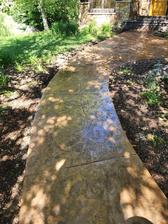
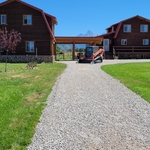
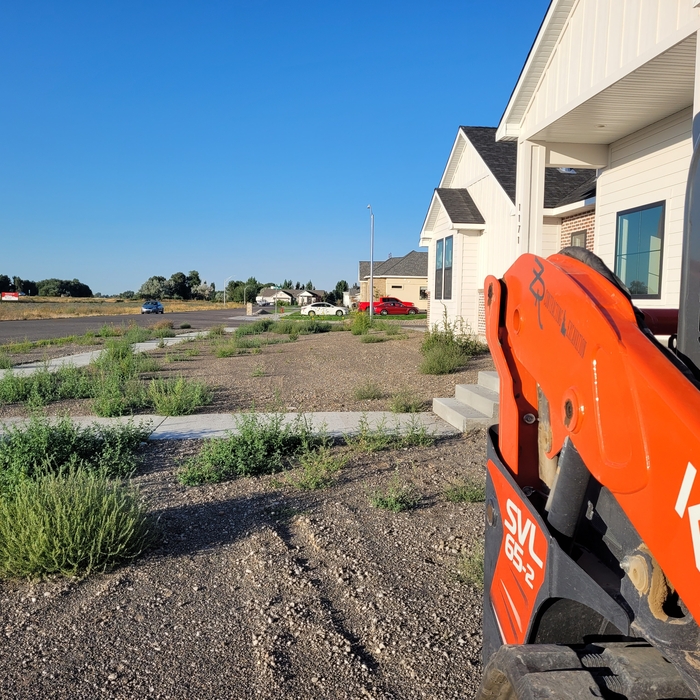
"It was easy to work with incredibly knowledgeable and his craft, set up level, had to take out a retaining wall near my structure was really grateful. He knew exactly what he was doing. Was able to trust the entire process with a large piece of equipment up against the house went flawlessly graded it perfectly level"
Photos
15 neighbors recently requested a quote
The Service Company of Idaho
New to Angi
Excavation - Major Grading or ReslopingLandscape - Minor Grading or Resloping

Serving Ashton, ID and surrounding areas

Approved

In business since 2013

Free estimates

Offers commercial services

We are committed to excellence in every aspect of our business. We uphold a standard of integrity bound by fairness, honesty, and personal responsibility. Our distinction is the quality of service we bring to our customers. Accurate knowledge of our trade combined with ability is what makes us true professionals. Above all, we are watchful of our customers' interests, and make their concerns the basis of our business.

Response time10 mins
Showing 1-10 of 19
Excavating questions, answered by experts

The best method for digging a trench depends on the scope of the project. For a short, shallow trench (less than 2 feet deep) in light, soft soil, digging by hand may be sufficient. However, digging by hand is labor-intensive, so consider the effort required. A machine trencher is the better option for longer trenches (over 100 feet), deeper ones, or when dealing with difficult soil conditions, such as rocky or hard ground, or obstructions like tree roots. A machine can save significant time and energy in these situations.

Yes, you can excavate in the winter, but it might make the job harder. Frozen ground is harder to dig, and snow or ice can make the work site more hazardous. A contractor may need special equipment and techniques, such as ground-thawing methods, to break through frozen soil. Although winter excavation is possible, it may take longer and be more costly than excavating during warmer months.

How deep your septic system needs to be into the ground depends on several factors. In extremely cold environments, the tank needs to rest below the maximum frost line, which can be up to six or eight feet deep. The standard burying depth for most systems is between a few inches and four feet below ground level. Depth can also depend on the slope of the landscaping and other property variables. 

Septic drain lines (or leach lines) are typically buried between 18 and 36 inches underground, and should be at least 6 inches below the surface. These pipes are perforated and surrounded by filtering materials like sand or gravel. Burying the lines at this depth helps minimize odors and allows bacteria and other biological processes in the soil to effectively treat the wastewater. Burying lines too close to the surface can cause issues unless the soil is very compact and stable.

To locate an underground downspout, you should start by identifying where the above ground gutter drains. Look for an entry point, such as a pipe or elbow leading into the ground. Follow the surface path for signs like depressions, landscaping disruptions, or wet areas after rain. You can use a metal detector or plumber’s snake to trace the pipe underground. For deeper pipes, a professional locator tool or camera inspection may be necessary. Visual markers or utility maps can also guide the search.

The Ashton, ID homeowners’ guide to excavation services

From average costs to expert advice, get all the answers you need to get your job done.