
Top-rated water heater pros.

Best water heater pros near Experiment, GA

Enter your zip and get matched with up to 5 pros

Need a pro for your water heater service project in Experiment, GA?

Select your specific project to find the pro for you.

TRUSTED BY EXPERIMENT, GA HOMEOWNERS

  • Average homeowner rating star icon4.7
    Average homeowner rating
  • Verified reviews icon28
    Verified water heater services reviews

Top-Rated Water heater pros in Experiment - Updated Nov 2026

Avatar for Rooter Pro Plumbing GA
Rooter Pro Plumbing GA
4.8(
37
)
Water Heater - Install or ReplaceWater Heater - Repair or ServiceTankless Water Heater - Repair+5 more

Serving Experiment, GA and surrounding areas

Approved

Super Service Award Winner

In business since 2021

Free estimates

Emergency services offered

"I had a water leak in my front yard & after researching the highest rated Plumbers, I found Rooter Pro Plumbing of Georgia. They had great ratings on Trust Dale Caldwell, Angi's List, & Google. I scheduled a visit with them & Jerimey Jackson came by & did a leak detection. It was determined that I had multiple leads in my water line and he gave me all of my options & pricing. He is an expert on everything to do with plumbing & a great guy too. My water heater is 23 years old, so I decided to replace that as well. Jerimey led the work crew the next day in replacing my water line & water heater replacement. All the work was complete that day & the results are very good! I am very pleased with Rooter Pro Plumbing and the work they performed & the people I dealt with. Even the people in the office were great! I will use them again & recommend them to my friends & family! Paul Taylor"
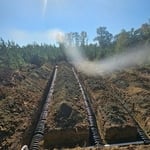
Well Pump Installation After
Well Pump Installation Before
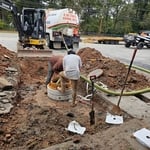
Well Pump Installation During
Sewer Main Repair
Sewer Main Repair During

+5

Response time4 hrs
Response rate92%
131 neighbors recently requested a quote
Showing 1-10 of 49
Water Heaters FAQs, answered by experts

There are pros and cons to tankless water heaters. They are more efficient than traditional tank water heaters, and maintenance costs are lower. These units are also much more compact. On the other hand, they cost about twice as much to install as traditional tank water heaters and are more limited in terms of flow rate.

Water expands when heated and also when freezing. When water is heated, it expands by around 4%. For a full water heater, this is one of the main reasons malfunctions occur—the hot water has nowhere else to go but out. Due to the constant expansion and reduction in volume, it’s recommended (required in most places) that an expansion tank be installed.

No, boilers and water heaters are not interchangeable because they serve different primary functions. Boilers are used for central heating systems, providing hot water or steam to heat your home. In contrast, a water heater's purpose is to supply hot water for daily household use, such as for faucets and showers. A water heater alone cannot supply the warm water or steam needed for a central heating system.

While they are not interchangeable, it is common to have both a boiler and a water heater. In fact, a conventional boiler often works best when a water heater system is already in place. The two systems can be combined to provide both heating and hot water, either by pairing a boiler with an indirect water heater or by installing a premade combination boiler-water heater unit. For home heating, some homeowners may also opt for a furnace instead of a boiler.

Tankless water heaters are more expensive than those with a storage tank, but they come with some impressive benefits that most homeowners find worth the higher investment. Most importantly, they provide unlimited hot water, so you’ll never run out like you would with a storage tank. Tankless heaters are also more efficient, so comparing gallon-for-gallon, you’ll spend less on hot water with a tankless heater. Tankless water heaters are also smaller, require less maintenance, and tend to last longer than storage tank water heaters.

Most standard residential water heaters, which are typically around 40 gallons and use 240 volts and between 3,500 and 5,500 watts, require a 30-amp, two-pole circuit breaker. For smaller, point-of-use water heaters using 120 volts and between 1,500 and 3,000 watts, a 30-amp breaker is also often adequate. However, some models may have different needs; units that use more watts than average may require a 40-amp breaker, while smaller units might only need a 20-amp breaker. Newer, tankless, or more energy-efficient models can also require a higher amperage. Having the correct breaker size is crucial for safe and efficient operation, so it's best to consult a licensed electrician to determine the specific needs of your water heater.

The Experiment, GA homeowners’ guide to water heater services

From average costs to expert advice, get all the answers you need to get your job done.