"Very well. The slight dip in the kitchen looks better and the doors trued up. The slight sag still in the kitchen floor is because of the sub floor plywood which I didn't want to get in to. They leveled the joist by shimming the tops of several cinder block posts and installing a pair permanent of steel posts under a section of joist the previous owner had cut in two."
"Did a good job of fitting a light over our counter. Said he would get back to us about two other lights but he did’t. We wanted to go ahead and complete our project but haven’t as we were waiting to hear from them. We may have to get someone else."
"The furnace took 4 days to get approved( not counting a Sunday) the others were quick but the water heater had to be ordered so without hot water for a week. One ceiling fan was easy but within a year their policy changed and They would not install the one I purchased and had to get a new one approved and then ordered online and took several weeks to get straightened out. Not sure who was at fault, AHS, installer or scheduling with renter. Fee is usually $75 per visit"
"They were above and beyond, they were great and I would recommend him anytime of the day and they were really good. Whenever I need electrical service they are the one who I call."
Total Home Care is a down home, professional and experienced handyman company. We can paint exterior/interior jobs. Remodel kitchen and bathrooms, flooring, closet organizing installer. We specialize in painting. We have over 30 years experience. We offer a 10% discount for our military and first responders.
Specialize in re-pipes, remodels, water lines, leak repair, general service plumbing, also wood rot, decks ,fences, most construction/ handyman needs we can fill for you with a smile!!!
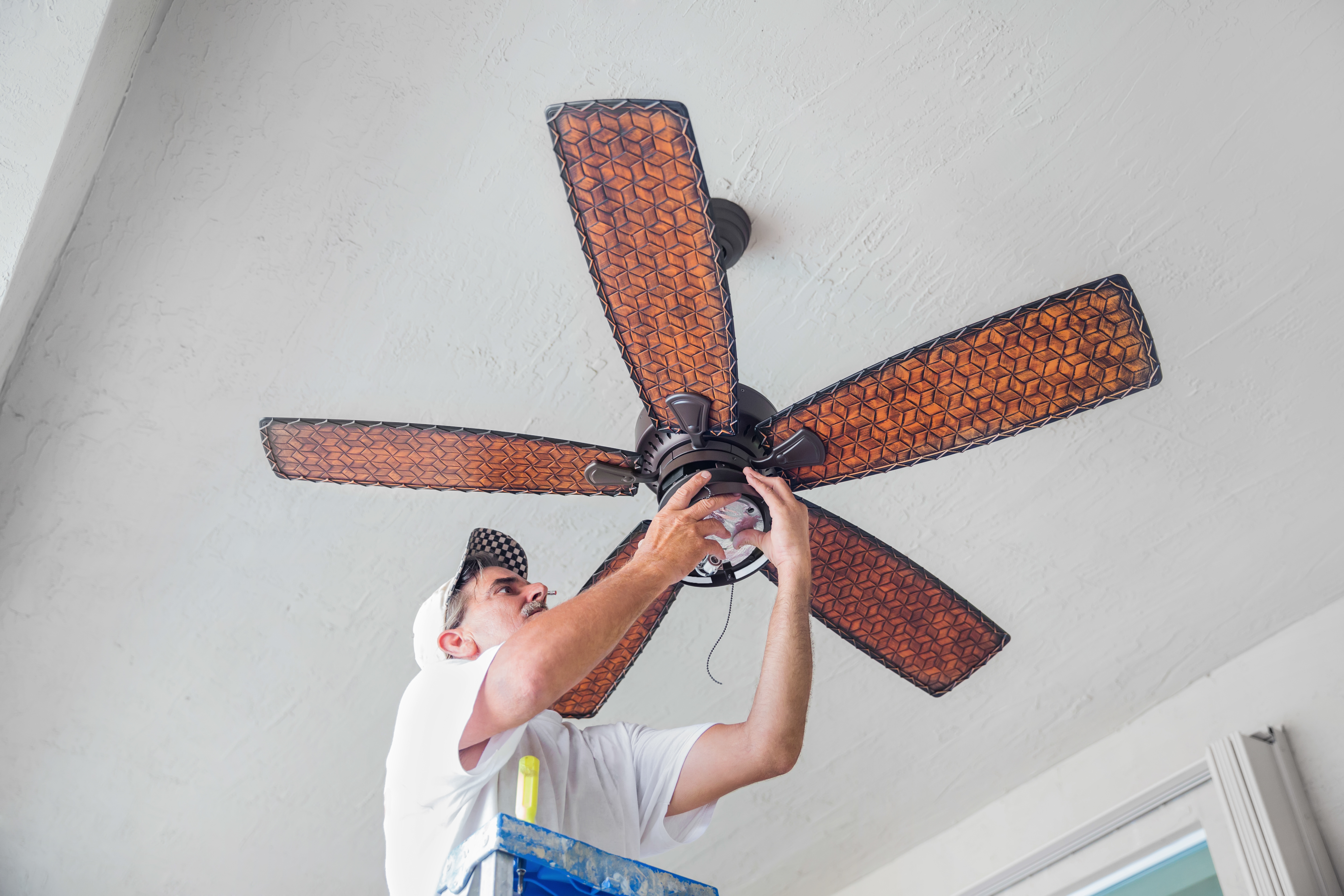
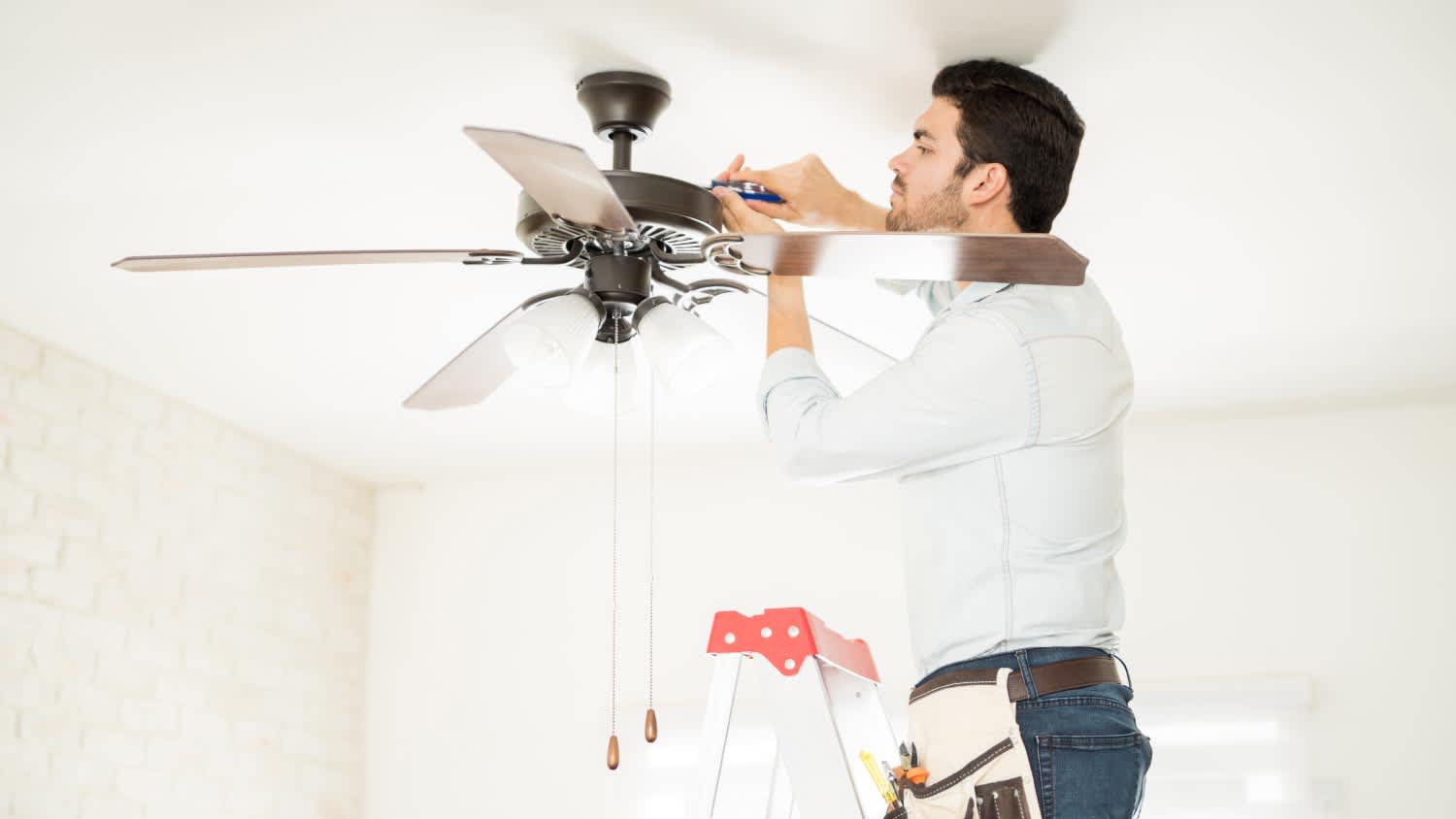
Though possible, installing a ceiling fan yourself requires electrical knowledge and confidence working with home wiring. Following the manufacturer's instructions carefully and observing safety precautions are crucial components of a DIY installation.
Fans not turning on, wobbling, noisy motors, or faulty remote controls are common issues requiring repair.
The square footage of your room will dictate the correct ceiling fan blade size. For example:
Rooms smaller than 75 square feet require a fan that is 29 to 36 inches.
Rooms up to 175 square feet require 42- to 48-inch fans.
Rooms up to 350 square feet require 52- to 56-inch fans.
Expansive spaces over 350 square feet need a fan larger than 60 inches.
Fan power is measured by CFM, or cubic feet per minute. For every 1,000 feet of square footage in your attic, you need a minimum of 700 CFM. Steeper roofs may need larger fans or about 840 CFM. You can figure the size of attic fan you need by multiplying the square footage of your attic floor by 0.7. (multiply by 1.2 for a steep roof and 1.15 for a dark roof). That number is the CFM required for your fan to run efficiently.
The direction your ceiling fan spins helps create comfortable airflow in your home and can also help cut down on energy costs.
During summer, your ceiling fan should spin counterclockwise. This will push cooler air downward in a column and help lower your room’s air temperature. In the winter, set your ceiling fan to spin clockwise and at the lowest speed setting. This will pull cool air upwards, displacing the warm air that pools towards the top of your ceiling and bringing it down towards the floor.
The Coolidge, GA homeowners’ guide to ceiling fan services
From average costs to expert advice, get all the answers you need to get your job done.
Discover the cost to install a ceiling fan, including labor, materials, and tips to save. Learn what impacts your price and how to budget for your project.
Ceiling fans cool down your home while stylishly accenting your space. With a variety of types of ceiling fan on the market to choose from, you can’t go wrong.
Although the risk is low, there are a few telltale signs that a ceiling fan will fall off your ceiling. This guide explains when to worry (and when not to).