





Top-rated excavation pros.

Get matched with top excavation pros in Lake Park, FL

Enter your zip and get matched with up to 5 pros

Need a pro for your excavation project in Lake Park, FL?

Select your specific project to find the pro for you.

TRUSTED BY LAKE PARK, FL HOMEOWNERS

  • Average homeowner rating star icon4.8
    Average homeowner rating
  • Verified reviews icon13
    Verified excavation services reviews

Find Excavation pros in Lake Park

Avatar for W.E.B. United, LLC
W.E.B. United, LLC
4.9(
40
)
Landscape - Minor Grading or Resloping

Serving Lake Park, FL and surrounding areas

Approved

In business since 2014

Emergency services offered

Credit card accepted

"I gave Bruce an impossible task to fill in my 10,000 gallon fenced in pool w/thirty cubic yards of gravel. The logistics were horrible, but Bruce was ready for the task at hand. Finished on time, and left my property undamaged and clean."
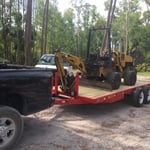
trailer repair
Trencher & Backhoe
Trailer Repair
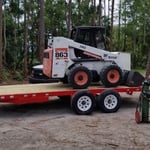
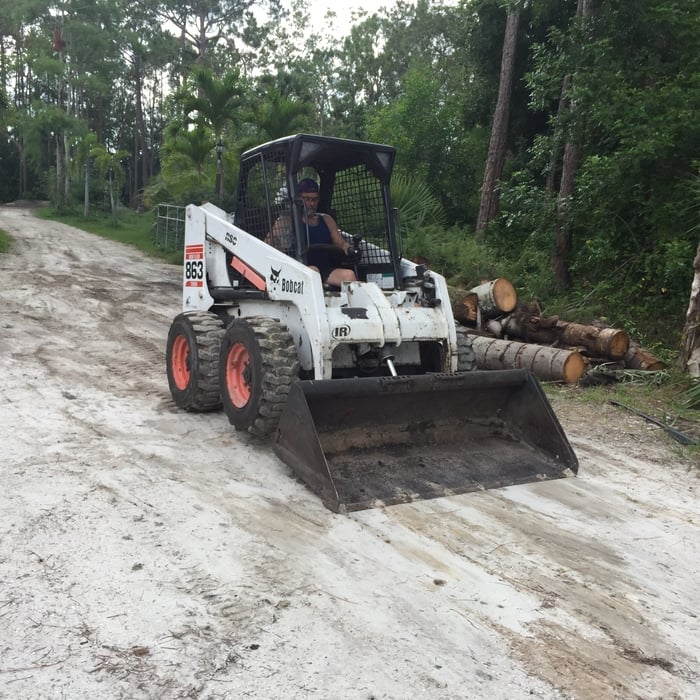
Bob Cat Services
Driveway grading

+8

Response time7 hrs
Response rate93%
Recommended by100%of homeowners
Avatar for Masterpiece Land Builders Corp
Masterpiece Land Builders Corp
5.0(
15
)
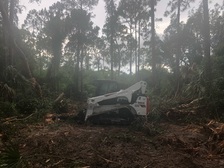
Building Site - Preparation and ClearingLandscape - Minor Grading or ReslopingBuilding Site - Preparation and Clearing - For Business+2 more

Serving Lake Park, FL and surrounding areas

Approved

In business since 2020

Free estimates

Offers commercial services

"Highly recommend! did an excellent job on my property. Professional, reliable, and clearly knows what he’s doing. The work was done efficiently, the site was left clean, and the results were exactly what I hoped for. I wouldn’t hesitate to use him again or recommend him to anyone needing excavation work."
project photos
2 neighbors recently requested a quote
Mexico & Guatemala Landscaping Services, Inc.
3.8(
105
)
Landscape - Minor Grading or Resloping

Serving Lake Park, FL and surrounding areas

Approved

In business since 2017

Free estimates

Customers say: True professional

"Henry was prompt for our visit, with a sensible crew (2 others). His quote for trimming 6 feet x 100 linear feet and removing debris was cost-effective. Fortunately he is flent in English, and I was happy to provide refreshments while they worked. I have other tree trimming and thinning bto do soon. 5 stars. Also, they cleaned up years of leaves which had accumulated over years, an additional value."
Response time1 day
8 neighbors recently requested a quote
Recommended by92%of homeowners
...
Showing 1-10 of 202
Excavating questions, answered by experts

Consultation with the local government helps identify necessary permits, avoid project delays or legal issues, and protect project integrity.

Most residential basements are 8 to 10 feet deep. You can dig deeper depending on building codes, but it does become more difficult. You’ll likely need to install stronger foundation walls and additional supports to handle the increased load. Depending on the water table, you may also need a water management system. Clay soil can support a deeper foundation than sandy soil. A structural engineer will be able to tell you the maximum, feasible depth.

Professional installers often include a deep layer of crushed gravel under permeable pavers to allow more runoff to soak through into the soil below. Many installations will include multiple layers of gravel, with coarser aggregate at the base and finer aggregate that sits on top of that bottom layer. Above the gravel, you’ll often find coarse sand that helps reduce paver shifting over time. Some permeable paver designs include a water collection system set into the gravel layer to route runoff to a safe area for disposal.


The digging depth will depend on the size of the trencher you use. Even smaller units can dig up to 4 feet deep, which is plenty for a DIY job. However, much larger trenchers can reach a depth of 18 feet and are better used by a team of pro contractors, not a single DIYer. As with all home improvement projects, use the right tool for the job and proceed with caution.

Digging a bush up by the roots is the most natural DIY method for removing a bush stump. Start by identifying the shrub type and revealing its roots. Cut the shrub to its base and loosen the soil, ensuring no utility lines are nearby. Optionally, treat the base with herbicide, then dig around the roots and cut a circle around the shrub using various tools. Dig a trench, cut the base of the root ball, and finally fill the hole to prevent regrowth. This thorough process ensures complete removal without damaging surrounding areas.

The Lake Park, FL homeowners’ guide to excavation services

From average costs to expert advice, get all the answers you need to get your job done.