





Top-rated structural engineers.

Get matched with top structural engineers in Branford, FL

Enter your zip and get matched with up to 5 pros

Need a pro for your structural engineering project in Branford, FL?

Select your specific project to find the pro for you.

Find Structural engineers in Branford

Avatar for Family Safe Southeast
Family Safe Southeast
5.0(
3
)

Serving Branford, FL and surrounding areas

In business since 2011

Free estimates

Credit card accepted

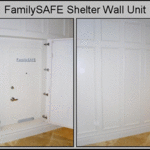
"Saw display at home and garden show.  Researched product and company, then ordered 4X4 shelter via telephone.  Company provided additional details about testing and certification IAW FEMA standards upon request.  Delivery and installation were on time and as promised."
.
.
.
Recommended by100%of homeowners
Structural Engineering questions, answered by experts

First, most contractors will have a structural engineer create a report and plan for your project to ensure it’s safe to cut into the load-bearing wall. The contractor will then excavate around the wall, if necessary, measure the opening—allowing for additional space to fit and level the door, and then cut the doorway out. They will likely install a steel lintel as a header over the door for support. Once the doorway is cut out, they’ll demolish the concrete using sledge hammers and masonry chisels, clean up the surrounding concrete, and seal around the door with masonry mortar. 

Any issue that affects the structural integrity or soundness of a home is considered a structural issue. In addition to foundation cracks, other signs of structural issues include roof leaks, bowing walls, sloping floors, gaps around windows and doors, and more.

Structural engineers typically conduct inspections during a home sale or renovation, looking for signs of structural damage in various structures throughout the building, such as load-bearing walls, joists, beams, roofing trusses, foundations, and chimneys. Some of the warning signs that structural engineers check for include:

  • Dry rot

  • Infestation

  • Shifting or cracking foundations

  • Erosion

  • Water damage

  • Sagging, shifting, or damaged walls, ceilings, or roofing support

A freestanding brick wall that's only one brick thick can usually stand six to eight feet high. If you need a higher wall, it should be at least two bricks thick for adequate stability, and it might require a footing to support the added weight. Additionally, some areas have regulations and codes dictating how high a brick wall can be, so check with local code enforcers to ensure your proposed wall complies with any regulations.

Precast concrete can be reinforced with rebar, wire mesh, or other materials to improve its strength and add stability. Precast concrete for large construction projects is often pre-stressed as well for greater structural strength. Reinforced concrete is durable and strong, making it an ideal choice for many construction projects.

The Branford, FL homeowners’ guide to structural engineering services

From average costs to expert advice, get all the answers you need to get your job done.

What do you need done? We’ll find top pros.
  • 🌱 "Mow a small front yard"
  • 🛠 "Fix a leaking pipe under the sink"
  • 🏠 "Repair shingles on an asphalt roof"