




Top-rated arborists.

Get matched with top arborists in New Castle, CO

Enter your zip and get matched with up to 5 pros

Need a pro for your arboricultural service project in New Castle, CO?

Select your specific project to find the pro for you.

TRUSTED BY NEW CASTLE, CO HOMEOWNERS

  • Average homeowner rating star icon4.6
    Average homeowner rating
  • Verified reviews icon64
    Verified arboricultural services reviews

Find Arborists in New Castle

Avatar for Ayala's Tree Trimming & Landscaping
Ayala's Tree Trimming & Landscaping
4.6(
34
)
Tree RemovalTree Stump - RemoveTree Trimming

Serving New Castle, CO and surrounding areas

In business since 2008

Free estimates

Small jobs welcome

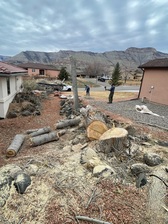
"I called and Isaac he came out and gave me a quote. He returned on the scheduled day he and his 2 man crew did an EXCELLENT job. They cut down and removed a Huge dead 65' Carolina Popular tree which was located close to our house, shed & fence. Very Experienced. They cleaned up my yard. Very nice crew. I recommend it to anyone needing tree service work . Call Isaac Ayala"
Response time1 day
Response rate92%
Recommended by91%of homeowners
Showing 1-10 of 36
Arborists questions, answered by experts

After a big storm, you may not be sure if a tree was struck or not. Look for the telltale long scars, like strips or gouges in the bark of the tree, running in sometimes jagged lines down the length of the trunk. These scars will often show vulnerable living wood inside the tree. It’s also common to see scorched or wilted leaves on the side or top of the tree where lightning struck.

Most trees can be successfully transplanted while they are young, but pines, walnuts, and some oak tree varieties are more difficult to move because their root systems grow deeper than most other trees. Also, trees adapted to sandy soil with wide root systems like beeches, willows, and aspens are harder to dig out because their roots spread much farther out from the trunk. In these cases, unless the trees are very young and small, it’s a good idea to consult a tree planting professional.

Yes, cutting a tree's roots can cause it to fall, particularly if major support roots are severed. In extreme cases, trimming roots can affect the tree's structure and stability. Many crucial roots are located just below the soil's surface. If you make severe cuts to roots more than 2 inches in diameter, you risk impacting the tree's water flow and its ability to withstand severe winds or storms. Even cutting roots less than half an inch in diameter under or outside the tree's canopy can cut off its water supply, causing it to decline, die, and eventually topple.

Trees don’t usually grow back after being cut down. Some particularly robust tree species may start sending up new stems from a stump to recover, but those stems won’t become a “tree” like before. Generally, trees don’t recover from being entirely cut down, which is why it’s important to be careful when making a decision. When you cut down a tree, it’s a good idea to make plans to remove the stump, even if it’s unlikely to grow back.

It’s possible to transplant trees as tall as 50 feet when an experienced tree planting service uses the right equipment. However, a tree with a trunk larger than two or three inches in diameter needs to be handled by a professional in order to yield successful transplanting results. Consulting a tree planting professional is the best way to tell if your large tree can be safely transplanted.

The New Castle, CO homeowners’ guide to arboricultural services

From average costs to expert advice, get all the answers you need to get your job done.