

Top-rated radon detection and reduction specialists.

Get matched with top radon detection and reduction specialists in Raymond, CA

Enter your zip and get matched with up to 5 pros

Need a pro for your radon detection and reduction project in Raymond, CA?

Select your specific project to find the pro for you.

Find Radon detection and reduction specialists in Raymond

Avatar for MG Remediation, Inc.
MG Remediation, Inc.
3.3(
8
)
Radon Gas - Abatement

Serving Raymond, CA and surrounding areas

Approved

In business since 1986

Free estimates

Customers say: Quick response

"Peter and his team at MG Remediation are professionals. They did everything they told me they would do and the radon levels dropped significantly. Great communication, too, which always matters."
Vapor Intrusion for VOC and Radon
 Cleaning
 Cleaning
Testing
Testing & Abatement

+4

Response time4 days
Recommended by80%of homeowners
Avatar for Central Valley Water Restoration
Central Valley Water Restoration
5.0(
5
)
Radon Gas - Testing

Serving Raymond, CA and surrounding areas

In business since 2023

Free estimates

Emergency services offered

"Tiko and Central Valley Water Restoration got to my house within an hour of me calling and they dried the house up and demolished what needed to be demolished and built it back up . They were fast and amazing. They truly care about the customer."
Water Mitigation
Water Mitigation
Water Mitigation
Water Mitigation
Water Mitigation

+27

Recommended by80%of homeowners

Radon Detection and Reduction questions, answered by experts

No level of radon is technically safe, but since it is present everywhere, complete avoidance is impossible. The average radon level in homes across the United States is 1.3 picocuries per liter (pCi/L). The Environmental Protection Agency (EPA) recommends taking preventative measures if your home's radon levels are between 2 and 4 pCi/L or higher.

Radon enters your home when warm air begins to rise and exits through the roof, creating a vacuum that pulls cooler air from under the foundation. Part of that air is radon, which is an invisible, odorless gas that develops naturally when radioactive particles are deep within the ground. Those particles usually come from decaying matter in soil and rocks.

The soil beneath your house is most likely what’s causing an increased level of radon. This is because soil holds radioactivity for a long time and it’s also what most buildings are built on. Another common source of radon is water from a source that hasn’t been through periodic radon tests, such as well water. Over time, the radon from the soil can inhabit other parts of your house like the foundation or plumbing.

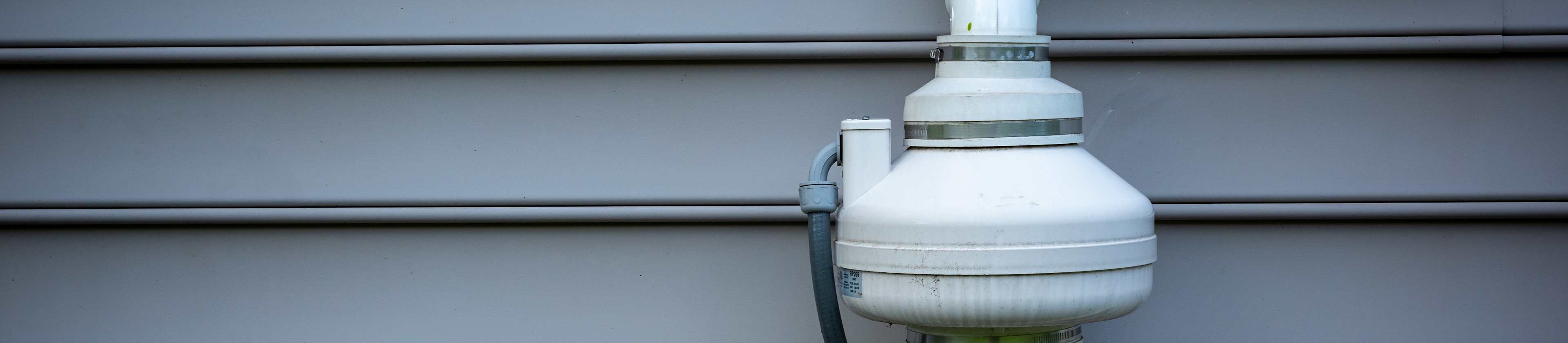
Your radon mitigation system may be loud because it’s time to replace it. Any sounds are usually from the inline fan that helps create the vacuum and resulting airflow. If you hear a new, loud mechanical or humming noise from your radon fan, it might be time to replace it. Most fans used in radon mitigation systems last up to 10 years, but may need to be replaced sooner.

No, radon mitigation systems do not decrease home value or make a home harder to sell. In areas where homes experience similar radon exposure risks, a radon mitigation system is viewed as an improvement. Potential homebuyers often opt to buy a home with a radon mitigation system already installed to reduce the risk of cancer for their families.

The Raymond, CA homeowners’ guide to radon detection and reduction services

From average costs to expert advice, get all the answers you need to get your job done.