Myers Well & Pump LLC is committed to excellence in every aspect of our business. We uphold a standard of integrity bound by fairness, honesty, and personal responsibility. Our distinction is the quality of service we bring to our customers. Accurate knowledge of our trade combined with ability is what makes us true professionals. Above all, we are watchful of our customers' interests, and make their concerns the basis of our business.
"He was able to quickly diagnose that the water leak from the water heater was a result of a ruptured tank, resulting in the need to replace the entire water heater."
"Not good. The water leaks had caused black mold that had to be repaired. When repairs were completed 3 months later, the valves still leaked from the stem when turned on. It was past 60 days so I had to pay another $100 service fee to have the water leaks fixed. He tightened the packing and quoted $350 to replace the valves. Sheesh."
A good hardness level for drinking water can vary based on personal preferences, but an ideal level is 3.5 to 7 GPG. This means your water isn’t soft or hard. However, some people prefer the “fresh” taste from the minerals in hard water, while others like the smoother, “slippery” texture of soft water.
While not everyone can detect taste differences in high-calcium water, water that has a slightly metallic taste probably has too much calcium.
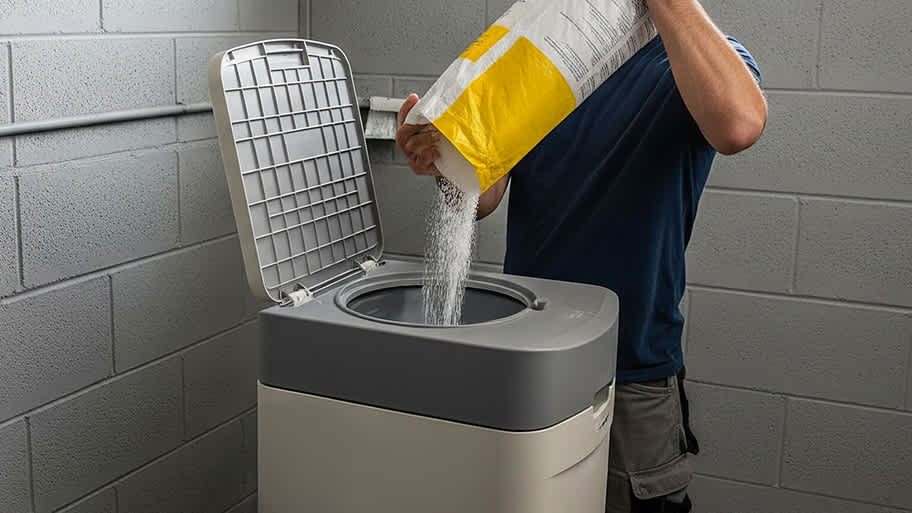
It’s not a good idea to oversize your water softener. Doing so will mean the tank doesn’t get full, which can lead to channeling. This leads to a large portion of the resin beads not being utilized and the beads at the bottom of the tank being overused. Over time, this will reduce the efficiency of your system, not to mention that the upfront cost of an oversized softener is unnecessarily high. If you have a timed regeneration cycle rather than a demand-based one, you’ll also spend far more on replacing salt than you need to.
Yes. To get soft water, you can install a water softening system, which will replace the calcium and magnesium ions in the water with sodium or potassium ions. Water softeners cost anywhere from $200 to $6,000, depending on the size and complexity of the system. You can either install a water softener for the whole house or just at your shower heads. If you’re sensitive to sodium or potassium, you can install a salt-free water conditioner.
Yes, a water softener can remove scale deposits. According to the U.S. Department of Energy, after you add a water softener to your home, “gradually the softer water will dissolve limescale scale deposits and remove the problem entirely.” Installing a water softener—or water descaler—will also help prevent new scale deposits from forming.
The First Mesa, AZ homeowners’ guide to water softener services
From average costs to expert advice, get all the answers you need to get your job done.
Water softeners work to remove unwanted minerals from hard water through a filtration and recharge cycle. Keep reading to learn how a water softener works.
There are four common softener alternatives available on the market today. We compare and contrast each one to help you find your best-fit solution in this blog.
Water softeners rid your home of hard minerals and, well, soften your water. Even better, the regeneration process is an automatic cycle that works when you’re least likely to use it.