




Top-rated outdoor kitchen pros.

Best outdoor kitchen pros near Tuckerman, AR

Enter your zip and get matched with up to 5 pros

Need a pro for your outdoor kitchen service project in Tuckerman, AR?

Select your specific project to find the pro for you.

Top-Rated Outdoor kitchen pros in Tuckerman - Updated Nov 2026

Outdoor Kitchens FAQs, answered by experts

No. Placing a built-in grill against the house is discouraged due to safety concerns. Building codes and regulations often require a minimum distance (typically 10 feet or more) between a gas grill and any combustible structure, including a house. Placing a grill too close poses a fire hazard and risks damage to the siding or structure, potentially leading to carbon monoxide buildup. It's essential to consult local building codes, follow manufacturer guidelines, and prioritize safety by positioning the grill at a safe distance, ideally in a well-ventilated outdoor kitchen or designated grill area.

Costs depend on materials, labor, appliances, and whether electrical or plumbing modifications are required.

In most cases, yes, an outdoor living space adds value to your home. The trick to your best return on investment is to choose high-quality building materials that will look nice and durable without crossing the line into total luxury that becomes cost-ineffective. For example, there’s no need to install marble tiles around your pool, but a durable and aesthetically pleasing deck will go a long way.

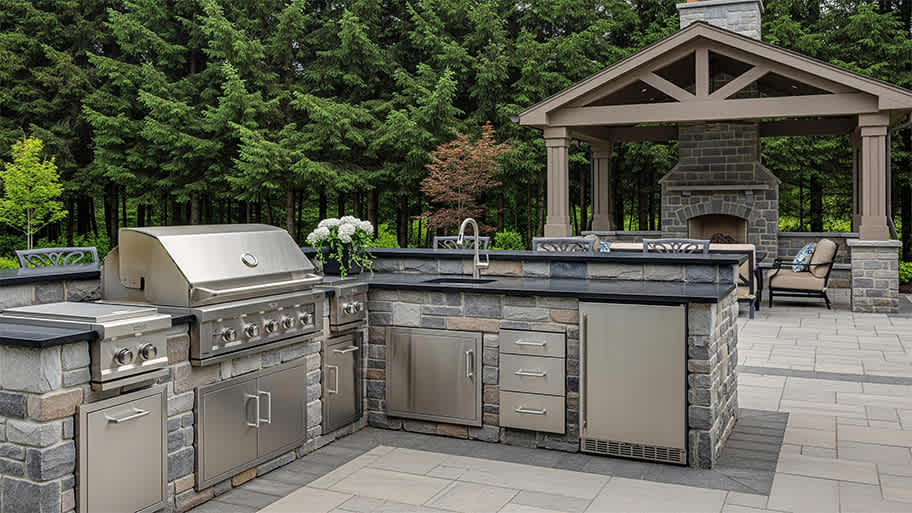
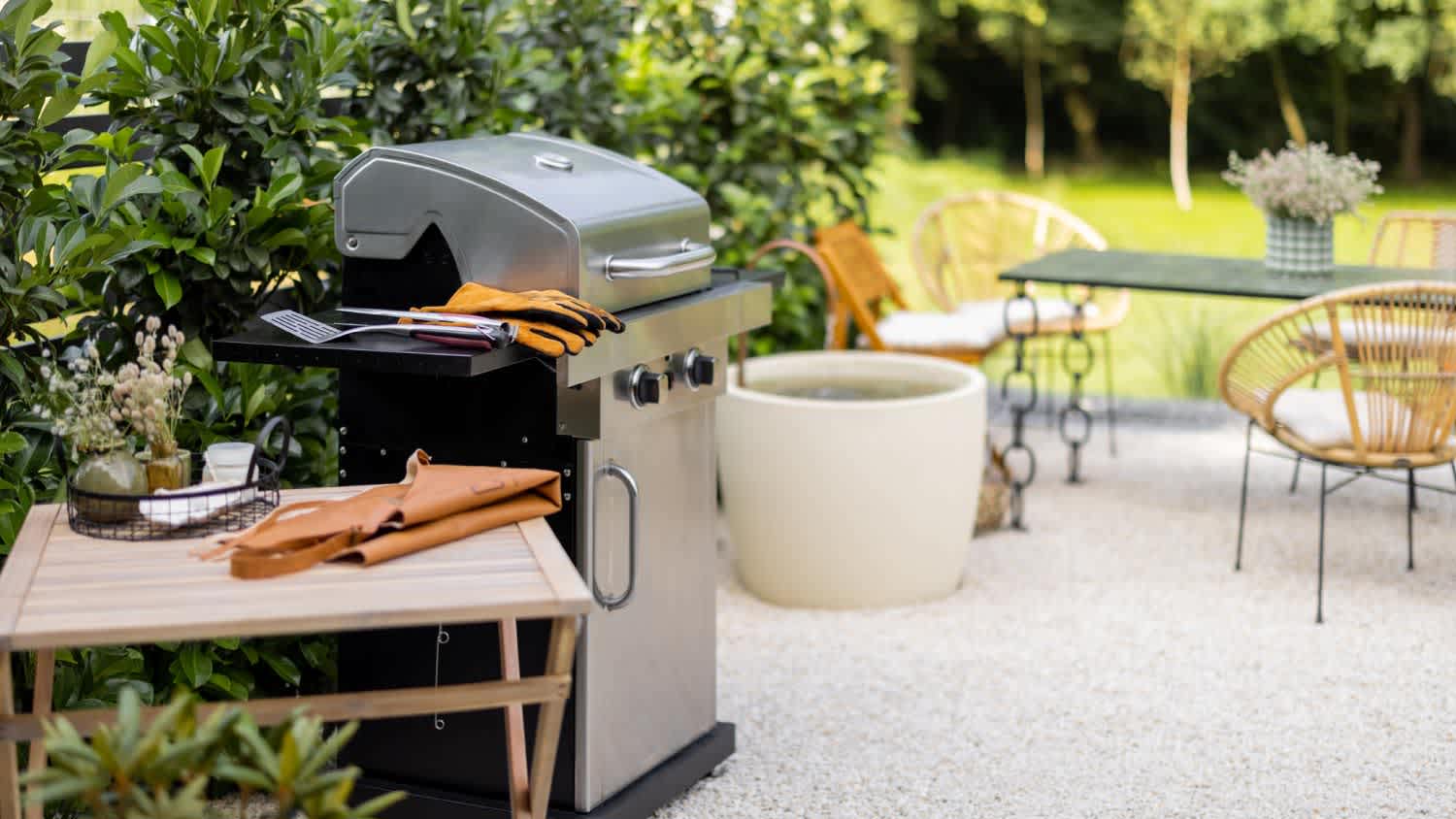
The difference between a built-in and regular grill is installation and design. A built-in grill is integrated into an outdoor kitchen or structure, often within a countertop or island. It is a permanent fixture. A regular grill is standalone, portable, or cart-mounted, allowing mobility and versatility in placement. Built-in grills are typically larger with more cooking space, while regular grills come in various sizes. Built-in grills are favored for creating a custom outdoor cooking area, while regular grills provide convenience and flexibility.

A few materials are most commonly used when it comes to building a frame for an outdoor kitchen: wood, steel, and concrete or brick. While there’s no best option overall, each material is better suited to different needs. Concrete and brick are typically more customizable than other options, but aren’t as resistant to inclement weather as steel. Wood is the most affordable pick, but it is more susceptible to rot, mildew, and heat than the others.

The Tuckerman, AR homeowners’ guide to outdoor kitchen services

From average costs to expert advice, get all the answers you need to get your job done.