


Top-rated tree service pros.

Get matched with top tree service pros in Danville, AR

Enter your zip and get matched with up to 5 pros

Need a pro for your tree service project in Danville, AR?

Select your specific project to find the pro for you.

Find Tree service pros in Danville

Avatar for Arkansaw Tree Service
Arkansaw Tree Service
4.5(
69
)

Serving Danville, AR and surrounding areas

Approved

In business since 1981

Free estimates

Customers say: Quick response

"For starters, was the first of only 2 to answer my request. A big problem in this area is that so many who advertise their services (of any kind) do not answer your inquiries. Arkansas Tree Service promptly came, as promised, to give me a quote and then to do the job. They did exactly what they said they would do and when they said they would do it, cutting down and hauling away 2 large pines. Cleanup was done well also. I highly recommend them."
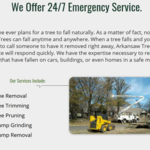
24/7 Emergency Services
We are AFFORDABLE!
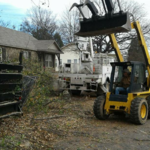
Equipment
Willing to go out on a LIMB for you ;)
Always Professional, Always Safe

+4

Response time5 hrs
Response rate96%
2 neighbors recently requested a quote

Andrew's Landscaping and Lawn Maintenance
4.0(
10
)

Serving Danville, AR and surrounding areas

In business since 1986

Free estimates

Credit card accepted

"Contacted Tru Cut and they gave me an estimate within 24hrs.  As I requested (hoping more leaves would fall), they waited one week to do the work.  We have a steep driveway with water run-off "ditches" on either side that go behind the garage and down to the lake.  They cleaned the ditches, our driveway/parking pad, and the back yard.  The job was excellent.  Will definitely hire them again.
"
Recommended by100%of homeowners
Showing 1-10 of 42
Tree Service questions, answered by experts

The best time to transplant a tree is when it is dormant. For many trees, this means either in the fall after the leaves have dropped (around October or November) or in early spring before new growth begins (around March). The ideal timing can depend on the type of tree. Deciduous trees do well when moved in early spring or fall, while evergreens are best transplanted in early spring or late summer. For example, pine trees are best moved in early fall, but maples prefer late fall. Avoid transplanting in winter, as the frozen or hard, cold soil poses a significant risk to the roots and prevents the tree from acclimating properly.

Hiring an arborist or tree surgeon is usually more expensive than a standard tree company, but it is often worth the investment. Arborists have education and certifications that standard companies typically lack, leading to a more professional, expert-level service. Their expertise is particularly valuable for diseased or infested trees, as they can ensure safer removal and help prevent the issue from spreading. Additionally, arborists may be necessary for work near power lines, as uncertified companies are often not permitted to service these trees. If your goal is to preserve the health of your trees, an arborist is the best choice. Their services, such as stump grinding, are also performed with greater expertise to ensure a safe depth that won't cause your lawn to collapse over time.

No, you should never top maple trees. Topping injures the tree and leads to the rapid growth of a weak canopy, which can be hazardous to rooftops and utility lines. Removing the crown can also leave the interior bark vulnerable to sun damage, leading to insects and disease. A topped tree can also reduce property value and permanently damage the appearance of a tree.

Often, it’s the homeowner’s responsibility to handle the aftermath when a neighbor’s tree falls on their property. But if a tree has been obviously dead for a significant period of time and caused damage when it fell, a case can be made that the owner should have removed it, especially if the neighbor wrote you a letter about the tree or asked you to take it down. This can be grounds for a successful lawsuit in claims court and is a good reason to always pay attention to your trees and remove dead trees before they fall.

You may be looking to identify maple trees to use for home improvement projects. In that case, you can tell hard maples by looking at their leaves. Leaves will have a U-shaped dip, or sinus, between the points, or lobes, of the leaves. Leaves of soft maples tend to have V-shaped sinuses.

If you already have the cut wood in front of you, look for a light, uniform color to identify hard maple wood and check for variations of red, gray, or brown streaks and an overall darker color in soft maple wood.

The Danville, AR homeowners’ guide to tree services

From average costs to expert advice, get all the answers you need to get your job done.