"He came right over on a Sunday and helped drain the crawl space then set up schedule to dry out, replace wet insulation and fix broken pipes. Ordered and later installed new water heater. It was a process but Matt and his associates were super helpful, professional and nice."
For a 12x12 room, a fan between 36" and 50" will work, as it falls in the range for spaces up to 144 square feet. These size fans provide adequate air circulation and ensure a comfortable environment without being overpowering. Even better, they come in a broad range of styles, offering aesthetics and functionality, making them suitable choices for maintaining an ideal room temperature and enhancing overall comfort.
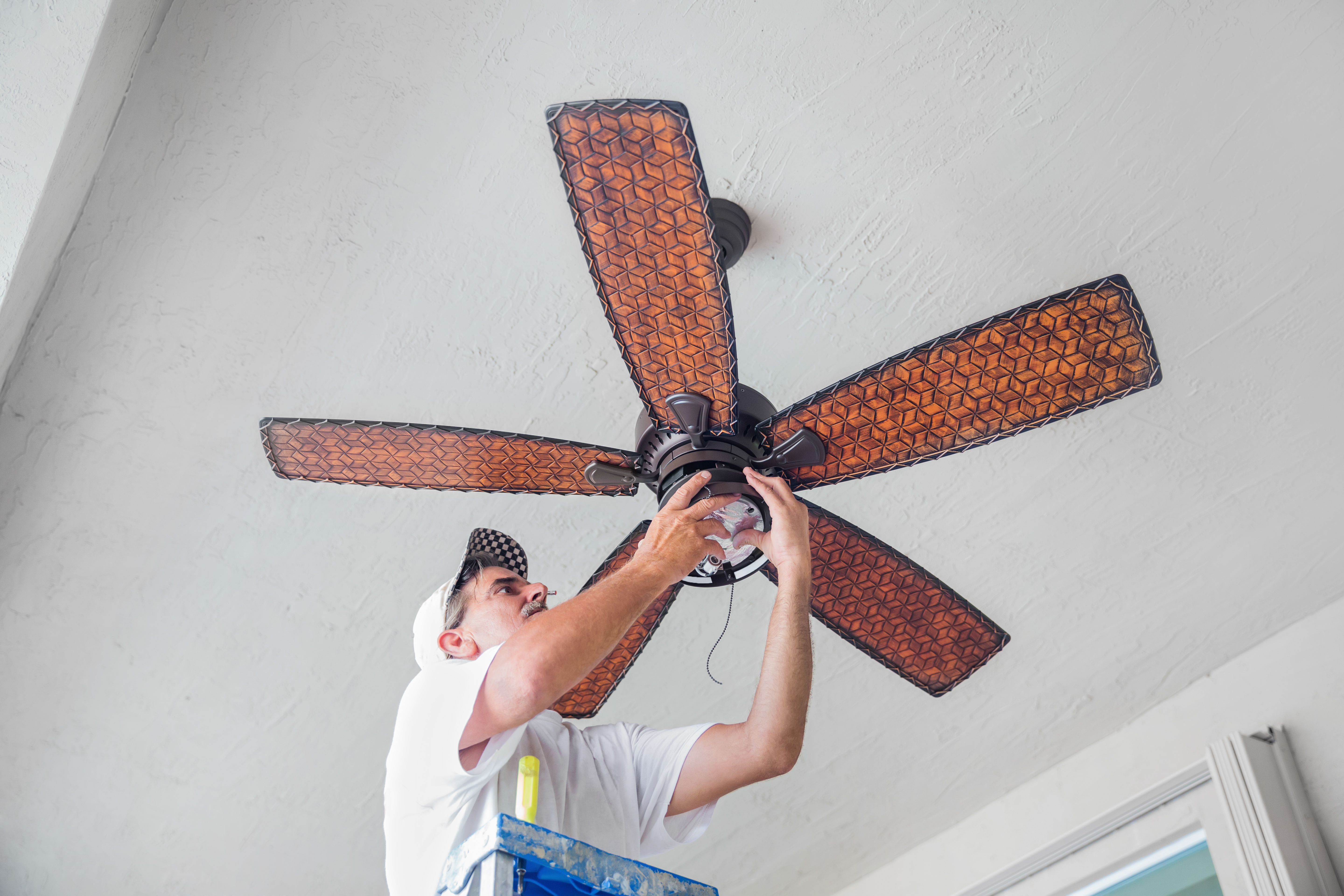
A typical fan installation takes between two and six hours. The exact timeframe can be influenced by factors such as the home's structure, existing electrical characteristics, ease of attic access, and whether complex wiring or additional attic ventilation work is required.
If your home already has wires for a ceiling fan (and optional light kit), then it’s quite safe to wire and install it yourself. Always be very careful to shut off the power before you begin, and confirm that the power is safely off with a non-contact voltage tester before touching anything. It’s also highly recommended to use eye protection, rubberized gloves, and tools with rubber handles to keep yourself safe from electric shock.
Keeping dust off fans can keep them working optimally and help keep dust mites or bacteria from building up. Dust fans weekly with a duster, microfiber cloth, old pillowcase, or vacuum attachment. You can also try spraying a clean fan with a store-bought dust-repellent product or making a DIY dust-repellent with water and a small amount of liquid fabric softener mixed in.
Yes, you can install a ceiling fan where a standard light fixture is, as the electrical wiring is often similar and may not need to be replaced. The most important step is to ensure the ceiling can support the fan's weight and motion. You will need to replace the existing light fixture's electrical box with a fan-rated electrical box, which is specifically designed to handle the extra weight and vibration. These boxes will be labeled as suitable for ceiling fan support and will indicate the maximum weight they can hold. Before you begin, also consider if you need an extension rod for a high ceiling or a special mount for an angled ceiling.
The Unalaska, AK homeowners’ guide to ceiling fan services
From average costs to expert advice, get all the answers you need to get your job done.
Discover the cost to install a ceiling fan, including labor, materials, and tips to save. Learn what impacts your price and how to budget for your project.
Ceiling fans cool down your home while stylishly accenting your space. With a variety of types of ceiling fan on the market to choose from, you can’t go wrong.
Although the risk is low, there are a few telltale signs that a ceiling fan will fall off your ceiling. This guide explains when to worry (and when not to).
With the right size, ceiling fans are an energy-efficient way to cool a room. Use this ceiling fan size guide to find the perfect model for your space.