
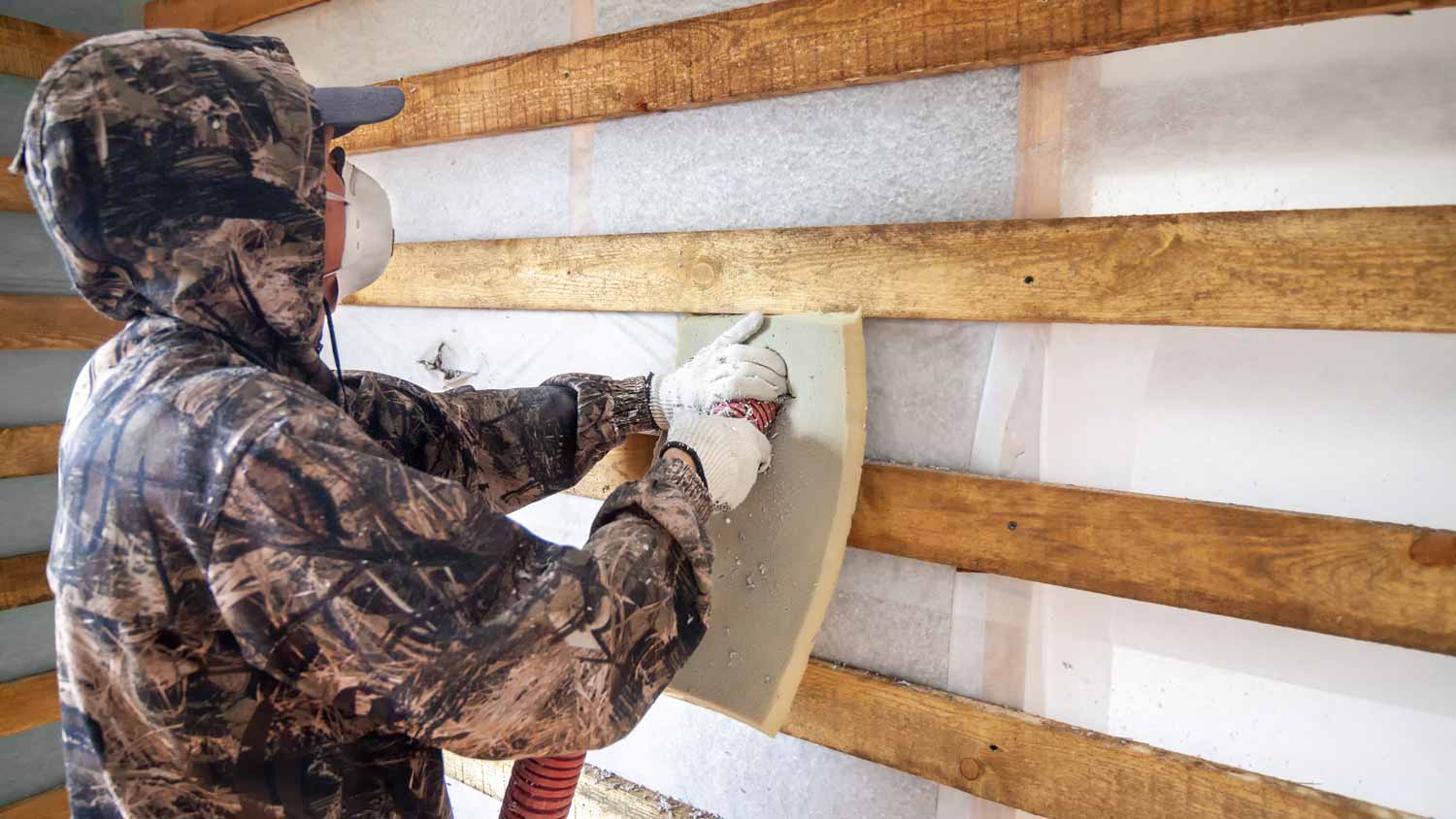
How much blown-in insulation do I need? Requirements vary by location and material choice. Learn how to estimate your needs for blown-in insulation.
You may need to get your calculator out

The best home insulation for cold climates depends on your climate zone, with colder northern regions needing R-49 or higher for attics.
Your home's existing insulation level affects how much new material you need, so layering additional insulation can help you reach the recommended R-value.
You should measure your current insulation thickness and multiply it by the material's R-value per inch to determine if you need upgrades.
Hiring a local insulation company provides clear guidance on choosing the right R-value and insulation type, keeping your installation on track for better energy efficiency.
Are you about to kick off an insulation project? If so, you're bound to wonder: what R-value do I need? When it comes to home insulation, R-value, which is short for resistance value, is a critical factor. R-value is a measurement that shows how well an insulation material resists heat flow. Our guide explains how to calculate R-value to choose the best insulation for your home.
As touched on above, R-value indicates an insulation material’s resistance to heat transfer. Poor insulation can cost you big time in terms of energy loss. A proper insulation R-value is crucial for maintaining your home’s temperature and reducing energy costs. Higher R-values offer greater insulation, but more isn’t always better—it's essential to choose an R-value suited to your specific needs and climate.
Selecting the right R-value depends on a range of factors, from your climate to the type of insulation you're considering.
Consider these factors to help you determine the correct R-value for your insulation installment.
In warm areas like Florida and parts of Texas, lower R-values (R-13 to R-21) are often sufficient because the main goal is to reduce cooling costs rather than retain heat.
In colder northern regions, like Minnesota or Maine, higher R-values (R-49 and above for attics) are necessary to retain heat and prevent heat loss through walls, floors, and ceilings.

Different areas of the house require different levels of insulation. Attics, walls, and floors each have unique R-value needs:
Attics: As much as 30% of a home’s heat loss happens through the roof, so attics need the highest R-value insulation, ranging from R-30 to R-60 depending on the climate zone.
Walls: Wall insulation needs are more moderate, with recommended values between R-13 and R-21.
Floors and basements: Insulating floors over crawl spaces or basements can prevent cold floors and reduce drafts. R-25 to R-30 is often recommended in cooler climates.

If your home already has some insulation, you may not need to install high-R-value materials in every area. The goal is to reach the total recommended R-value for each area by adding additional insulation as needed.
While you can use an insulation calculator, you’re better off consulting an insulation company near you to determine whether you should layer new insulation on top of the existing material or replace it altogether for optimal performance.
You should choose a type of insulation based on where it will be installed as well as your budget and local climate. For hard-to-reach places or thin walls, high-R-value materials like spray foam can deliver more insulation in less space. To determine the R-value of different insulation materials, it’s essential to know their specific R-value per inch. This number varies by material type, indicating how well each inch of insulation resists heat transfer. Here are some common examples:
Fiberglass Batt Insulation: One of the most common insulation types, fiberglass batts have an R-value of around R-2.9 to R-3.8 per inch. This type works well in wall cavities and attics where space allows for multiple layers.
Spray Foam Insulation: Spray foam comes in two types—open-cell and closed-cell—with different R-values. Closed-cell spray foam provides an R-value of R-6 to R-6.5 per inch, offering high insulation in a compact layer. Open-cell spray foam is less dense with an R-value of about R-3.5 per inch but is great for filling irregular spaces.
Rigid Foam Board: Known for its durability and resistance to moisture, rigid foam board insulation provides an R-value of about R-4 to R-6.5 per inch, making it ideal for basements and exterior walls where high insulation values are needed in limited space.
Cellulose Insulation: Often made from recycled materials, cellulose insulation has an R-value of about R-3.2 to R-3.8 per inch and is effective in wall cavities and attics, though it can settle over time, slightly reducing its R-value.

To measure your home’s R-value, start by identifying the type and thickness of insulation in key areas like the attic, walls, and basement. Common types include fiberglass batts, spray foam, and cellulose, each with a unique R-value per inch. Measure the thickness of the insulation with a ruler or tape measure, and multiply it by the material’s R-value per inch to get the total R-value for that section.
For areas like walls, you may need to cut a small inspection hole or consult building plans to check insulation depth. An insulation contractor can also help assess hard-to-reach spaces and detect any gaps or settling that could reduce effectiveness. If your current insulation doesn’t meet the recommended R-value for your climate zone, consider adding more layers or upgrading to higher R-value materials for better energy efficiency.
If you need to increase your home’s R-value, you can add layers or replace old insulation. For example, if your attic currently has R-20 insulation but needs R-49, you can layer additional insulation to reach the recommended level. Insulation can degrade over time, especially in areas with moisture exposure. In these cases, removing old insulation and replacing it with new material can boost performance.
If you’re good people wanting to do business with good people, hire Matt. He is a consummate professional and utterly competent. He installed a water heater in my home at a price that beat competitors by hundreds of dollars with a promise to support the unit for its life (even after its 6 yr...
 Greene's Plumbing Services
I would recommend this company to anyone! He showed up on time, was friendly, completed a very difficult repair on our dryer vent cover, was responsive, and pricing was extremely fair and competitive. I would have him back to do any of our repairs or cleanings without hesitation!
 U.S.A. Dryer Vent, LLC
Best cleaning I've had at my property
I conferred with 2 other contractors before Armstrong Electric. Nick and his crew showed me that the project was not as convoluted as the other contractors made it appear to be. They completed the entire project on time. They were professional, friendly and cleaned up after at completion. I...
 ARMSTRONG ELECTRIC, LLC
Our exterior looks brand new thanks to Custom Paint Jobs LLC. Theyre the best in town!
 Custom Paint Jobs, LLC
Excellent experience with hiring Tether House to Mount our 77’ Samsung TV in our bedroom. Fast, friendly, and knowledgeable. Highly recommend.
 Tether House
The techs on my project, Shawn and Cliff, were great. They were prompt, courteous, and efficient. I am very happy with the results and would definitely contact Mr. Electric for any future electrical projects.
 Mr. Electric of Columbus
We had our houses windows and back door replace this summer by Window Depot USA of Central. He gave us grate advise and saved my family lots money. The team did a fantastic job with installation. If you need help, they sure get job done right!
 Window Depot USA of Central Ohio
Beginning with the estimate, Larry and Peyton were super helpful in getting my new condo's interior re-painted. Not only was the job well done, but also done in a super timely manner as promised.
 Five Star Painting of Plain City and Powell
Great job...edging and pre clean up went well with a great job with seal coat. Friendly, efficient and professional.
 All Star Paving and Sealing
From average costs to expert advice, get all the answers you need to get your job done.
How much blown-in insulation do I need? Requirements vary by location and material choice. Learn how to estimate your needs for blown-in insulation.
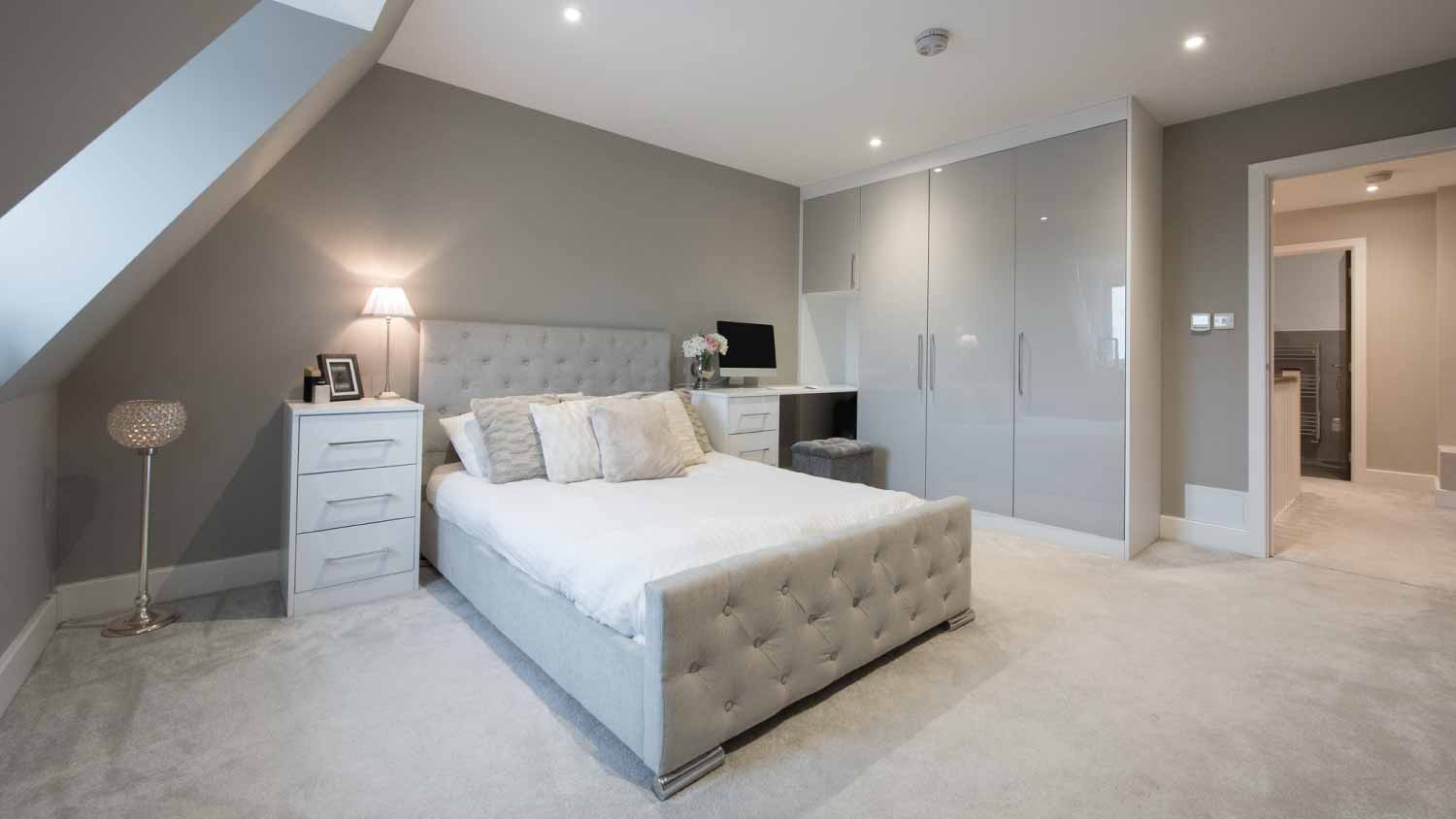
Building an addition can help you gain valuable living space in your home. Learn how much value an addition can add to your home and which additions add the most.
Understanding how appraisers determine the value of a house can help guide pre-sale renovations or offer negotiation as a buyer or a seller.

Do pellet stoves need a chimney? No, but they do need ventilation. Here’s how to vent a pellet stove with our without a chimney and the cost of pellet stove flues.

Reach-in closets tend to be of a similar size, but determining which one is right for your personal situation will come down to a few factors.
Confused by the terms involved in a real estate transaction? Learn about the differences between appraised value and market value to clear things up.