


Your well tank replacement cost will vary depending on a few key factors, such as the size and capacity of the well pressure tank.
Well and pump service costs depend on your project and location. Check with a local pro for your specific job.

The cost of a well inspection is $375 on average, but it’s normal to spend between $250 and $500 or more.
If the depth of your well is 50 feet or less, you can expect to pay between $250 to $350 for an inspection.
Wells more than 500 feet deep cost $500 or more to inspect.
Add-on services include a septic inspection, costing $150 to $400, and advanced water testing, costing $100 to $350.
The cost of a well inspection ranges from $150 to $900, with most people paying around $450. Your total cost will depend on factors like the type of well you have, its depth, and your location. Even though it can seem like a lot of money, regular inspections help you stay ahead of any potential issues or safety concerns that may affect your water supply, which will cost more to fix in the long run.
Learn more about the factors that may affect your inspection cost so you can budget for an inspection on a regular basis.
There are many factors that can impact your well inspection cost, including the type of well, depth of the well, and your location.
The type of well you have will impact the cost of your inspection. Drilled wells often have a higher inspection cost as they are more extensive and have more components that need to be tested. Dug wells require more extensive water testing as they are more likely to be contaminated due to their design. The costs for these different types of wells are based on your local inspector’s hourly fee and the accessibility of your well on your property.
The type of pump you have in your well will also affect the cost. Submersible pumps are harder to reach than jet pumps, which makes it harder and more costly to inspect them.
If your well is deeper than 500 feet, you may have to pay more for an inspection. Deeper wells require more complex equipment and expertise, which increases the cost. However, if you have a shallow well, less than 50 feet deep, your well inspection cost will be on the lower end.
| Depth in Feet | Average Inspection Cost |
|---|---|
| Up to 50 | $250–$350 |
| 50–500 | $300–$500 |
| More than 500 | $500+ |
The cost of a well-water inspection will also vary depending on your location. If you live near an agricultural, mining, or construction site, you will often need a more extensive inspection due to the higher chance of contamination.
If you live in an area with a high demand for well-inspection services, this may also increase the cost. On the other hand, if you live in a remote area, you may have to pay travel fees. Some companies will add $1 to $2 for every mile they travel to do the inspection.
| Add-On | Additional Cost |
|---|---|
| Septic inspection | $150–$400 |
| Advanced water testing | $100–$350 |
| Comprehensive well inspection | $700–$750 |
There are additional tests that can be added to your well-water inspection that can save you money in the long run. When you add a septic inspection, the total inspection cost will range from $400 to $650. The added cost of a septic inspection will depend on the location and size of your septic system.
You can also have additional tests performed while the inspector is testing your water quality. Basic well water tests will only provide a positive or negative result for their contaminant findings. Advanced tests will cost more but will let you know how much of each contaminant is found. These tests can range from $100 to $350 depending on the type and amount added.
Another option is a more comprehensive well inspection. Basic inspections cover the visual inspection, equipment testing, and water quality testing. Comprehensive tests include additional features such as bacterial analysis, mineral testing, and flow-rate measurement. The more comprehensive the inspection, the higher the cost will be.
"Get your well water sampled at a lab every year. You always want to know what is in your water and how good it is."
— Constantin Geambasu, Owner of Water Rehab, Gilbert, Arizona
There are two main components of a well inspection: examining the equipment and testing the water quality. The inspector will begin with a visual inspection and examine all parts of the well including the casing, cap, seals, overflows, screens, gaskets, storage tank, and wellhead.
The inspector will do the following:
Assess the mechanical components, including the pipes, pump motor, pressure relief valve, and gauges
Test the electrical system, including the control box, connections, and capacitors to make sure they’re running properly
Look for any corrosion or damage
Assess the area for compliance and potential sources of contamination
Conduct a flow test to test the pump motor and system output
Check for low-pressure levels, cloudy water, and faulty gauges
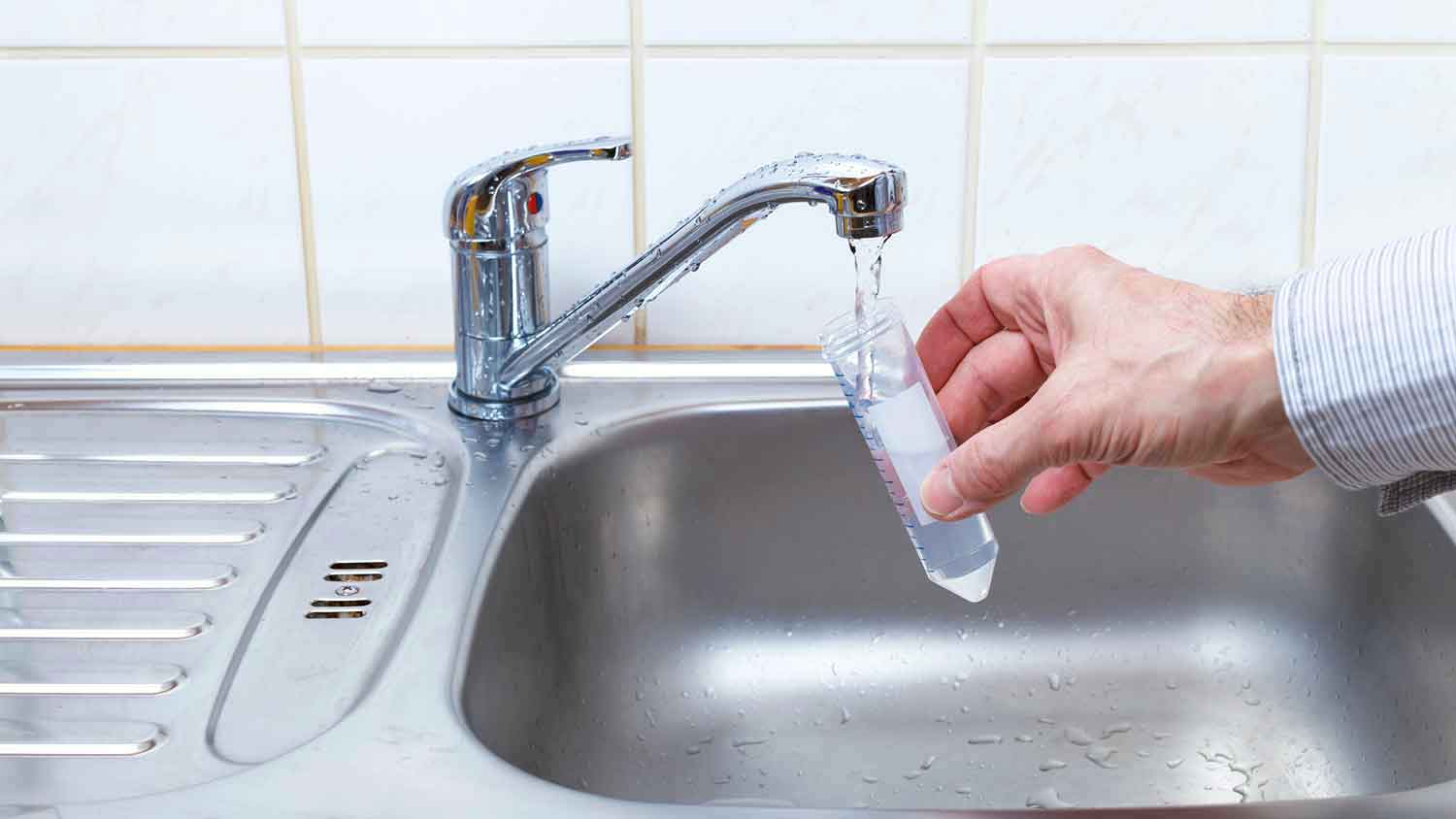
Once they’ve completed a visual inspection of the well and tested the equipment, they will check the quality of the water. The inspector will collect water samples that will then be sent to a lab to test them for harmful bacteria, contaminants, and toxic substances.
You’ll receive a report of their findings, and you may have to provide this information to your local health department for added safety. The inspector will also recommend any repairs or maintenance needed.
After your inspection, the report you receive may outline some necessary or recommended repairs to your well. The most common repairs include:
Cost to replace a pressure tank: $300 to $700
Cost to replace a well pump: $975 to $2,800
Cost to repair a leaky well pipe: $100 to $300
Cost to replace a well casing: $375 to $2,500
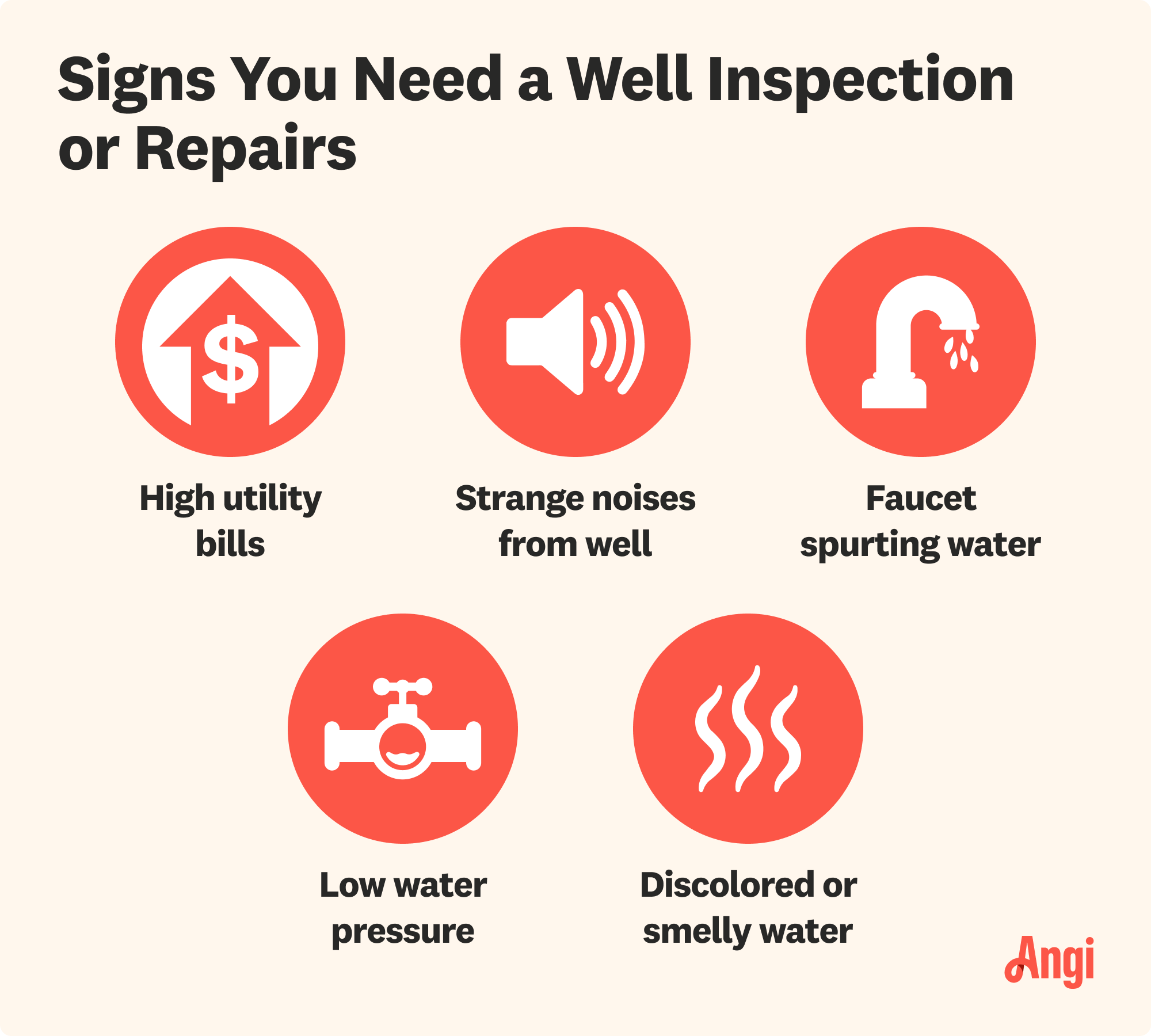
In between inspections, it’s important to stay on the lookout for common signs that tell you your water pump or well may need repairs.
Hiring a well pump pro near you can cost $250 to $500 or more. We recommended having a well inspection once per year to ensure this essential feature is functioning properly and the water is safe to drink.
Don’t hesitate to hire a well inspection pro to ensure your well is running safely and smoothly.
Professionals have extensive experience and can identify potential problems.
Well pump pros conduct water testing to ensure it is clear of contaminants and safe for consumption.
Pros can complete the job quickly, safely, and efficiently.
DIY mistakes can pose health risks and structural hazards.
A professionally inspected well can increase your home's resale value and make it easier to pass a home inspection.
A well inspection should always be done by a pro, but there are a few tasks you can do to ensure it’s functioning correctly, such as:
Perform visual inspections for cracks or other damage to the casing and wellhead.
Monitor water pressure and notify a pro if you notice a drop.
Examine the surrounding area for erosion or potential contaminants.
Utilize a home-testing kit to check water quality.
Verify the credentials of the well pump pro, including whether they are licensed and insured.
Talk with the well pump professional about what the inspection involves and whether it includes water testing.
Clarify the total cost of the well inspection to budget accordingly.
Consult the pro about their recommendations for maintaining the type of well to ensure it operates efficiently.
Home is the most important place on earth, which is why Angi has helped more than 150 million homeowners transform their houses into homes they adore. To help homeowners with their next project, Angi provides readers with the most accurate cost data and upholds strict editorial standards. We extensively research project costs to develop the pricing data you see, so you can make the best decisions for you and your home. We rely on reputable sources, including the U.S. Bureau of Labor Statistics, academic journals, market studies, and interviews with industry experts—all to ensure our prices reflect real-world projects.
Want to help us improve our cost data? Send us a recent project quote to [email protected]. Quotes and personal information will not be shared publicly.
From average costs to expert advice, get all the answers you need to get your job done.
Your well tank replacement cost will vary depending on a few key factors, such as the size and capacity of the well pressure tank.
Find out the average heat pump repair cost, what impacts pricing, and how to save. Get transparent estimates and tips for homeowners planning repairs.

A water pressure booster can add a lot of volume for a small price. Discover booster pump installation costs and cost factors in this guide.

A sump pump doesn’t remove water from your home on its own. Check out this diagram of a sump pump to see how it works with a sump pit, discharge pipe, and more.
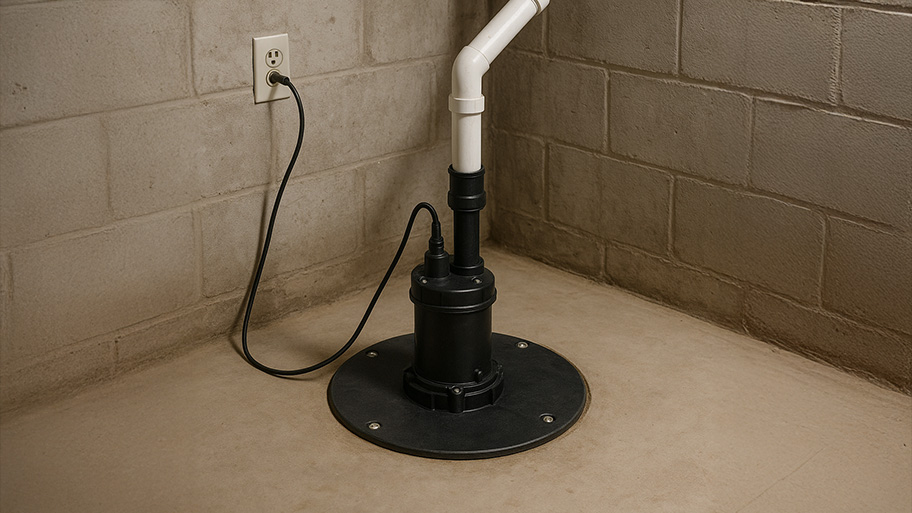
Does a sump pump need a dedicated circuit? Find out the wiring and electrical requirements for installing a sump pump in your home.

Well pump pressure helps water get where it needs to go. Learn how much pressure a well pump should have before you start adjusting.