

An electric fence is an effective way to keep animals in your yard. Learn how much different electric fences cost, in this guide.
No uncomfortable shocks required

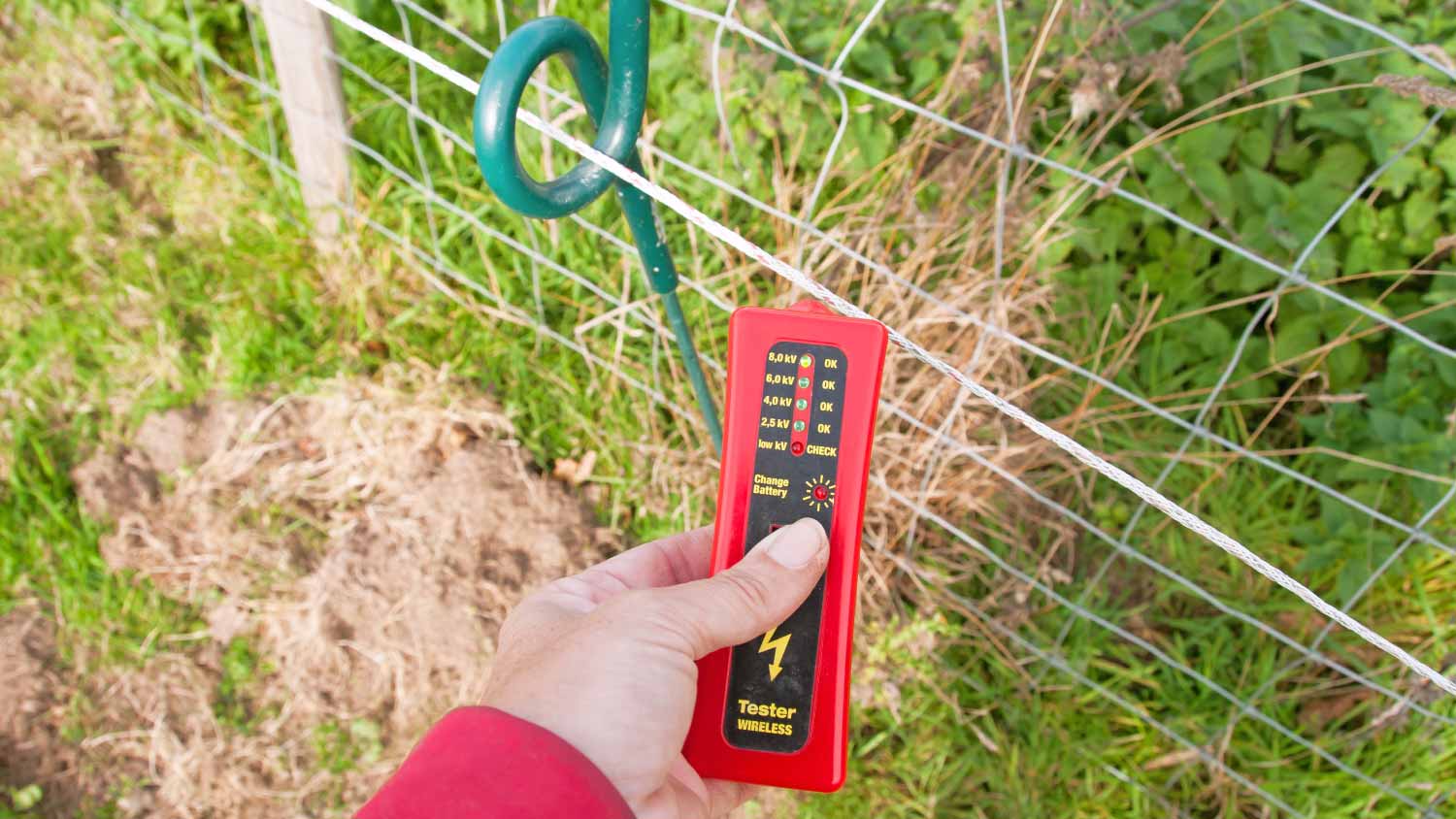
Testing an electric fence with a multimeter provides reliable voltage readings when you touch the probe to ground and charged wires simultaneously.
Expect to pay $20 to $50 for an electric fence voltmeter to measure voltage accurately and identify weak spots along your fence.
Your electric fence loses power when vegetation touches the wires, insulators crack, or grounding rods fall short of the required 4-foot depth.
Hiring a local fence company provides expert troubleshooting for connection issues and grounding problems, keeping your livestock safely contained without guesswork.
You’ve installed an electric fence to keep cattle and horses in a protected boundary while securing your livestock from local predators, like coyotes or foxes. But it might be time to test your electric fence if ol’ Bessie has escaped for the third time this week. While it might be tempting to throw on some rubber gloves and touch the fence to check for a current, trying one of these more reliable methods to test an electric fence is much safer.
Even if you’ve just installed an electric fence and you’re confident it has power, you still need to test an electric fence to ensure the voltage isn’t too high or low. If it’s too high, it could cause dangerous shocks to animals or humans who come into contact with the fence. If it’s too low, animals could escape through the fence without any issues.
If you suspect something is wrong with your electric fence, testing and troubleshooting it is important to keep it working properly. Otherwise, you’re risking the health and safety of the animals contained by the fence.

Maybe you notice some livestock escapees, or you’re dealing with the aftermath of a predatory animal that got through your electric fence. There are several reasons your electric fence may have stopped delivering shocks, including:
Power outage: Electric fences need energy to work, so a power outage on your property can prevent your electric fence from working.
Weather: Heavy snow or even rain can cause your electric fence to lose some voltage, making it weaker.
Faulty grounding: Poor grounding is the most common cause of a malfunctioning electric fence. Grounding completes the circuit, allowing the electricity to flow and power the fence.
Vegetation: Tall grass, branches, weeds, brush, or other plants that touch an electric fence can drain some of the voltage, so it’s essential to keep up with trimming along the fence.
Damaged insulators: Insulators are important for containing the voltage in the wires, but a damaged insulator can cause a leak.

There are several different ways to test an electric fence, depending on which tools you may already have in your shed. Here are six options for how to check an electric fence with safety in mind.
As its name suggests, using a voltmeter is one of the most reliable tools for testing an electric fence. You can find one at home improvement stores for about $20 to $50. To use the electric fence voltmeter:
Start by standing near the part of the fence farthest from the fence charger. Identify the ground wires of the fence by checking the fence manual.
Hold the plastic part of the voltmeter’s probe, and use the metal tip to touch the ground wire. If there is no ground wire, touch the metal tip of the probe into the soil near the fence.
Keep the metal tip of the probe to the ground wire or the ground. At the same time, hold the metal prong on the end of the voltmeter to a charged wire.
The digital screen on the voltmeter will display the voltage. Compare the voltage reading to your fence manual, which will tell you what the fence’s voltage should be (Most electric fences have a voltage of 2,000 to 10,000 volts).
Repeat these steps along the fence, moving closer to the charger, to find weak spots.
You can buy a non-contact voltmeter, or non-contact voltage tester, for about $20 to $30 at most home improvement retailers. They’re easy to use and won’t require you to touch the fence wires.
Turn the non-contact voltmeter on and wait for a blinking red light on the tip.
Stand within 5 feet of the electric fence. Point the blinking tip of the non-contact voltmeter toward the fence.
The voltmeter may begin to glow with a steady red light and beep, indicating a charge. If not, slowly move closer to the fence. If the non-contact voltmeter still doesn’t remain lit up or beep, the wire likely lacks a charge.
Repeat the steps all over the fence to check for faulty wires.
When a fencing professional installs your electric fence, you may want to invest in electric fence indicator lights in addition to the base cost to install your electric fence. These indicator lights are placed along the fence wires at even intervals. The light will be on when the fence is working properly.
If you’ve had your fence for a while, you may want to test using another method before installing indicator lights, which can help you test the electric fence in the future.
A compass can do more than just guide you through your next hike. Grab the compass from your adventuring backpack and hold it a few inches from each electric fence wire, taking extra care not to bump into your fence accidentally. Hold the compass for about 30 seconds. The compass arrow will vibrate near wires that have a charge.
You may be able to simply listen for the sound of a working electric fence. Go to a quiet part of the fenced-in area, and stand about 1 foot from the electric fence. Listen closely for the pulse of electricity, which will sound like a faint buzzing or humming sound. Just be aware that you may not hear anything, which doesn’t always mean the fence isn’t working.
If you hear crackling, clicking, or other strange noises coming from your electric fence, hire a fence company near you to take a look.
While keeping a voltmeter on hand once you’ve installed an electric fence is a good idea, you can use a screwdriver with a plastic handle if you’re in a pinch. The plastic is non-conductive, so it can keep your hands safe from shock.
Note: Never touch the metal of the screwdriver while performing this test, and do not touch the fence wires with your hands.
Touch the metal end of the screwdriver to each fence wire. You may notice an immediate electric arc move from the wire to the screwdriver, which indicates that the wire is working.
If the arc doesn’t happen right away, gently move the screwdriver along the wire for up to 30 seconds. If no arc happens, that wire could lack a charge.

After you test an electric fence and find weak points, it’s time to start troubleshooting the problem to get your fence back up and running. The problem could be any number of things, from simply letting weeds grow too high and close to the fence to incorrectly installing grounding wires.
If you have trouble finding the issue, you’ll want to call a professional fence company or local electrician for help. Handling electric wires can be dangerous for those without training, and these pros can quickly identify and resolve any problems with your electric fence.
As simple as it sounds, a leak or missing charge could be due to improper connections. Ensure wires are secure to maintain the circuit and the jumper wires that carry the charge throughout the fence are properly connected.
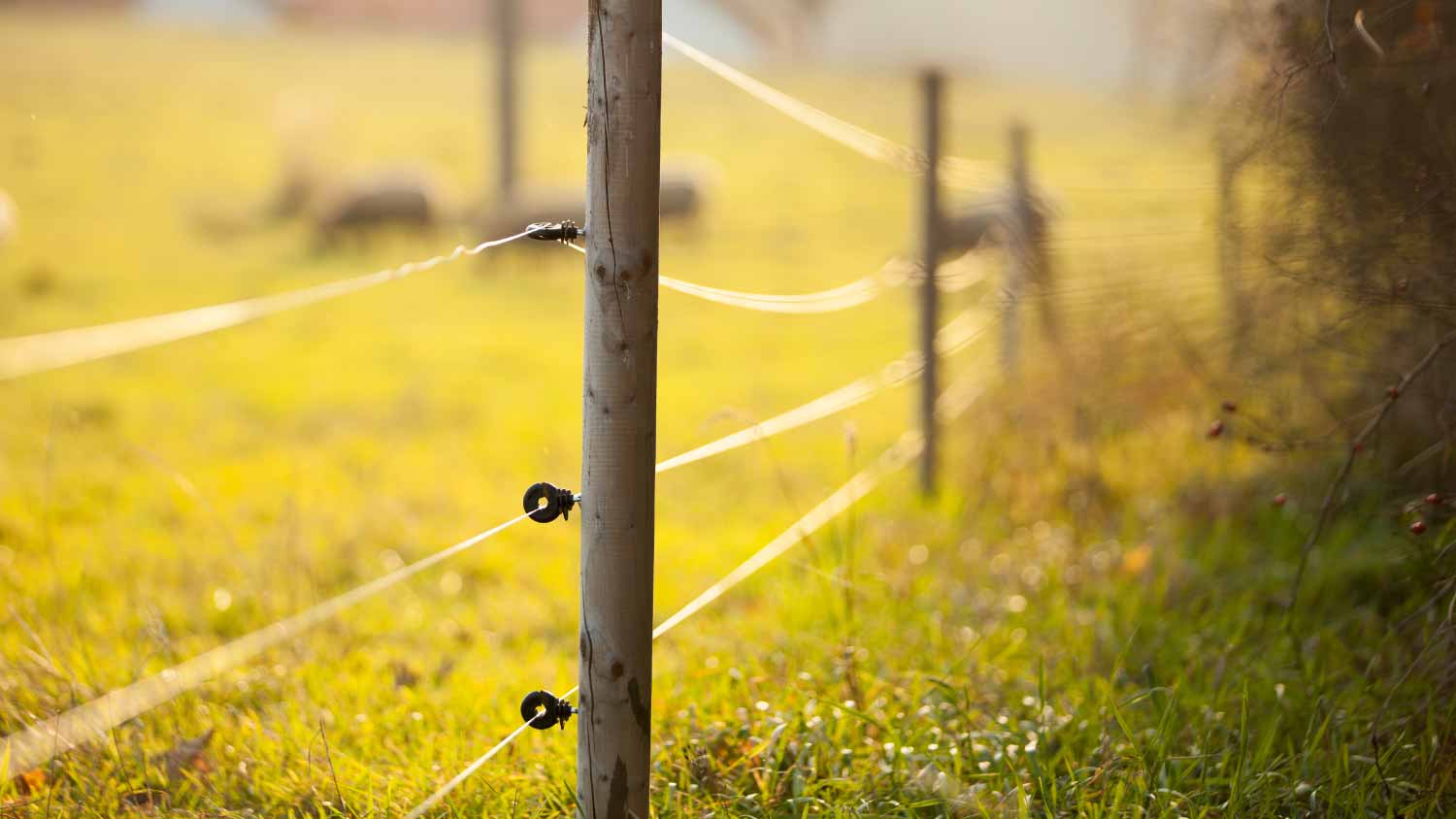
Insulators are non-conductive materials designed to prevent the fence from shorting where the wires and fence posts meet. Using the wrong insulators for your fence can cause shorts, which can also happen when your insulators are cracked or damaged. Over time, insulators can break down from exposure to the elements, so inspect them and budget for fence repair costs as needed.
Grounding problems are common for electric fences. This process is what completes the electrical circuit and allows electricity to flow from the charger and all the way around the fence. Using ground rods shorter than 4 feet or rods made from metals other than copper or galvanized metal can prevent the fence from working properly.
Many materials can interfere with your electric fence. Make sure not to leave tools, wheelbarrows, or other equipment leaning against the fence, which can cause a short. Again, weeds, brush, bushes, or other plants growing along the fence can drain the voltage, so you’ll need to add trimming and clearing the area along the fence to your chore checklist.
A reliable team for moves across state. My switch to a new place needed careful lifting through tight hallways. The movers checked the doorway first, then carried heavier pieces with slow, controlled movements. Their patience helped prevent damage, and I?d choose them again.
We have used Window Warriors many times with no issues. They arrived on time and were very professional . We have pets and Window Warrior team treated them very well, well trusted team.
 Window Warrior of Columbus, Inc.
We have bought and sold numerous times over the past 50 years. Sherman Hall and Top Line are top notch. Thorough and detailed, he explains every possibility, probability, and eventuality. High class and pleasant. The best.
 Top Line Home Inspections, LLC
Our homes curb appeal skyrocketed thanks to Custom Paint Jobs LLC s exterior painting.
 Custom Paint Jobs, LLC
Window Depot did an amazing job on my deck. I wasnt sure what I wanted to do, but their composite decking was affordable and will last a long time. I am excited to have family over, and I am no longer embarrassed by my backyard. Jeff and the ground crew were polite, respectful, and caring for...
 Window Depot USA of Central Ohio
Storms Mobile Welding was great to work with. They were prompt, professional and did an overall excellent job on the project. I highly recommend.
Great job...edging and pre clean up went well with a great job with seal coat. Friendly, efficient and professional.
 All Star Paving and Sealing
Did an amazing job transforming my yard. Also installed sod in places, would recommend to everyone.
 Cardinal Landscaping & Construction LLC
We hired Andrew and the team from Midwest Lightscapes for a custom lighting design and installation on a Victorian Village home. The house had outdated low-voltage halogen outdoor lights and many of them were not working. Andrew designed and installed a new system including uplighting on the...
 Midwest Lightscapes
The work was completed in a day and a half. They cut small trees, pulled out an old swing set, pulled out railroad ties and left the place spotless when the job was complete. I am very happy with the fence and their efforts were above and beyond my expectations.
 Elite Fence
From average costs to expert advice, get all the answers you need to get your job done.
An electric fence is an effective way to keep animals in your yard. Learn how much different electric fences cost, in this guide.

Find out the invisible fence installation cost. Learn about average prices, key cost factors, and tips to save on your pet’s safety solution.
Find qualified electric fence pros for installation or repairs. Learn what questions to ask, credentials to check, and how to hire the best contractor.
When an electric fence is not working, it can become a major concern for landowners. Troubleshoot the issue with these common electric fence problems.
Learn how to read an electric fence wiring diagram—knowing the parts of an electric fence can give you a better understanding of how it works.

Unsure who to hire for electric fence installation? Compare fencing contractors vs. electricians and learn how pros deliver safe, reliable results.