
Your well tank replacement cost will vary depending on a few key factors, such as the size and capacity of the well pressure tank.
The pressure is on, but don’t sweat it

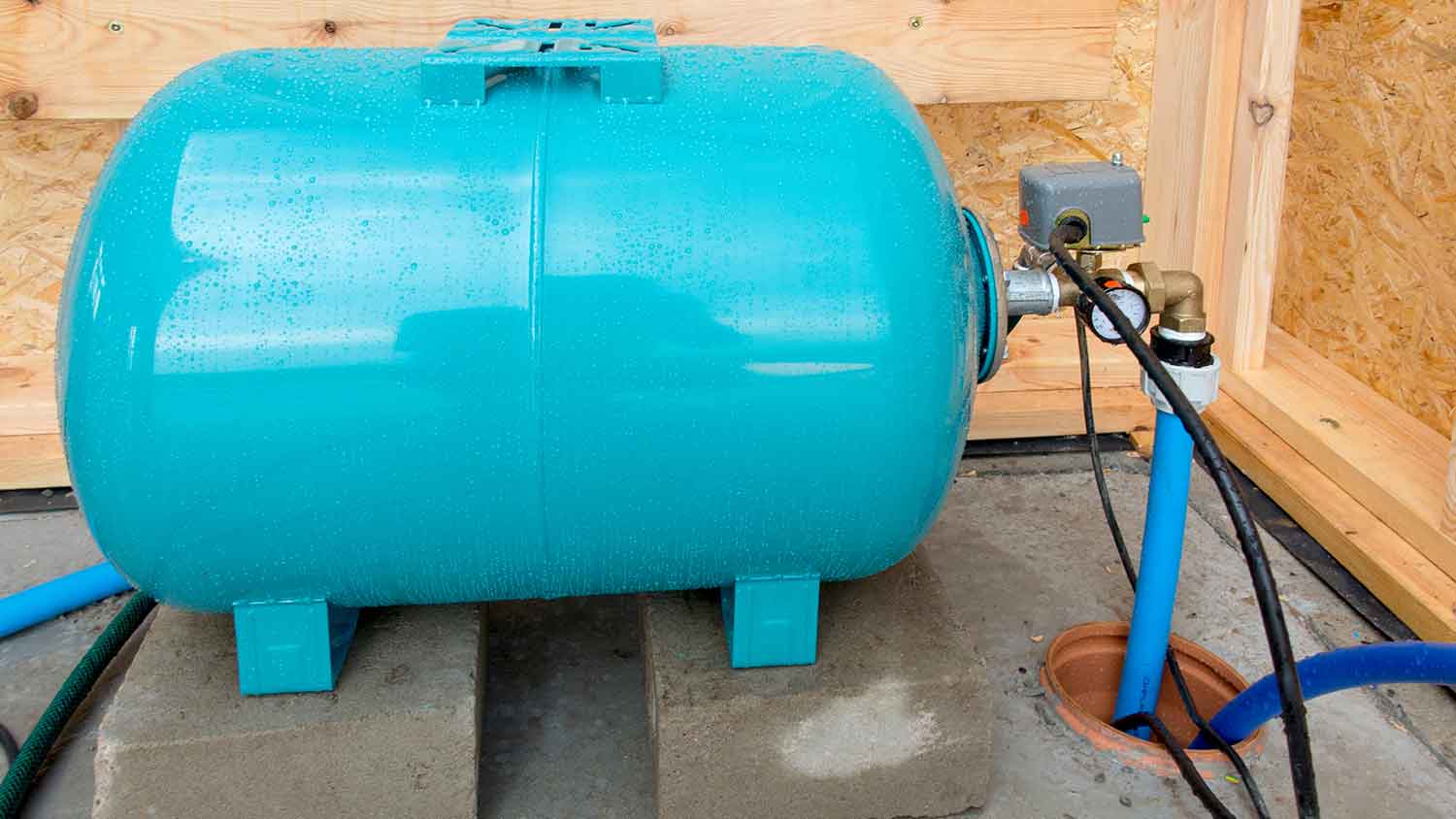
Sizing a well pressure tank depends on your pump flow rate, pressure switch setting, and drawdown, the usable water stored between cycles.
Professional well inspections cost $250 to $550, and scheduling them annually helps you catch sizing issues or tank problems before they lead to bigger repairs.
Calculate drawdown by multiplying your pump flow rate by the recommended minimum runtime, then select a tank size that meets that drawdown.
Hiring a local well pump professional removes the guesswork from sizing calculations and pressure switch adjustments, keeping your water system running smoothly for years.
Low-pressure situations are usually desirable, but pressure is a touchy subject when it comes to your well water. It’s an important part of maintaining proper water pressure to your sink, shower, and other water fixtures while also preventing premature wear and tear to your well pump. Since factors like flow rates and pressure switch ranges can vary, choosing well pressure tank sizes isn’t a one-size-fits-all situation. Check out the steps below for how to size a well pressure tank.
By installing a well pressure tank that’s the right size for your household, you can save money and help the tank run more efficiently. If you choose one that’s too small, the pump may cycle too quickly. This can wear down the tank and force you to replace it earlier than you would if it were the right size.
On the other hand, a larger-than-necessary well pressure tank won’t affect how your well operates, but it will take up extra space and cost more money.
Need a new well pressure tank, but not sure which size to get? Let’s break down how to determine the size of a well pressure tank.
The flow rate of your pump refers to how many gallons per minute (GPM) it delivers. This is typically tested when you or a professional drill a new well and may be in your records, but you can test it later if you don’t have the information handy.
Pressure tanks are filled with one part water and two parts air to create pressure in your water fixtures, so measuring the flow rate takes some calculations. To perform a simple test, get a few buckets that have either measurement lines or a standardized size, such as 5 gallons. Without any other water sources running, fill your bucket(s) for 60 seconds at full blast from a garden hose. The number of gallons at the end of the 60 seconds represents your flow rate—for example, if you have 10 gallons at the end of the test, your flow rate is 10 GPM.
The drawdown capacity of your pump refers to the usable amount of water stored between a high- and low-pressure range. When water flows out of the tank to your water fixtures, the tank pressure decreases until it hits the low end of the range, such as 30 PSI (pounds per square inch), then turns on the pressure switch until it reaches the high end of the range, such as 50 PSI.
When multiplied by the flow rate, the minimum runtime describes how long the pump takes to give you the appropriate drawdown capacity. The standard guidelines for GPM and minimum runtime are as follows:
| GPM | Minimum Runtime per 1 GPM of Flow |
|---|---|
| 0–10 | 1 gallon |
| 10–20 | 1.5 gallons |
| 20+ | 2 gallons |
As an example, a pump with a 10 GPM flow rate should have about a 10-gallon minimum drawdown capacity. A pump with a 16 GPM flow rate multiplied by 1.5 should have a 24-gallon minimum drawdown capacity.

The pressure switch setting refers to the low and high pressure ranges that determine when your well pump should turn on or off. Settings vary, but most pumps are either 30/50 or 40/60. The lower of the two numbers represents the PSI that triggers the pump, and the higher number is the PSI that turns off the pump. Most pressure tank manufacturers provide a chart with the unit indicating the drawdown capacity in reference to the pressure switch setting.
Once you’ve determined the flow rate, drawdown capacity, and pressure switch setting, you can calculate your tank capacity needs. Pressure tank sizes are standardized by size and associated drawdown volume:
| Tank Size (in Gallons) | Drawdown Capacity (in Gallons) |
|---|---|
| 20 | 6 |
| 30 | 9 |
| 50 | 14 |
| 85 | 25 |
| 120 | 36 |
Let’s say your pump has a 10 GPM flow rate and 1 GPM runtime for a 10-gallon drawdown capacity. According to these standards, you would need a 50-gallon tank. This is where the pressure switch setting comes in: The higher the pressure switch setting is, the lower the drawdown capacity is. If you’re operating with a higher pressure in this example, you may need to upgrade to an 85-gallon pressure tank.
Choosing the right size pressure tank is just the first step in making sure your system runs smoothly. Here are a few other tips for taking care of your well pressure tank:
Examine the tank: From time to time, inspect the tank for leaks, corrosion, rust, cracks, or other damage. If you spot any of these signs, reach out to a professional.
Set the right pressure: When your well tank pressure is too high, it can force the pump to turn on and off too quickly, which may lead to burst valves in the tank. To avoid this, you should test the pressure once per year (and adjust it if necessary).
Schedule professional well inspections: To keep your tank (and the rest of your well system) working properly, have a pro check it out every year. On average, a well inspection costs between $250 to $550.
A plumber can install a well pressure tank for between $125 and $200 in labor costs, and they can help you select the appropriate size for your home as part of the cost of well pressure tank replacement.
If you plan to install the well pressure tank yourself, determining the size on your own might be more convenient than calling a local well pump company. Sizing your own well pressure tank requires minimal time and resources, and you can usually get input from the supplier as you start shopping around for the unit.
I have used Columbus Worthington Air for years and recommend them whenever I have a chance. The staff is quick, courteous, and well-trained.
 ARS Columbus Worthington Air
This service was great. My air conditioner went out during the heat spell that we had. My husband has health issues and they came out that night and at 9:30pm the air conditioner was fixed and running. We are sooo very thankful, this is the company I will be using from now on and would...
 Mr. Mechanical Ohio
Joseph did a great job with the staircase and trim. Timely and efficient, clear communication about the work, very fair pricing. For the stairs in particular, done very skillfully in an old house (1893) in a tight spiral, and very creative with how to do the handrail. Did a nice job with...
 Vouis Trim Carpentry L.L.C.
Great experience!! Dion was prompt, professional and very polite. He is hands down the best plumber I have ever used.
 Mercenary Remodeling & Handyworks
Cole has been handling plumbing and general contracting for our four properties over the past three years, and he’s always done a great job. Most recently, he installed a sink and countertop in our retail store where none existed before, and it turned out exactly how we needed. He’s...
 ANB Renovations LLC
Matt is a consummate professional. The work turned out to be far more difficult than expected and rather than turn the job down, Matt rose to the occasion and completed a near impossible task. I can not recommend Greene's Plumbing Service more highly. On a scale of 1-5 I would give Matt a...
 Greene's Plumbing Service
The technician was very professional and friendly. He answered all my questions and was very thorough. He left the fireplace area very clean . He inspected from the roof and advised me as to other work that might need to be done. There was no pressure there. I was very satisfied with the...
 Supreme brick & chimney
Custom Paint Jobs LLC pays attention to every detail, ensuring a job well done every time.
 Custom Paint Jobs, LLC
When we had the winter freeze, I called Quantum Waterworks Waterline & Drain Cleaning Services and within 1 hour I received an e-mail and he sent someone out the next day and he was on time, he was nice and did the job quickly and cleaned up after himself. We had a leak in our kitchen from...
 Quantum Waterworks Waterline & Drain Cleaning Services, LLC
From the beginning , every appointment was met with punctuality! The day of installation, they arrived on time and worked tirelessly all day until the job was finished. ( Even through a very heavy down pour) Ilia, the owner is a professional, knowledgeable, and fair man. He is absolutely, and...
 Window Depot USA of Central Ohio
From average costs to expert advice, get all the answers you need to get your job done.
Your well tank replacement cost will vary depending on a few key factors, such as the size and capacity of the well pressure tank.

Drilling a well is no small feat. You’ll need to plan for excavating, a pump, and more. This guide will help you estimate and manage your well drilling costs.

Discover the average water tank cost, including installation, maintenance, and tips to save. Get transparent pricing and expert advice for your home project.

A pressure tank keeps your well system running smoothly. Follow this guide to determine the specific well pressure tank size needed for your home.
Extend the life of your well pump with a healthy water well pressure tank. Learn the steps to install a new well pressure tank successfully in your home.

You don’t always need to leave it to the pros to set up your well pump and pressure tank. Follow this guide to learn how to do it yourself.