


Wondering how to stop grass from growing into your flower beds? Use these four helpful methods for keeping your grass in the right place.
The grass is always greener when it's growing where it's supposed to be

Grass in your flower bed competes for nitrogen, phosphorus, and water, weakening your plants and spreading quickly through deep roots and underground stems.
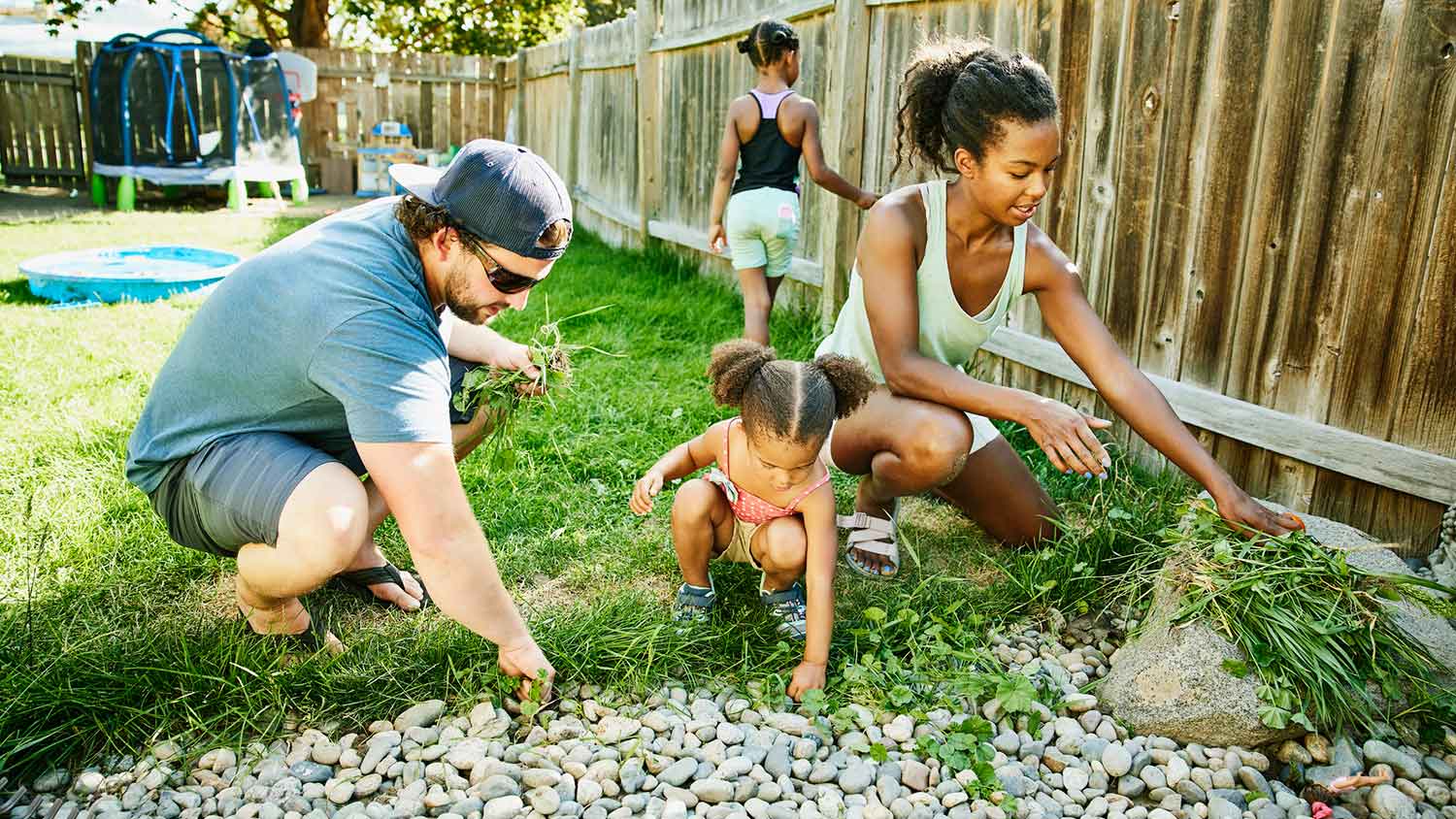
Pull grass up by hand when you spot small patches, gripping close to the ground and shaking roots loose to remove the entire root system.
White vinegar mixed with dish soap dries out unwanted grass, so you should spray only the grass and avoid nearby flowers and leaves.
Hiring a local lawn care professional provides reliable help with removing stubborn grass, installing garden edging, and applying mulch to prevent grass from returning.
When exactly does a plant turn into a weed? When it ends up somewhere without an invitation. The same things that make grass strong and healthy in your lawn can make removing it difficult the second it creeps into your garden. Learn how to kill grass in flower beds, whether by pulling it up manually, spraying it with herbicide, or burning it right out of the ground.
A flower bed overgrown with grass is more than just an eyesore. The plants in your flower bed or vegetable garden are vying for sun, water, and nutrients. Flowers that require a lot of nitrogen, phosphorus, or potassium, for example, will have to fight with turfgrass to stay big and strong.
Both turfgrass and many weed-like grasses, such as crabgrass or orchard grass, spread quickly and dig into the ground with deep roots. Weeds can even be a sign you have poor nutrients in your soil. If you don't catch them quickly, they can mature and easily take over your lawn.
Arcadia has been an incredible help in getting my yard ready for winter. They recently handled my fall cleanup, tackling everything from leaf removal to trimming and preparing the garden beds. The attention to detail was outstanding—they left everything clean and well-cared for. They also gave great advice on maintaining my garden through winter and preparing for spring. For example, they helped protect my hydrangeas to ensure a full bloom next year and showed me how to winterize my new fig tree which was a gift by wrapping it to shield it from the cold. They even suggested replacing my old habit of tilling my garden beds with mulching to protect the soil from erosion and adds nutrients. If you're looking for a team that goes above and beyond and really knows their stuff, I highly recommend Arcadia!
The best times to get rid of your grasses and weeds are when they’re small. Ideally, remove grass and weeds from your garden in the fall and spring.
Perennial weed plants, like dandelions and creeping Charlie, are best-taken care of in the fall because the plant dies while the root stays alive. As long as you take care of the weed at the root level, it won’t return in the spring.
On the other hand, take care of annual weeds, like chickweed and crabgrass, in the spring. By disrupting their life cycle at this time, you can prevent the weeds from taking root.
If you notice a specific weed taking over your garden, avoid the problem next year by using pre-emergent herbicides, which prevent weed seeds from germinating. Nip these weeds in the bud before they get a chance to become a problem.
In order to access the roots of the grass, you'll need to be able to see the base of your flower bed. Trim back or prune the plants to access the base of the grass itself. This process will keep you from harming nearby plants around your grass.
Wear work or thick gardening gloves, long sleeves, and pants. If you decide to use an herbicide, even an organic one, you may also need goggles and a mask.
Lastly, pick the right time of day for the method you choose below. Applying any products or pantry items to your weeds shouldn't be done before a rainstorm. Otherwise, they'll wash right off and into the soil. However, if your grass is too dry, you'll have more trouble pulling up the roots from the soil.

Before you jump in, keep in mind that many types of turfgrass and weed-like grasses spread through rhizomes. The tightly knit systems of underground stems can be trickier to pull up than plants with simpler shallow roots.
Whichever method you choose, remember to get all of the roots beneath the grass as well as what you can see above it. If you have trouble, consider hiring a lawn care company near you or local gardener to help.
The best grass killer for flower beds is your own two hands. Opt for this method if you're dealing with small patches of grass that jumped your edged barrier or are relatively young with small root systems. Pulling weeds by hand is an art, even if you're pulling up common turfgrass.
Here's what to do:
Wait for the soil to be slightly moist but not soaking from a recent rain.
Wearing gloves, grip the patch of grass as close to the ground as possible.
Shake the grass loose, careful to break as few roots as possible.
If it doesn't budge, use a spade or small hand rake to loosen the soil.
Place the grass in a bucket to keep the seeds from spreading around your discard pile.
In lieu of a traditional herbicide, vinegar is a great at-home option that will target your grass but not the larger plants in the area. The high acidity of the vinegar should dry out grass but leave plants with deep root systems alone.
While it is safe in small amounts on plants, it's best to try to target only the grass you're trying to kill, especially when working with an undiluted solution.
Pour undiluted white vinegar into a spray bottle. Add a few drops of dish soap to help the blades of grass retain the vinegar.
Wearing gloves, spray the vinegar solution directly on the patch of grass.
Wait several days and observe the grass. Reapply if the grass does not begin to wilt.
After several days, pull the dead grass up by hand, careful to remove the dead roots as well.
Dish soap works similarly to vinegar, especially in concentrated form. The slight alkalinity of the grease-fighting product will break down the grass but have little effect on nearby plants.
Combine equal parts dish soap and water in a spray bottle.
Spray liberally on the grass and surrounding soil.
Wait several days to let the grass wilt, reapplying if necessary.
Pull up the dead grass by hand when it's wilted.
There are several main ways to kill grass in your yard with the sun. Solarization involves laying a clear plastic tarp over the grass to cut out oxygen and moisture but retain the heat from the sun.
Keep in mind that this is an easier method for large open areas in direct sun, such as when a flower bed is overgrown with grass and you've decided to start from scratch.
Aerate the soil around your grass and flower bed with a spade or rake.
Water the area thoroughly.
Lay a clear plastic tarp over the area where you wish to kill the grass and other weeds.
Seal the edges of the tarp with bricks or stones or by pushing the edges into a hand-dug trench.
Leave the tarp over the area for four to six weeks.
Remove the tarp and aerate grass-free soil.
Sheet mulching is another way to kill grass in flower beds if you're trying to wipe out a large area exposed to the sun. It's a bit different than solarization, however, because you're cutting out access to the sun as well.
You can either use a plastic tarp or layers of newspaper and cardboard to do the trick. Here are the basics:
Pull up as many patches of grass as you can by hand. You can also trim or mow the grass as short as possible.
Water the area you plan to cover.
Cover the grass with a layer of newspapers, cardboard, or a sheet mulching tarp.
Water the area again.
Cover with a layer of organic mulch such as wood chips, bark, or pine needles.
Water one more time and let the cover sit for several weeks to kill the grass and rejuvenate the soil.
Hire a mulching company in your area to take on this task if you’d rather spend more time caring for flowers and less time installing mulch. They can help setup your garden bed so your flowers have the best chance to thrive.
Take extra care with this trick and the next suggestion, as they both involve dangerous levels of heat. Heat up the kettle and—while wearing gloves and long sleeves—pour boiling water directly on the patches of grass in between your flower beds.
The water will kill the roots and grass blades, making them easier to pull up. Keep in mind that this will kill root systems around it as well, so be careful when pouring.
Similarly, you can burn grass and weeds right out of the ground if you're comfortable with a blow torch. Many gardening stores make long-handled torches specifically for this purpose. However, always remove all dried debris from your garden area and never burn away weeds during a drought.
Herbicides may be one of the quickest ways to kill grass around your flower bed, but those with glyphosate pose a potential risk to ecological health, according to the United States Environmental Protection Agency (EPA).
However, selective herbicides that target grass and not your surrounding plants can take out the weeds quickly and effectively. Above all, always follow the instructions on the label of the product and wear proper personal protective equipment (PPE) during the application.
After getting rid of the initial patches of grass in your flower beds, you may need to keep at the hand-pulling, vinegar spraying, or boiling water trick, depending on your preferred method. Grass roots can be difficult to fully remove and seeds spread quite easily from a matured plant. So, the first step to keep grass from growing back is by pulling it up the second you see it sprout.
Adding an edge to your flower bed is your next best bet. Garden edging creates a physical border between your yard and the soil of your flower bed. The process involves removing several inches of turf from the border of your flower bed and inserting plastic, stone, metal, or concrete separators to keep the grass from making the leap.
Lastly, consider adding a layer of natural mulch around your flower beds to protect them from weeds, grass, and even pests. Mulching your garden can also regulate the temperature and moisture of the soil around your flowers, as well as look pretty stylish in the meantime.
The cost of a professional landscaper will range from $50 to $150 per hour, but the price varies depending on the service and where you live. Many landscaping companies offer weekly or monthly visits in price packages. During these visits, they may remove the grass from your flower beds, install garden edges, or top off your mulch.
If you need additional landscaping assistance, hiring a landscaper to get rid of grass in your flower beds may be a good bet. However, the small job itself is an easy one to DIY, especially if you're an avid gardener who likes to get into the mud anyway.
Ginny Bartolone contributed to this piece.
Custom Paint Jobs LLC made our home feel like a piece of art. Thank you for your creativity!
 Custom Paint Jobs, LLC
Window Depot did an amazing job on my deck. I wasnt sure what I wanted to do, but their composite decking was affordable and will last a long time. I am excited to have family over, and I am no longer embarrassed by my backyard. Jeff and the ground crew were polite, respectful, and caring for...
 Window Depot USA of Central Ohio
First of all, the gentleman I dealt with (Cam?) was very responsive to my many questions and concerns throughout the project, which is a huge plus to me. From the first time I met him for the estimate all the way til the completion of the job, he and his crew were professional and respectful....
 All Star Paving and Sealing
We had a 20+ year old landscape lighting system that needed replacement. Midwest Lightscapes worked with us to design a much improved lighting system, lighting the exterior of the house and the back yard. Installation of the 45 light system took one and one-half days, and went very smoothly....
 Midwest Lightscapes
Another great success for me on home advisor. This company did an awesome job on my landscaping and stayed within my budget. The best part, the work was complete within 2 days of my initial request. Professional and responsive. I highly recommend!
 Blue Ring Residential Services, LLC
The company no showed on me twice. The 2nd time was no call no show. They were responsive to set up the first appointment to perform the "landscape cleanup". 3 hours after their initial scheduled appointment time they called me to let me know they had some "problem" with the truck and their...
 Ruby Home and Hauling Services
Received ideas for future landscape plans...quote to do the work seemed a bit high but I did not have any other quotes to compare it to, so perhaps that is the going rates. <br />
 Landscapes By Terra, Inc
All around they have done a really great job. <br /> I have used JL Landscapes for the past 8 years. I own and operate my own commercial/residential real estate company where we own, operate, and maintain our own properties. JL Landscapes has been our exclusive landscaper for both our...
 J.L. Landscapes
Bought a half a cord of firewood from Pitzer with stacking last month. I waited to report so I could see how the wood burned. <br /> <br /> I have three pet peeves regarding landscapers, but Pitzer scored "A"s regarding all three. First, rather than having customers "leave a message" and...
 Pitzer Landscaping
I left a message on Sunday requesting to schedule a time to obtain an estimate/walk-through and received a return call in the morning of the following Monday. Mark worked with me and agreed to schedule the estimate/walk-through for the following Saturday. When Mark arrived for the...
From average costs to expert advice, get all the answers you need to get your job done.
Wondering how to stop grass from growing into your flower beds? Use these four helpful methods for keeping your grass in the right place.
Killing grass can be a slow process that takes neglect, time, or herbicide. Throw in some muscle to prepare the land for fresh grass seed or a garden.
Will vinegar kill grass and weeds? Get the scoop on what vinegar does to grass, when to use it, and things to consider.
Whether you're opting for a lawn alternative or looking to rejuvenate your turf, check out these five options to remove grass from your lawn.
Curious how to kill weeds in your grass and keep them from popping up every season? Here are five weed-fighting methods to beautify your lawn.
Foxtail grass is a nuisance in yards and pastures, and is dangerous to animals. There are several ways to get rid of foxtail weeds without killing your grass.