
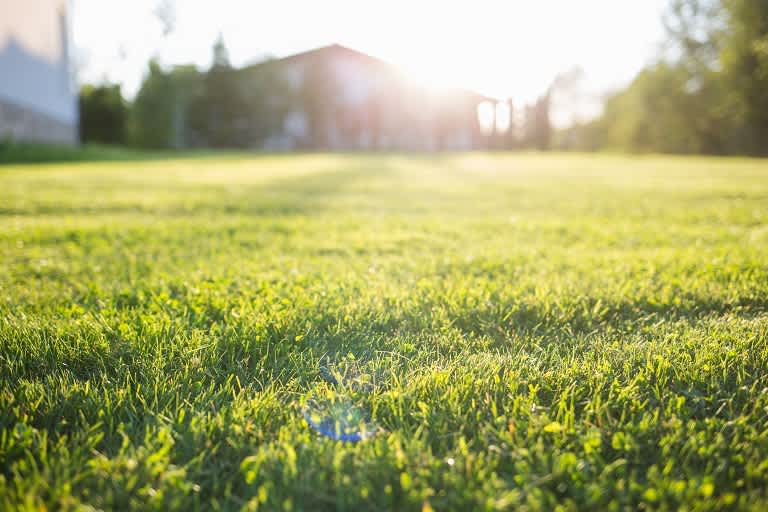
Making grass greener and thicker is easy—when you know how it’s done! Find out how to make your grass green and lush with these simple tips. This guide has everything to know about making grass greener to get a beautiful, healthy lawn.
Get your best lawn ever

Keeping grass green starts with mowing at the right height for your grass type, watering early in the morning, and fertilizing based on soil tests.
Your lawn needs 20 to 40 minutes of watering one to three times per week, depending on grass type, location, and rainfall levels year round.
Aerating your lawn once per year gives roots better access to air and water, strengthening your grass and improving its heat and drought tolerance all season.
Hiring a local sprinkler installation professional sets up automatic watering at the right times, keeping your lawn green without manual effort every day.
Not only does a lush lawn make your home look more appealing, but it’s also a great place to sprawl out and soak up some sunshine. The only problem? Maintaining a yard full of healthy grass takes serious work. Fortunately, though, learning how to keep your grass green is pretty straightforward—and the results are worth the effort.

Before you drag your lawnmower out of the garage, make sure you know the recommended height to cut your grass. For most grass types, the ideal height is between 2 and 3 inches, but certain warm-season grasses should be closer to 1 and 1/2 to 2 inches. Cutting your lawn too short can hurt the grass and make it susceptible to browning or weed growth.
If you’re aiming to keep grass green in summer, knowing the right time to water is important. When you water your lawn on a hot day, the water from your sprinklers can evaporate before it even reaches your grass’ roots. To prevent this, be smart about when you run your sprinklers.
In summer, the best time to water your grass is the early morning—ideally, at dawn, but definitely before 9 a.m. If that’s not possible for you, try to water between 4 p.m. and 6 p.m. in the summertime.
Of course, watering your lawn by hand or manually turning your sprinklers on and off for every session isn’t ideal, which is where an automatic sprinkler system comes in handy. With the help of a local sprinkler installation pro, you can set up your irrigation system to run at whatever times you’d like.
The best time to water grass is at dawn or early evening before the sun is fully out. This will result in less wasted water from evaporation.


Like watering at the right time of day, it’s also essential to water your grass for the correct amount of time. For your lawn to thrive, it needs to get enough moisture in the scorching days of summer. But you should also be careful not to leave the sprinklers on for too long and overwater your grass.
As a rule of thumb, most lawns require 20 to 40 minutes of watering one to three times per week. However, your grass type, location, rainfall levels, and other factors will impact how long you should water your grass.
Throughout the year, the soil beneath your grass loses its nutrients due to things like erosion, leaf removal, and stormwater runoff. Fortunately, fertilizing your lawn can help replace these key nutrients so that your grass stays strong and fends off pests and weeds.
Rather than just buying the first bag of fertilizer you find, it’s best to perform a soil test to get a better idea of your lawn’s health and discover which nutrients it really needs. In general, though, you can fertilize cold-season grass once or twice per year, either in the spring, fall, or both. If you have warm-season grass, aim to fertilize in late spring or early summer. Over-fertilization is possible, though, so research your grass and soil type beforehand to avoid fertilizer burn.
Pesky weeds like crabgrass can wreak havoc on your lawn, competing with your grass for sunlight, water, and nutrients. There are a few different approaches for removing weeds, but the best methods usually involve pulling out the existing weeds by the root and then using an herbicide or homemade weed killer to prevent them from coming back. If these tactics don’t work, you might need to call in a local weed control professional.

Dog poop and grass? They’re not the best of friends like we might think. If you have a furry friend who goes to the bathroom in your yard, you might notice unsightly brown patches or dead spots around your lawn. That’s because dog poop and pee contain high levels of nitrogen and phosphorus, too much of which can kill your grass.
Fortunately, there are ways to prevent your dog’s pee from destroying your lawn. For example, you can train them to use the bathroom in a designated grass-free area of your yard, or you can wash away the pee when they finish. Also, keeping your pup well-hydrated dilutes their urine, so it’s easier on your grass. Scooping their poop right away (or at least once per day) will also help keep your lawn in good shape.
Lawn aeration involves poking holes in the soil, which gives the roots better access to air, water, and nutrients. On top of that, aerating your lawn also helps your roots grow stronger and deeper, improves heat and drought tolerance, and facilitates better drainage.
Typically, experts recommend aerating once per year. If it’s been a while since your last aeration or you have a thick layer of thatch buildup, you might need to aerate twice yearly. The best time to aerate is when your grass is in its peak growing phase. Often, that’s in early fall, but your exact timing will depend on your grass and soil types.
D1 Roofing delivers outstanding service from beginning to end, backed by a strong warranty and expert teams. I highly recommend them for their excellence in meeting and surpassing expectations with unmatched communication. Choosing D1 Roofing was flawless decision
 Division 1 Roofing LLC
We had our houses windows and back door replace this summer by Window Depot USA of Central. He gave us grate advise and saved my family lots money. The team did a fantastic job with installation. If you need help, they sure get job done right!
 Window Depot USA of Central Ohio
Wonderful. I am going to have them remove and replace my driveway in the spring.
 All Star Paving and Sealing
We were having 2”x 2” tile installed . There was a small installation error and the new additional replacement tile was from a different lot and the colors didn’t match. Joe assured us that he would rectify everything , which he did without hesitation. We decided to go with the 18” x 36” tile...
 CarifaTile
We had a 20+ year old landscape lighting system that needed replacement. Midwest Lightscapes worked with us to design a much improved lighting system, lighting the exterior of the house and the back yard. Installation of the 45 light system took one and one-half days, and went very smoothly....
 Midwest Lightscapes
Did an amazing job transforming my yard. Also installed sod in places, would recommend to everyone.
 Cardinal Landscaping & Construction LLC
They show up and they did take us on as a client which seems to be a problem with other lawn care providers. We have multiple properties and this one was located close to downtown and no one really wants to mess with it.
The worker came out when he was supposed to come. He informed me he would honor the Angie's List deal, but would not do any more work for me since my son in law owns lawn care company as well, even though they do not do the same type of work. He said he did not feel comfortable giving me...
 Bello Giardino LLC
E & L Lawn Care was super. They were very responsive before and after service. They were efficient and were able to complete the job within 1 day. I have had concern about one section of sod - the owner was pro-active and did a visit to evaluate. I have no doubt they will stand behind...
 E&L lawn care
From average costs to expert advice, get all the answers you need to get your job done.
Making grass greener and thicker is easy—when you know how it’s done! Find out how to make your grass green and lush with these simple tips. This guide has everything to know about making grass greener to get a beautiful, healthy lawn.

Summer heat and droughts can make lawn and garden care challenging. Here are some summer landscape tips that’ll keep your lawn and garden looking healthy.

Grass can look dull or dead for many reasons, but you don’t have to spend months trying to revive it. Here’s a guide for how to make grass green fast.

Tactics for keeping grass green during a drought depend on local restrictions. Check out these seven tips for preserving your grass.
When your grass keeps dying where a tree used to be, it’s likely because there is a nutrient deficit in the soil in that area. Here’s how to fix it.
Tired of seeing unsightly grass and weeds sprouting under your fence line? You've come to the right place. Try these foolproof prevention methods.