
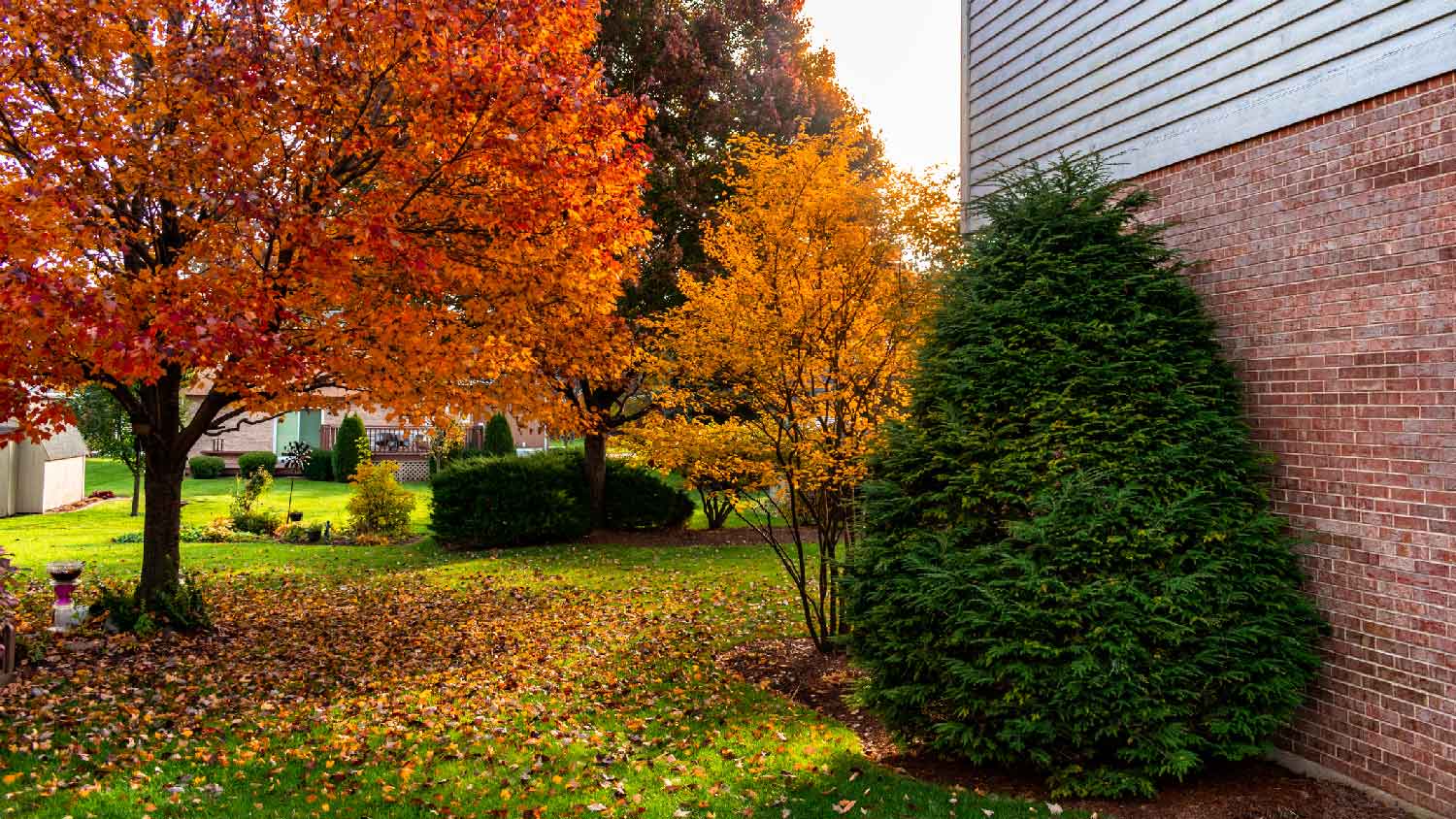
Never do this when cutting down a tree. Instead, follow our guide to safely remove a diseased, dying, or overgrown tree from your property.
Give your tree the ax

Cutting down a tree safely requires proper safety gear, a cleared fall zone, and a partner to spot falling branches while you work.
Expect to pay $200 to $2,000 for professional tree removal, so addressing hazardous trees early helps you avoid higher costs and property damage.
You should clear escape routes, remove lower branches, and make precise notch and felling cuts to control where the tree falls during removal.
Hiring a local tree service professional provides peace of mind with skilled chainsaw work and safe removal, especially for tall trees near power lines.
Even if you adore the trees in your yard, there may come a time as a homeowner when you have to remove them. However, this process is dangerous even for skilled professionals, so it’s essential to learn how to cut down a tree safely first.
If you have prior tree-cutting experience, feel comfortable handling a chainsaw, and have a friend who can help, it is possible to fell a tree yourself. With the right tools and safety precautions in place, you can learn how to cut down a tree safely.
This task has serious personal and home safety risks. You should strongly consider hiring a tree removal professional to ensure it's completed safely and effectively.

Regardless of the reason you’re taking this project on, you’ll need to do some prep before you can safely chop a tree down.
Even if the tree's diameter isn’t large, a tall, skinny tree can still cause major damage to property and serious injury to any person nearby if it falls the wrong way.
First things first: If you’re not confident in your chainsaw skills, hire a local tree cutting pro who can safely remove the tree for you. Even if you’re confident, hiring a pro is still a very good idea, as mistakes during tree removal can lead to serious injury or even death.
If you decide you’re experienced enough to DIY, have at least one person on hand to act as your lookout. Remember, you’ll be wearing hearing protection, so you might not hear warnings that a branch is about to come tumbling down. Have your partner stand nearby with a stick while you’re making the cuts so they can tap you on the shoulder to get your attention while keeping a safe distance.
Anyone working near the tree should wear the necessary safety equipment, including a logger’s helmet or hard hat, work gloves, and steel-toed boots to avoid injury. For the person(s) handling the chainsaw, this safety gear includes heavy-duty chainsaw chaps or similar protection.
Check that your chainsaw is in good working order, well-oiled, and fitted with the sturdiest chainsaw bar for the job—you’ll want a bar that is at least 20 inches.
Before you start, research if it’s legal to cut down a tree on your property (laws vary by state) and if you need a permit. In many areas, you’ll need to hire a pro to remove trees of a certain size.
If the tree has a lot of dead limbs, is leaning strongly in one direction, or appears to be dying, do not attempt to cut it down yourself. It can be extremely dangerous to fell a tree with an unstable trunk.
While attempting tree removal of any size is risky, attempting to cut down a very large tree comes with even more risks. Not only can it increase the danger that the tree will fall on people or property, but as mentioned above, it may even be illegal to remove trees of a certain size without a pro. Check with your local ordinances and seriously consider hiring a pro to remove large trees (anything you can’t reach the top of without the help of a ladder).
If you’ve decided to remove the tree yourself, you’ll need to follow these steps carefully.

The felling zone or the fall area is the direction you expect the tree to fall. You can estimate this with an ax or stick.
Carefully hold an ax handle or stick at arm’s length, perpendicular to the ground.
Shut one eye and back away from the tree until you see that the top of the ax or stick is even with the treetop and the bottom is even with the ground or base of the tree.
This step will show you the spot where the tree should fall (which is where you’re standing). If the tree is larger than your stick, measure its height and account for that in the fall area.
Remember that this is just an estimate and not an exact measurement.
If any obstacles, including structures, other trees, electrical boxes, and power lines, are in your way or in danger of being taken down by the tree, don’t try to fell the tree yourself and call a local tree service.
Once you’ve estimated your fall zone, you will need to clear the area of any debris, including sticks, leaves, underbrush, or shrubs. Make this area double the width of the tree and at least as tall. It’s always best to overestimate height and width.
Just as you’ve cleared a path for where you want the tree to fall, you will need to clear an escape route. You will want two cleared paths where you can make a fast run for it if something goes wrong. One should be a path in the opposite direction of the fall and another in between the two.

Before felling the tree, remove as many of the lower branches and limbs as high up as possible. Do this carefully, as limbs can easily fall and cause injury.
Using a chainsaw, cut a notch on the side of the tree in the direction you want it to fall. You will use two cuts to make the notch, which is an angled chunk taken out of the tree that you’ll make by two cuts. Make these cuts at a comfortable height, usually between shoulder and waist height, depending on the height of the tree.
The first cut will be the top cut at a 45-degree angle downward. Cut 1/3 of the way into the trunk toward the ground. Make the second cut a few inches above that, parallel to the ground. It should curve downward to meet the first cut with a uniform deepness. Make this as clean as possible in order to help the tree fall more safely. Remove the wedge of the trunk. This is the notch.
Usually, trees wider than 18 inches in diameter require felling wedges to help keep your saw from getting stuck or pinched in the trunk.
On the opposite side of the tree from the notch, start to make a horizontal cut. This is the beginning of your felling cut, but if you need felling wedges, you will stop cutting once you’re as deep in as the wedge requires. Pound the felling wedge in the direction you want the tree to fall. Now you can continue your felling cut.
This step is where the tree will fall, so be ready. Continue making your cut but do not go all the way through the trunk. Cut carefully and slowly, being aware of the tree’s movements. When the tree begins to lean, run to your escape route. The tree usually falls when there is about 10% of the width left uncut, so get ready. You should have your partner standing in a safe location, looking out for the movement of the tree as well.

Once your tree is down, you’ll need to limb it, meaning you’ll be cutting off its limbs to prepare for removal. Even though the tree has already fallen, this can still be a hazardous process. Here’s what to do to get it done safely.
Position yourself on the uphill side of the fallen tree to ensure that the tree won’t roll towards you as you work. Then, keep an even stance and maintain firm control, positioning your body to hold the trunk in place.
Before making your first cut, note the branches on the underside of the fallen trunk. These are supporting branches that are stabilizing it on the ground, so you’ll want to cut them off last.
Then, starting at the base of the tree trunk, begin cutting off the branches within reach from where you’re standing. For non-tension-bearing branches, make a single cut through the top until the branch falls. If you encounter branches that are carrying tension—called spring pole branches—you’ll need to make multiple cuts to break that tension and avoid kickbacks from your chainsaw (see the next step).
When cutting off spring pole branches, which are long, flexible branches that carry a lot of tension, you’ll want to make multiple shallow cuts at the apex of the branch’s tension until the branch splits on its own. Find the peak of the branch’s tension and make a series of shallow, parallel cuts until the branch splits.
Once you’ve removed all of the branches within reach, set your chain brake and find a stable position to work through the next section. Again, cut all non-tension-bearing branches from the top and use shallow, parallel cuts to work through the spring pole branches. Repeat this until you’ve removed all the branches that aren’t supporting the trunk.
Lastly, you’ll need to cut the supporting branches on the underside of the trunk. Stand on the uphill side of the trunk and take note of where the trunk will fall as you cut off each branch. Then, working from the bottom up, move quickly out of the way as you cut through each branch.
As you’re limbing your tree, you may also want to buck it and create smaller sections for repurposing, such as creating small pieces for firewood. Techniques will vary based on whether the trunk is lying totally flat, or if one or both ends are lifted by the leftover stubs of the cut branch limbs. Again, be sure to maintain a firm stance and stand on the uphill side of the trunk in case it rolls.
If your tree is lying flat on the ground, make your cuts starting from the top side and working your way through the trunk. Stop just as you reach the bottom and avoid cutting into the earth. Repeat until you’ve cut every piece to the desired length.
If the tree trunk is lifted at one or both ends, make the first cut with your chainsaw on the underside and make an undercut upwards of about 1/3 of the way through the trunk’s diameter. Then, make a second cut starting from the top until you’ve fully cut off that section. Repeat this process until all your pieces are cut to length.
Saying goodbye to an old tree isn’t always an easy decision, but there are instances when cutting down a tree is necessary to protect your safety and your property. Aside from simply wanting to free up land, minimize leaves and debris, or let in more sunshine, you may need to cut down a tree to eliminate a hazard (or an eyesore).
According to the Arbor Day Foundation, here are some of the key signs that it’s time for a tree to go:
The tree is an undesirable species, whether it’s a messy mulberry tree, a boxelder tree causing a boxelder bug invasion, or a species that isn’t well-suited for your area’s climate.
The tree is dead, leaving it open to becoming a dangerous fall hazard or a host for pests.
Over 50% of the tree is damaged or dead (this will likely grow back malformed, if ever).
More than 25% of the trunk’s circumference is wounded, cracked, or otherwise injured, which suggests irrecoverable internal decay.
The trunk is hollow or leaning heavily to one side, leaving the tree vulnerable to falling unexpectedly.
There is trunk rot, fungus growth, or sprouts near the tree's base.
The tree is dangerously close to or touching power lines.
You may also want to consider the tree’s role in the grander scheme of the other plant life around your property. Is it blocking out the sun that could be crucial to your vegetable garden? Could it be robbing more desirable trees and plants of vital soil nutrients? Whether it’s dangerous or just in the way, these are all signs that it might be time to bring out the chainsaw.

It can be tempting to tap into your inner lumberjack, but it’s not always safe or possible to cut down a tree on your own.
If you don’t have experience with a chainsaw or you live in an area with close neighbors and parked cars, hire a pro instead who has the necessary skill and experience. You will also want to skip this DIY if your tree is taller than 30 feet or within 10 feet of power lines. Hire a tree removal company instead to get the job done.
If you decide to hire a pro, the cost to remove a tree is $200 to $2,000, but keep in mind that loss of property or major injury is not worth the DIY trade-off. When hiring a tree cutting pro, provide them with relevant details about your tree (its size, location, and condition) to get a more accurate estimate of the total service cost. Keep in mind that cutting down large, established trees will cost much more than chopping down smaller, newer trees.
This service was great. My air conditioner went out during the heat spell that we had. My husband has health issues and they came out that night and at 9:30pm the air conditioner was fixed and running. We are sooo very thankful, this is the company I will be using from now on and would...
 Mr. Mechanical Ohio
One of my old tall evergreen trees was suddenly leaning toward the busy street in front of my house. I submitted a request for an emergency tree inspection, and Alejandro, owner of Cajete Tree Service, contacted me immediately and arrived to look at it just 20 minutes later. We agreed the...
 Cajete Tree Service LLC
1 tree was cut down and 5 others including a large willow tree were trimmed. The Grant Tree Service men were professional and cleaned up afterwards. The cost of the 6 trees were affordable. I am very happy with the results. I would hire them again.
 Grants Tree Service
D1 Roofing delivers outstanding service from beginning to end, backed by a strong warranty and expert teams. I highly recommend them for their excellence in meeting and surpassing expectations with unmatched communication. Choosing D1 Roofing was flawless decision
 Division 1 Roofing LLC
Promptly arrived for quoting! Demonstrated superb customer service, affordable pricing, and completed service swiftly! Looking forward to the spring for our service!
 All Star Paving and Sealing
Seth was very professional, prompt in responding to queries about the work required , gave sincere advice as to what would be best for tree trimming and did the job timely.
Ace Fireplace Services' chimney sweep service is truly exceptional. They used advanced technology to ensure a thorough cleaning process, and my chimney has never looked better. I highly recommend their services.
 Ace Fireplace Services
I definitely recommend Ramonaâ s cleaning service! I have booked services with her many times and she arrives on time, ready to work and provides a great service.
 Your Cleaning Solutions LLC
Webb â s was priced well, flexible on scheduling, great with communication, and detailed in their work. Iâ ll definitely use their services again.
 Webbs Pressure and Paint LLC
Great tree company, very professional and honest. Glad we found them, they had the best pricing
From average costs to expert advice, get all the answers you need to get your job done.
Never do this when cutting down a tree. Instead, follow our guide to safely remove a diseased, dying, or overgrown tree from your property.
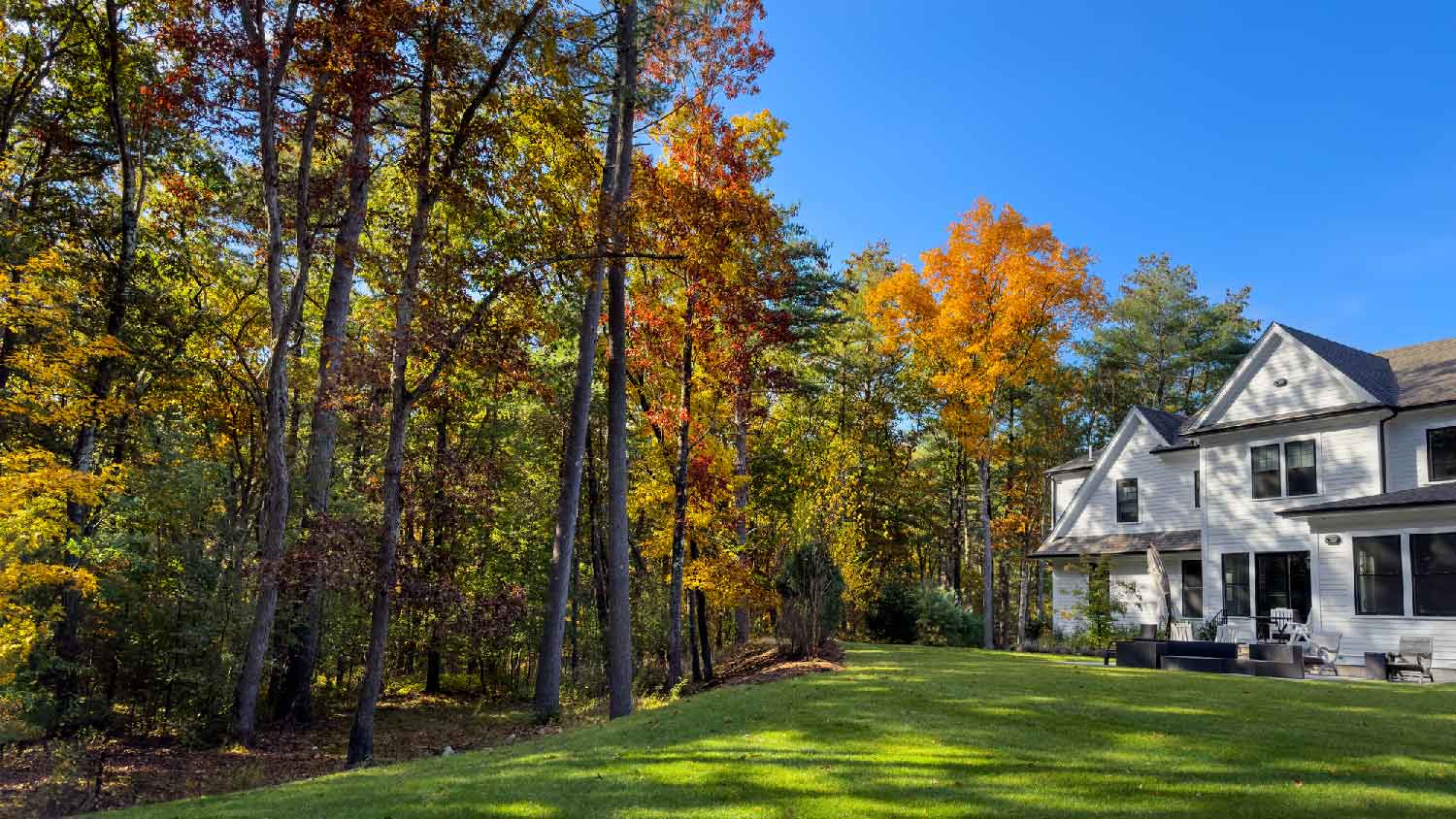
Not sure who to call to cut down your tree? Learn what type of company to hire and how the process works with this step-by-step guide.
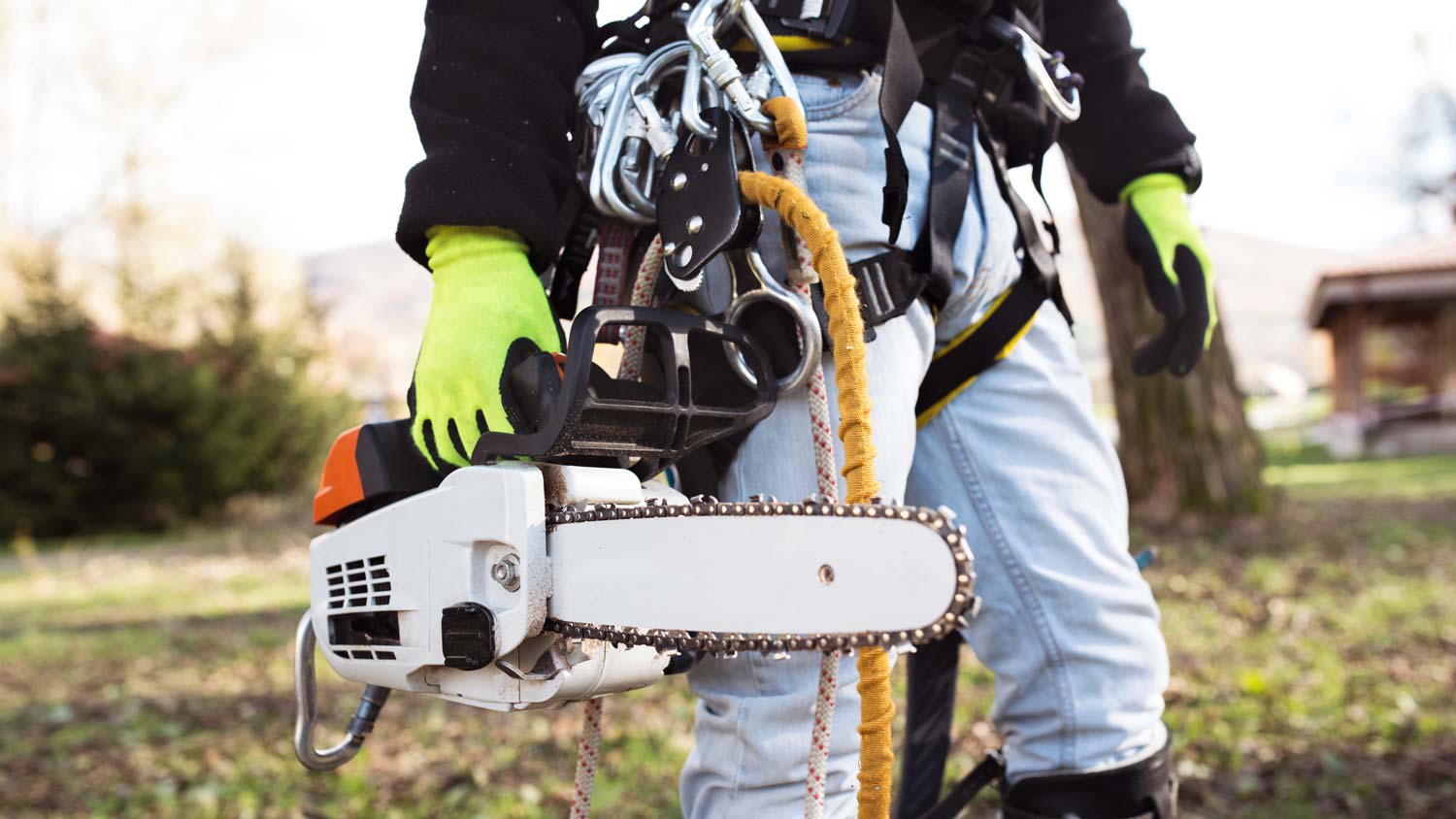
If you’re searching for people who cut down trees, look for arborists and tree cutters. Our guide will show you who to hire for tree cutting.
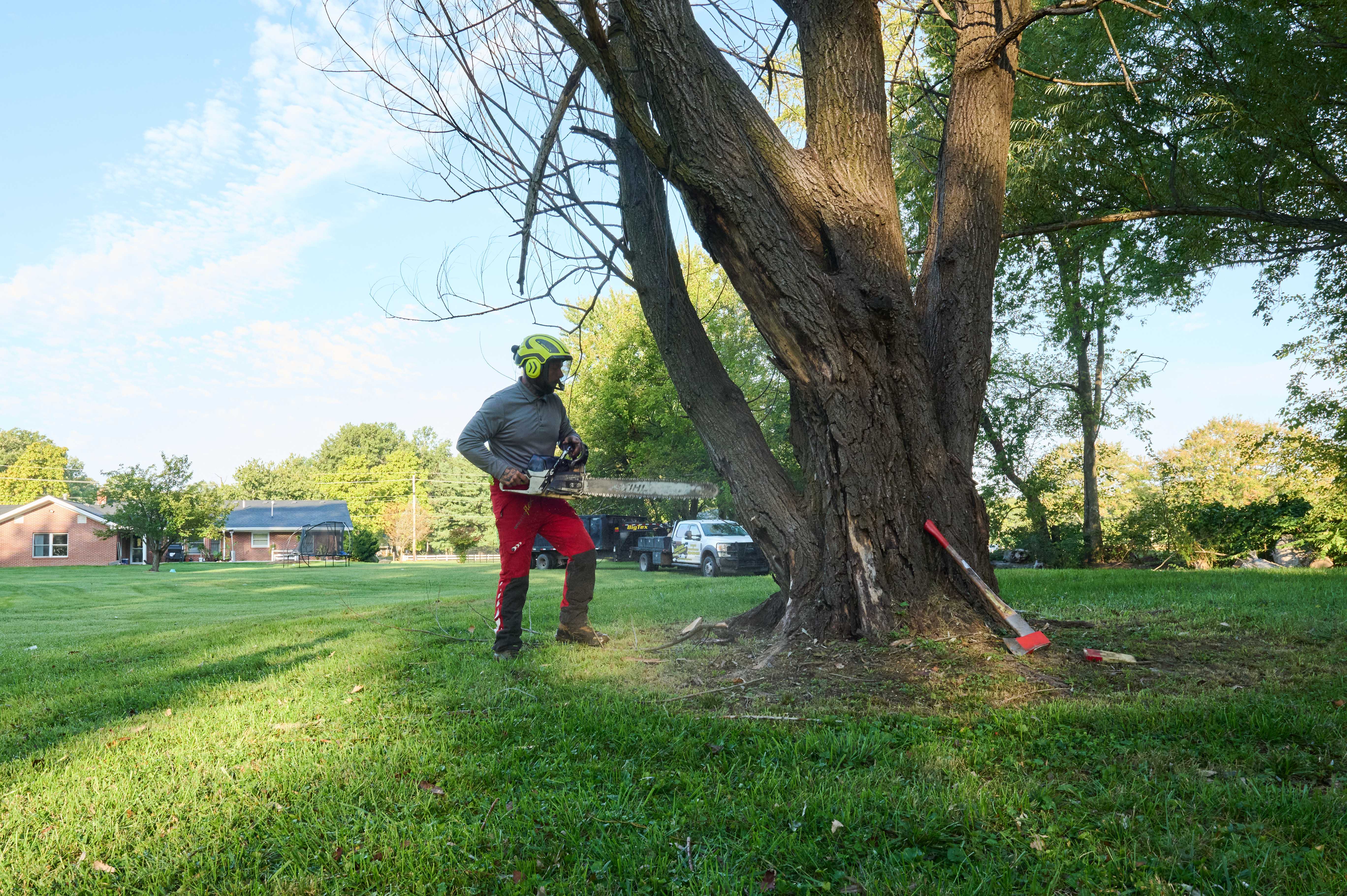
To remove a tree, you’ll need tools like a chain saw, wedge, wood chipper, and more. Keep reading to discover the top tree cutting tools for your next project.
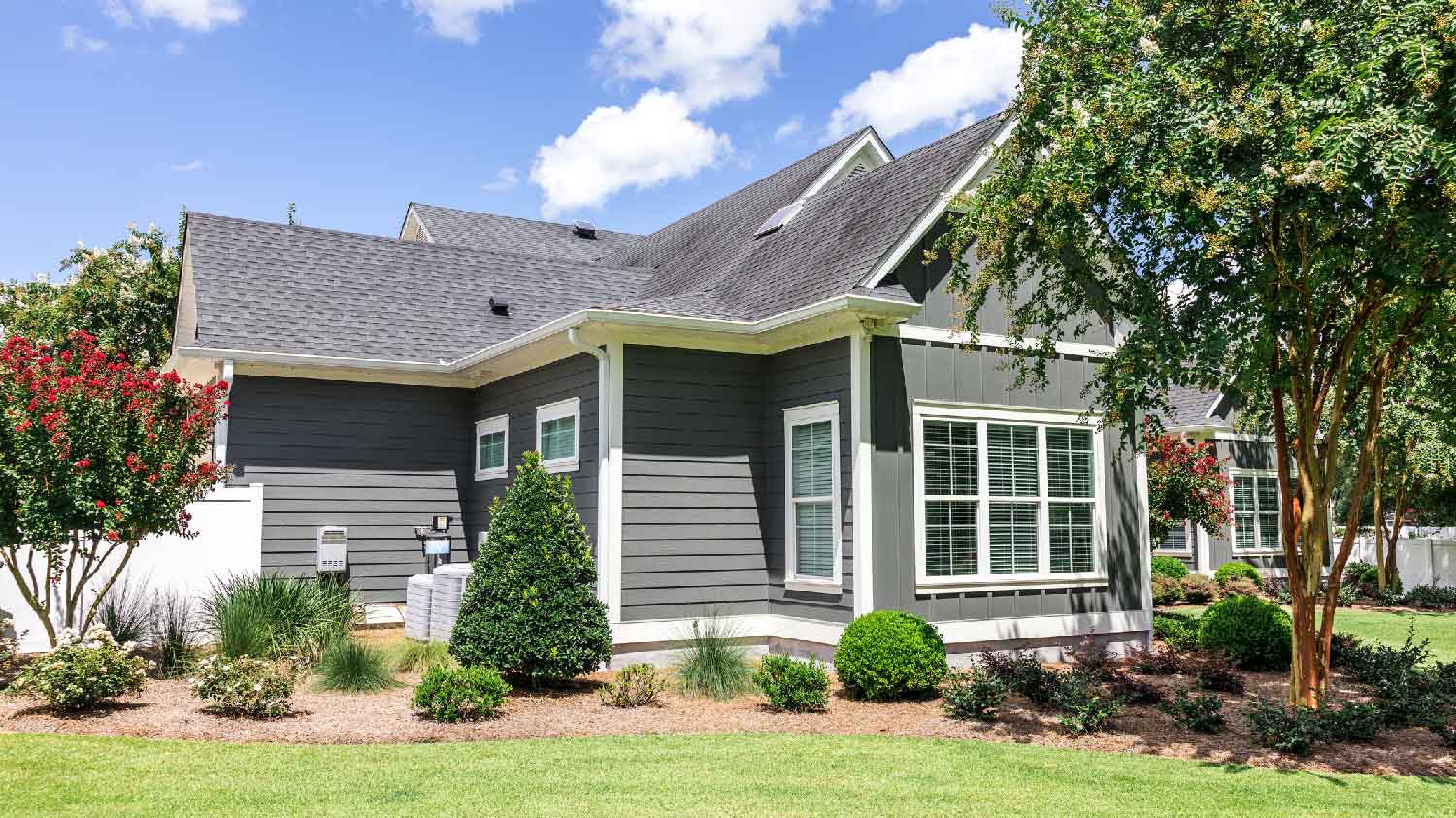
You must know how to notch a tree before felling it to direct where it lands. Notching a tree requires accounting for the tree’s lean, location, and more.

A dead or dying tree on your property usually calls for removal. Damaged or diseased trees may be fixable. Find out the signs your tree needs to be removed.