
•
Find out the average bat removal cost in Charlotte, NC. Learn what you can expect to pay for local wildlife control and safely exclude bats from your home.
Pest control costs depend on your project and location. Check with a local pro for your specific job.

Removing a small or medium wasp nest costs $245 to $485, but bigger nests cost around $975.
It’s pricier to remove nests from hard-to-access spaces (such as chimneys, attics, and walls) than open areas (like trees).
If wasps have damaged your roof, siding, or other parts of your home, you may face additional repair costs.
Hiring a pest control specialist in Charlotte, NC, ensures the nest is removed properly and prevents you from getting stung.
Wasp nest removal costs in Charlotte, NC, depend on the nest’s size and location, but the average price of this project is $511. Most homeowners end up spending between $292 and $681, which includes the materials and labor. If you’re wondering how much you’ll pay for wasp removal in the Queen City, here are the key factors to consider.
Whether you’re getting rid of a small nest or a massive hive, here’s how much to budget for wasp removal in Charlotte, NC.
While one or two wasps may seem scary, dealing with a hive with hundreds of workers can be even worse. The larger the hive, the more difficult and time-consuming the removal and cleanup will be.
For small hives of 10 to 50 worker wasps, you’re looking at spending $245 for extermination on average. Medium hives with 50 to a couple hundred wasps will be in the $485 range. Large nests can cost $975 or more.
| Hive Size | Average Cost |
|---|---|
| Small | $245 |
| Medium | $485 |
| Large | $975 |
While most people associate our buzzing neighbors with hanging from a tree or off the side of the house, not all wasps or hornets prefer to make their homes here. Some wasps build inside your attic, in the walls, and even underground. If this happens to you, a pro will likely need to cut into different parts of the home, which could lead to additional repair costs.
| Location | Average Cost Range |
|---|---|
| Walls | $245–$780 |
| Attic | $290–$485 |
| Chimney | $390–$585 |
| Trees | $195–$585 |
Some types of hornets and wasps are more aggressive than others, so call a professional exterminator if you spot a nest in your yard that's bigger than a fist. Don't hesitate to take pest control action to prevent the infestation from growing.

From sprays to full-on nest removal, you can choose between a few wasp nest removal methods.
| Wasp Nest Removal Method | Minimum Cost | Description |
|---|---|---|
| Aerosol | $120 | Budget-friendly choice for hanging wasp nests |
| Dusting | $195 | Targets wasps that build underground nests with a powdered pesticide |
| Vacuuming | $245 | Ideal approach for wasps that have infiltrated your home |
| Extermination | $340 | Best and quickest for aggressive wasps, very large hives, or wasps causing home damage |

Not all wasps are the same. Yellow jackets, paper wasps, and mud daubers are some of the most common types of wasps in North Carolina—and each one has its preferred method of building nests. Bald-faced hornet and yellow jacket removal costs are the highest, and removing more docile species, like paper wasps, costs the least.
Here’s what you can expect to pay for wasp nest removal based on the type of wasp.
| Wasp Type | Description | Average Cost Range |
|---|---|---|
| Yellow jackets | Hides hives underground; aggressive; moderate-sized nest | $485–$730 |
| Hornets | Nest is football-shaped and hangs from a tree; aggressive when nest is nearby | $290–$390 |
| Paper wasps | Not aggressive; nest is papery and umbrella-shaped with a single comb of cells | $95–$195 |
| Mud dauber | Nests are made of mud and tube-shaped; not aggressive; construct nests in human-frequented areas | $290–$390 |
| Red wasps | Don’t sting unprovoked; nest is umbrella-shaped and attached to a structure by a single strand | $300–$390 |
| Bald-faced hornets | Nest is gray or brown and football-shaped; hangs from a tree branch or other vertical surface | $610–$730 |
There are two more things to take into account when hiring a wasp removal pro: labor and licensing.
Pest control specialists in Charlotte, NC, often charge a flat rate per project, but some may set hourly rates. Removing a large wasp nest requires more time and supplies, so you can expect to spend more on labor if you have a sizable infestation. Labor rates are also higher if the nest is in a tight or hard-to-reach area (like inside your walls or up your chimney).
Pest control pros in Queen City must be licensed by the North Carolina Department of Agriculture and Consumer Services (NCDA&CS). They’re also required to hold valid liability insurance in case anyone is harmed by their use of pesticides. Before hiring a pro, you can check their license and insurance status on the NCDA&CS website.
On its own, wasp nest removal won’t boost your home’s value. But if you have an active wasp issue while trying to sell your house, it could scare off buyers (or at least prompt them to offer less money). Because of this, it’s a good idea to remove a wasp nest before putting your home on the market.
Even if you don’t plan on moving, it’s still best to get rid of the nest as soon as possible. For much of the year, Charlotte, NC, has pleasant weather, giving you plenty of opportunities to enjoy your outdoor space. But if wasps are swarming, the idea of spending time outside becomes a lot less appealing—and potentially painful.
To help homeowners plan their next project, Angi provides readers with carefully researched cost data and upholds strict editorial standards. We start with national average project costs, which we collect by analyzing competitor information, retailer material costs, and input from professional contractors. We then apply local price index data to calculate location-specific estimates that reflect what homeowners typically pay in their local area. To do that, we use data from the U.S. Bureau of Economic Analysis (BEA), including its Regional Price Parities (RPPs), which measure price differences across cities. This helps us account for differences in labor, materials, and overall cost of living, so estimates in higher- or lower-cost areas better reflect real-world local pricing.
Every estimate undergoes a thorough editorial review to verify accuracy, consistency, and alignment with observed market conditions.
Want to help us improve our cost data? Send us a recent project quote to [email protected]. Quotes and personal information will not be shared publicly.
Our technician, Charles Garland, arrived on time, was friendly and answered questions we had. I would highly recommend Bulwark to anyone looking for a good pest control service.
 Bulwark Exterminating, LLC
Eric and Wyatt did a great job! They were the most attentive and thorough technicians that we’ve ever had. I’m glad to have Remedy for my general pest control needs!
 Remedy Pest Control
Luke did a fantastic job with my mosquito control. Heâ s very professional and passionate about what he does. Iâ ve tried all of the DIY methods from Loweâ s to no avail. I will be calling Luke for any further pest control needs in the future. Highly reccomend!
 Hanner's Pest Control
Remedy pest is the most thorough pest control service that Ive dealt with! One of the best customer service experiences I ve had in a long time. Shout out to Chris, the tech that came out to the house. He spent a lot of time clearing debris away from the house and made the effort to explain...
 Remedy Pest Control
Perfect. Our exterminator, Bulwark, recommended their strategic partner TruTech. Our technician was Nick Starsky. He could not have been a better service provider! Professional, punctual, polite, competent, and immensely effective. His, and his Company's commitment to humane pest management...
Dereck does a great job! He's honest & stands behind his work. I'll definitely call him the next time I need pest control done.
Lake Norman Pest Control is very professional, honest. Good company that i will call when i have rodent issues.
 Lake Norman Pest Control
From average costs to expert advice, get all the answers you need to get your job done.
Find out the average bat removal cost in Charlotte, NC. Learn what you can expect to pay for local wildlife control and safely exclude bats from your home.
Find out the average wildlife removal cost in Charlotte, NC. Learn what you can expect to pay for local animal extraction services to secure your home.
Asbestos removal costs vary based on location, the size of the job, and if there is any underlying damage. Learn what has the biggest effect on the cost in Charlotte, NC.
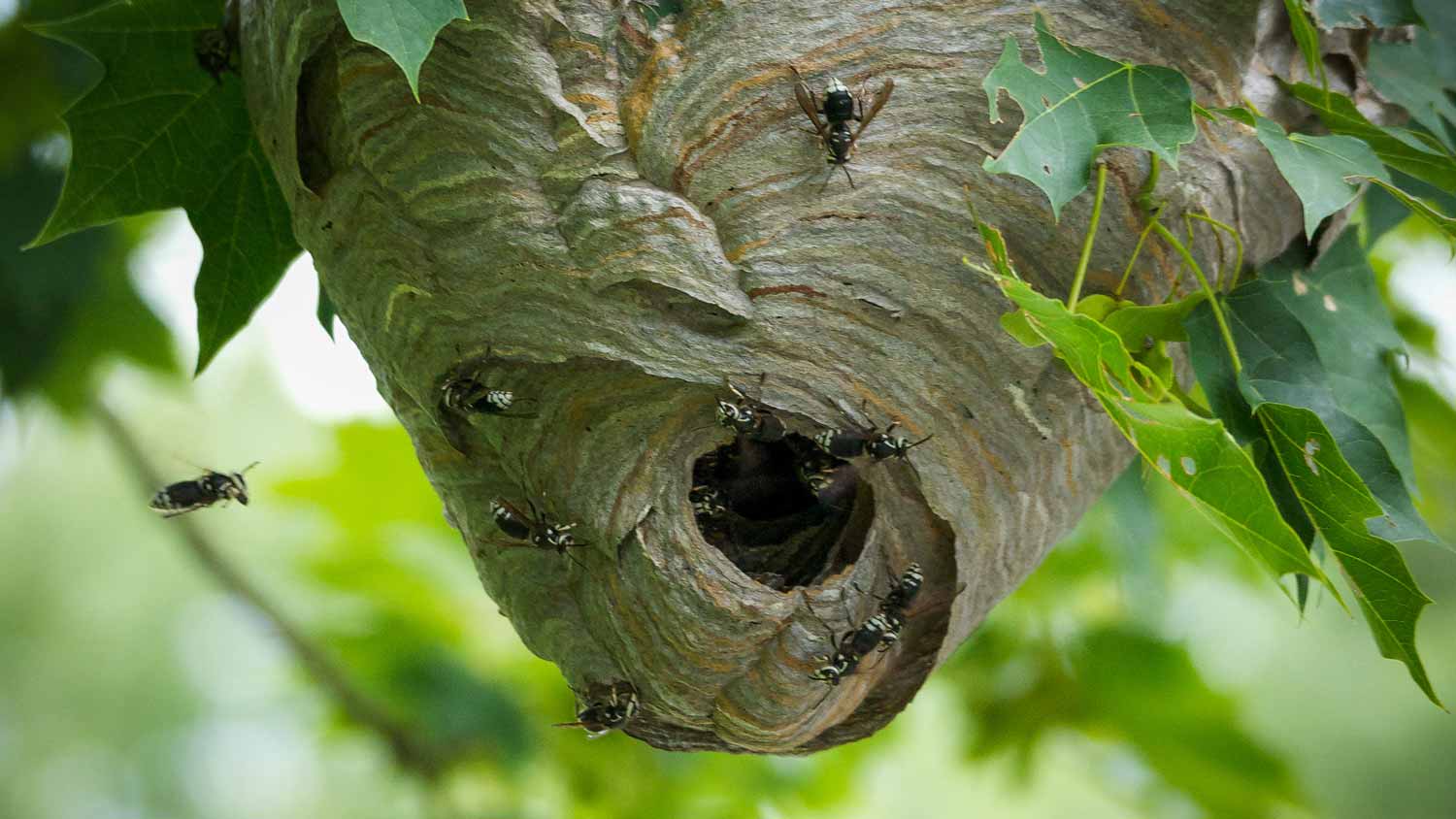
Wasps are a pain to share space with, but you have options for removal. While it’s best to call a pro, here’s how to get rid of wasp nests the DIY way.
No one wants wasps setting up shop in their yard but that doesn’t mean you should try to DIY their removal. Here are five reasons to leave wasp removal to the professionals.

Nobody wants to tangle with wasps on their property, as these insects sting with extreme prejudice. Here’s how to get rid of wasps safely and for good.