

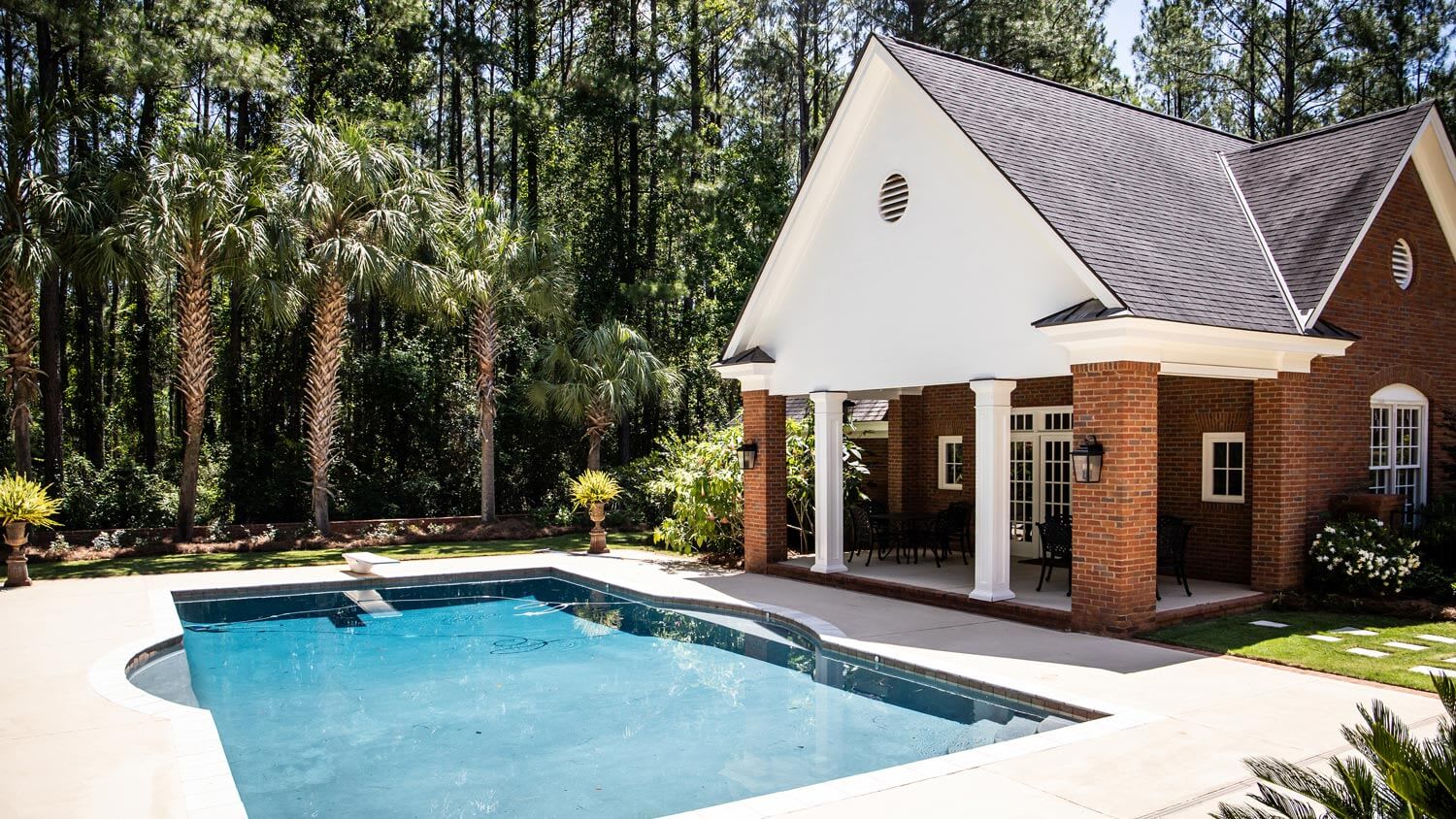
How much does it cost to fill a pool with water? It depends on the size of your pool and where you’re getting the water. This guide can help you budget.
Pool construction and installation costs depend on your project and location. Check with a local pro for your specific job.

In-ground pool fill-in costs range from $2,000 to $19,000, and your pool size and removal method set totals.
Your pool material and frame type decide full removal or partial fill-in, shaping your drainage needs, timeline, and budget.
Account for dumpster rental, water pump costs, permits, engineer fees, and landscaping expenses when you plan your pool removal budget.
Hiring a local demolition service professional prevents damage to your septic tank, plumbing, and utility lines during heavy equipment operation.
The average cost to fill a pool in with dirt or similar material is $8,000, but you could spend as little as $2,000 or as much as $19,000, depending on the size of your pool. Most homeowners spend between $5 and $15 per cubic yard on dirt or gravel, but adding topsoil or a concrete slab will cost extra.
Whether it’s for safety, space, or maintenance reasons, filling in an in-ground swimming pool with dirt can be a smart move. Before embarking on the project, understand the costs associated with the process.

Here’s a breakdown of the main expenses associated with filling in an in-ground pool.
To figure out how much it’ll cost to fill in your pool, it’s best to start by calculating your pool size. Knowing the size will help you plan for the amount of fill you need, which can range widely from $200 all the way up to $2,000 or more.
Pool length in feet x pool width in feet x pool depth in feet
Divide the total by 27 (the number of cubic feet in a yard).
And presto! The final amount is the number of cubic yards of dirt you need to fill your pool.
Here are the cubic yards and fill dirt prices for standard residential pool sizes:
| Dimensions | Volume | Price for Fill Dirt |
|---|---|---|
| 10 feet x 20 feet x 5.5 feet deep | 41 cubic yards | $205–$615 |
| 15 feet x 30 feet x 5.5 feet deep | 92 cubic yards | $460–$1,380 |
| 20 feet x 40 feet x 5.5 feet deep | 163 cubic yards | $815–$2,445 |
The cost to remove an aboveground pool is significantly less than the cost to remove an in-ground pool. Part of the price also depends on whether you spring for a full removal or a partial removal.
| Type | Cost Range |
|---|---|
| In-ground | $2,000–$19,000 |
| Aboveground | $300–$800 |
You can expect the cost of removing an in-ground pool to range from $2,000 to $19,000, depending on what you decide to do. The partial pool fill-in option is on the lower end of the price range, which costs $2,000 to $10,300.
If you opt for a full removal, it’ll cost $9,000 to $19,000. If your pool has a metal frame, your only choice will be full removal. On the other hand, if your pool has a wood or concrete frame, you could go with a partial fill-in.
Generally, the cost to remove an aboveground pool is $300 to $800, though you could spend up to $5,000 if you also need to remove a pool deck and backfill dirt. Unlike in-ground pools, most aboveground pools require removal rather than a dirt fill-in. However, in some cases, you may have installed your aboveground pool partially underground, which would require a fill-in.
The material determines how you’ll fill your swimming pool. Keep in mind that some areas require the full removal of a swimming pool’s structure before filling it with dirt, so check local regulations.
| Material | Cost Range |
|---|---|
| Fiberglass | $5,000–$10,000 |
| Vinyl | $3,000–$10,000 |
| Concrete or gunite | $3,000–$15,000 |
Fiberglass: Removing a fiberglass pool costs $5,000 to $10,000. Your contractor will need to completely remove the fiberglass shell before filling in the hole. Sometimes they can lift the shell out in one complete piece. Other times, they’ll need to cut the shell and remove it in separate pieces, which will increase costs.
Vinyl: Removing a vinyl pool costs $3,000 to $10,000. If your vinyl pool has a metal frame, you’ll need to remove the entire frame before you can fill the hole with dirt. If your pool has a wood or concrete frame, you can remove the liner, partially break up the frame to allow for drainage, and then fill the hole with dirt.
Concrete or gunite: If you have a concrete pool, you may be able to break up the material for drainage and then fill the area with dirt. This option is more affordable. In some cases, like where legally required, you may have to break up and fully remove the concrete, which will increase costs.
Before demoing your in-ground pool and filling it in, you’ll need to drain it of water. Motorized submersible water pumps cost anywhere from $55 to $100 on average. Your local municipality code might also require you to disconnect and remove all pump and lighting wiring and any gas lines.
Dumpster rental costs $380 on average, or between $200 and $800 per week, depending on the size. The rental usually includes hauling and disposal.

Fill dirt ranges from $5 to $15 per cubic yard, plus $150 or more for delivery. If you opt to fill your pool with a mix of concrete and dirt (also known as a partial removal), you can expect to pay an average of $5,000.
| Type of Fill | Cost Range (Per Cubic Yard) |
|---|---|
| Gravel | $5–$8 |
| Dirt | $8–$12 |
| Concrete | $100–$200 |
| Top Soil | $12–$55 |
Gravel: Gravel costs $5 to $8 per cubic yard, and it’s the most affordable fill type. Typically, you would fill the pool partially with gravel—to the halfway mark—and then fill the rest with dirt. If you use gravel alone as a fill, you’ll find that the gravel settles over time, which can lead to sinkholes.
Dirt: Structural fill dirt costs $8 to $12 per cubic yard. You'll need to leave 18 to 36 inches free at the top for space for the topsoil. Some people fill the pool entirely with dirt and topsoil, or you can use a mixture of gravel and dirt.
Concrete: Although you can’t fill a pool with concrete, you can pour a concrete slab on top of a filled pool area. Concrete costs $100 to $200 per cubic yard.
Topsoil: Topsoil costs $12 to $55 per cubic yard. It has all of the nutrients and organic materials to help your filled pool area come back to life. You’ll need to add at least 18 to 36 inches of topsoil, depending on whether you plan to plant grass or additional landscaping.
You can hire a local demolition service or a pool services company to help with your pool demo project. Labor rates vary by location and depend on your pool size, difficulty accessing the pool, and geographical region. Reach out to at least three local contractors to get quotes for your specific project.
If you decide not to order dirt for delivery, you'll need a truck to haul it. You'll also need a jackhammer or heavy-duty drill, an excavator with rubber tracks, and a sledgehammer for the demolition. A contractor typically includes these charges in their project cost, but costs could reach up to $2,000 to rent equipment for a few days if you're doing it yourself.
You can hire a professional landscaper at $50 to $150 per hour to lay down grass, shrubs, and other plants. You can also tackle landscaping as a DIY, but be sure to factor in costs for tools, plants, and any other supplies.
Cities and towns generally require permits for swimming pool removal. They cost anywhere from $50 to $250. Your contractor will typically handle this as a part of their project process and price.
Some local codes require you to work with an engineer when removing a pool, especially if you plan to build another structure on top of where the pool was. According to HomeAdvisor, the average price to hire an engineer is $500.
Compare the costs of a full versus partial pool removal service.
| Type of Removal | Cost Range |
|---|---|
| Full Removal | $9,000–$19,000 |
| Partial Fill-In | $2,000–$7,000 |
A full pool fill-in (or removal) costs twice as much (or more) than a partial pool fill-in; you can expect it to run somewhere between $9,000 and $19,000. The high pool demolition costs account for all of the work that’s required.
Every piece of the pool is demolished and hauled off, and workers fill the empty hole with dirt and gravel. You can have a layer of topsoil installed so your yard can be as good as new. The extra investment for a full pool fill-in is worthwhile for two reasons: you can always build something new on the land, and you won’t devalue your property.
If you have a fiberglass pool, you’ll have to get a full pool fill-in. If the fiberglass is in good shape, you may be able to salvage the liner for re-use; if the fiberglass shell is in bad shape, then the shell will be cut up and hauled off.
A partial pool fill-in costs $2,000 to $7,000, or $5,000 on average. Workers demolish the edges and sides of the pool, and use it as backfill. Then, they fill the hole with dirt and gravel and top it off with a layer of topsoil. The company will completely remove all the steel during this process.
Although you’ll save money, the area will be considered non-buildable—and you’ll have to disclose the partial pool fill-in to future buyers. Additionally, not all areas allow a partial fill-in, so make sure you check local regulations.
Depending on the pool fill company, you may have additional costs to consider. Also, you’ll need to account for extra costs if your pool has special add-ons.
Most demolition companies include the cost of pool deck removal in their quotes. However, if it’s considered an added expense, you can expect to pay $500 to $1,700 to remove a concrete deck.
Removing a pool enclosure costs $800 to $2,000. You can expect to pay the higher end of the scale if your pool enclosure is aluminum or steel.
After the workers finish filling the pool, you’ll have lots of options for what you can do with the space. But if you plan to keep it simple, your best bet is to reseed your yard. This costs about $400 to $1,600.
The cost to restore a partially filled pool depends on how much of the original pool is salvageable. It ranges between $28,000 and $55,000, but it could be as low as $11,000 if you DIY. Pool excavations cost $400 to $1,500. If the pool had a concrete liner, workers drilled holes on the bottom during the fill-in process. Assuming that there is no other damage to the original shell, patching the holes will get you on track to restoring your pool.
If the pool had a vinyl liner and steel walls, you’re likely looking at starting from scratch. If the fill was done properly, workers removed all of the steel. If the pool had a vinyl liner and polymer walls, you might be able to salvage the original walls with some repairs.
In the worst-case scenario, you won’t be able to salvage any of the pool lining. In these cases, the cost of restoring your pool will be close to the cost of installing a brand new pool: $38,000 to $67,000.
If you had a full pool fill-in done, the cost to install another pool will be the same as starting from scratch. An in-ground pool will cost $38,000 to $67,000, depending on whether you opt for a concrete, fiberglass, or vinyl-lined pool.
Weigh the pros and cons of filling in your pool.
| Pros | Cons |
|---|---|
| Save money on home insurance | High upfront cost |
| No more pool maintenance | You can’t build on the land with a partial removal |
| Lower water and electricity bills | Could lower your home’s resale value |
| Removes potential for pool-related accidents | High cost to add a pool if you change your mind |
The cost of a pool remodel is very similar to that of a pool removal. In some instances, a pool remodel can be more affordable than removal (unless you have an aboveground pool or can do a partial fill). If you’re choosing between the two, you’ll need to consider your goals.
Removal is generally the go-to choice for homeowners who don’t want to maintain a pool. Pool owners spend around half an hour per week on maintenance and about $400 to $1,200 per year on pool-associated costs. That cost rises if you have an aging pool that needs more frequent repairs.
Remodeling is the best choice if you have an aging in-ground pool, but still regularly use your pool or are planning to sell your home and want to maintain the value. It’s a good idea to price out the options (and check local listings to understand the demand of a pool) before you decide which will reap the largest return.
You’ll spend about $1,000 to $4,000 in labor costs when hiring a local pool-filling pro, but this is a necessary step, as it’s unsafe and inefficient to DIY this project. Professionals have accumulated experience over years of work, and what may seem a simple task at first glance is actually a fairly involved undertaking where skill matters.
Here’s why it’s ideal to hire a pool-filling pro
Heavy machinery, backbreaking loads, and safety considerations are all compelling reasons to hire a professional. Here are some other reasons:
Professionals will ensure your pool filling doesn’t settle or sink in the future.
Pros already own the heavy machinery, eliminating the high cost, hassle, and learning curve of renting it yourself.
Filling a pool is a large project. Many DIYers lack the physical strength and safety training to perform this task.
Pros can source the filling material at a discount due to their licenses and contacts. This helps offset any potential financial impact.
Mistakes can be catastrophic to your budget, and a pro knows how to avoid them.
Pros handle the necessary permits and inspections required by local municipalities.
Homeowners can participate in the process, but they should focus on smaller tasks such as:
Clearing and decluttering the work area
Deciding what to fill your pool with and how you want it to look afterwards
Clearly marking utility lines for the pro (electrical, gas, water)
Be ready to discuss the location of your hose hookups with the pro, as they’ll need easy access to water sources.
Finalize plans for the disposal of leftover materials. You don’t want to be left with hundreds of pounds of waste after the job is complete.
Ensure the pro is fully licensed and insured, which is critical due to the safety hazards involved with heavy materials and specialized machinery.
Have your pro check local regulations to ensure you don’t need permits for the work.
Home is the most important place on earth, which is why Angi has helped more than 150 million homeowners transform their houses into homes they adore. To help homeowners with their next project, Angi provides readers with the most accurate cost data and upholds strict editorial standards. We extensively research project costs to develop the pricing data you see, so you can make the best decisions for you and your home. We rely on reputable sources, including the U.S. Bureau of Labor Statistics, academic journals, market studies, and interviews with industry experts—all to ensure our prices reflect real-world projects.
Want to help us improve our cost data? Send us a recent project quote to [email protected]. Quotes and personal information will not be shared publicly.
If you’re good people wanting to do business with good people, hire Matt. He is a consummate professional and utterly competent. He installed a water heater in my home at a price that beat competitors by hundreds of dollars with a promise to support the unit for its life (even after its 6 yr...
 Greene's Plumbing Services
Joseph did a great job with the staircase and trim. Timely and efficient, clear communication about the work, very fair pricing. For the stairs in particular, done very skillfully in an old house (1893) in a tight spiral, and very creative with how to do the handrail. Did a nice job with...
 Vouis Trim Carpentry L.L.C.
This company does it right. Firstly, I want to say that Landan was a joy to work with. He was so kind, transparent, and had everything under control. His entire team showed up ready to work and they were all very respectful of the fact that we were in an office space. A little backstory – we...
 Krumlauf Floors
Professional Team, smooth to communication chain and schedule flexibility. Follows proper construction procedure and completes task on time.
 Pegasus Concrete
Very professional, knowledgeable and helpful! Completed the install on time and as expected.
 Ward's Services
Cole has been handling plumbing and general contracting for our four properties over the past three years, and he’s always done a great job. Most recently, he installed a sink and countertop in our retail store where none existed before, and it turned out exactly how we needed. He’s...
 ANB Renovations LLC
Excellent, Prompt, Courteous Service!!! They were super friendly and quite personable. I felt very comfortable with the gentlemen that did the installation. They installed it exactly where I asked them to and they did an excellent job!! I loved their service so much.
 Tether House
I hired windows depot USA of central to install new windows in house in Oshawa. Ilya was very professional from the start, not only did he offered a great price, he also made sure the installation was on time. I am very satisfied with final outcome. The windows look great and the overall...
 Window Depot USA of Central Ohio
The guys did an outstanding job and we had a great experience with CarifaTile. I appreciated that Joe reviewed the quotes with me and set expectations prior to the install. The crews showed up as scheduled and always left the areas clean upon leaving the house. We will definitely use...
 CarifaTile
Did an amazing job transforming my yard. Also installed sod in places, would recommend to everyone.
 Cardinal Landscaping & Construction LLC
From average costs to expert advice, get all the answers you need to get your job done.
How much does it cost to fill a pool with water? It depends on the size of your pool and where you’re getting the water. This guide can help you budget.

If you’re looking to get your backyard summer-ready, use this guide to learn pool opening costs, budget appropriately, and how to save money.
Removing a pool is a labor-intensive job, but the investment can be worth it. Use this pool removal cost guide to estimate how much you’ll pay for the service.

How long does it take to fill a pool? It depends on the method, water pressure, and pool size. This guide will help you find that magic number.
Filling in an in-ground pool has definite advantages, but it can also cost you more money than it’s worth. Our guide covers the pros and cons of filling in a pool.
Need to refill your pool after cleaning or the winter season? Use this guide on how to fill a pool with water for a few different affordable methods.