
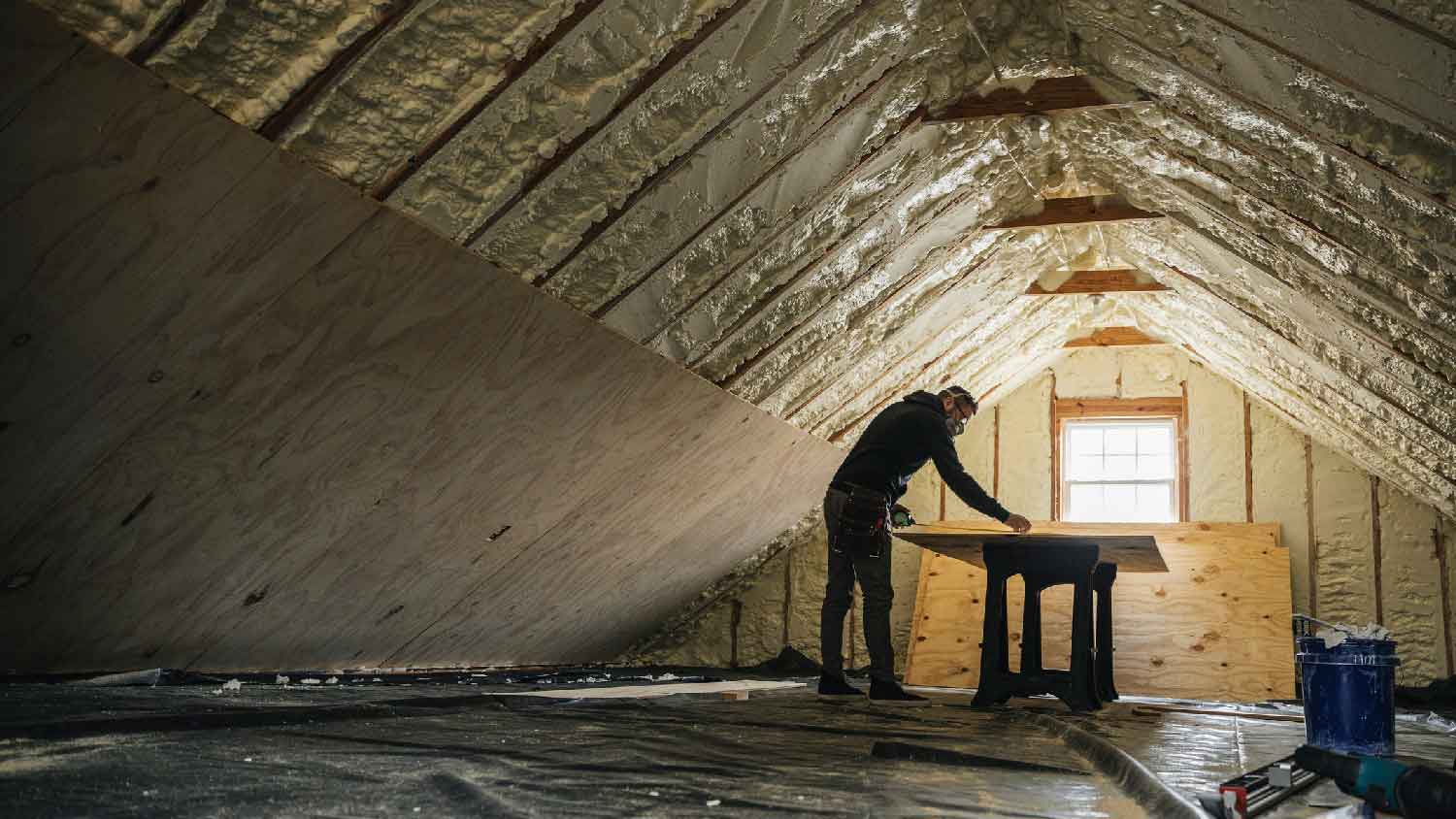
Attic insulation removal costs in Philadelphia, PA, vary based on multiple factors, including why you're removing it and how easy it is to complete the task.
Insulation service costs depend on your project and location. Check with a local pro for your specific job.

Square footage is the largest attic insulation cost factor, with homeowners paying between $1 and $3 per square foot.
Insulation material, air sealing, and inspections also contribute to the final cost.
Remember that removing old insulation will require proper budgeting at around $1 to $2 per square foot.
Hiring a local insulation pro provides reliable help with attic insulation. and saves you time and effort.
If you’re having cold winters and can’t figure out why, it might be because your attic is poorly insulated. Attic insulation costs in Philadelphia, PA, average $2,155, with costs ranging between $1,744 and $2,565.
Heat rises, so proper insulation near the top of your home—the attic—is extremely important, especially in a city with such cold winters. While this project seems expensive upfront, the return-on-investment (ROI) is excellent, and it may even raise the value of your home.
Philadelphia, PA, has cold winters, and it’s obvious where insulation helps there, but remember, insulation also helps retain cold air in the summer, when attics bake. Choosing the right insulation type for your attic's size accounts for over 80% of the cost factors for this project, with any inspections or air sealing (which isn’t always required) accounting for the other 20%.
The amount of insulation you need depends on the size of the attic and the desired insulation level or R-value. You’ll typically match the insulation coverage to the attic size, assuming you’re insulating the entire attic space. Here’s how much you can expect to pay for insulating different attic sizes:
| Attic Size (Square Feet) | Average Cost |
|---|---|
| 300 | $300–$900 |
| 500 | $500–$1,500 |
| 800 | $800–$2,500 |
| 1,000 | $1,000–$3,100 |
| 1,500 | $1,600–$4,600 |
You’ll need to account for the recommended R-value of your climate zone, as well. The higher the desired R-value, which represents the insulation's thermal resistance, the thicker the insulation needs to be. Colder climates generally require higher R-values to provide effective insulation.
To achieve the desired R-value, the insulation may need to be installed in multiple layers or in thicker batts or rolls. The more insulation material required to cover the attic space, the more it will contribute to the initial cost of finishing an attic.
The type of insulation you choose is among the most significant factors affecting cost. Each material has a different R-value, which makes it more or less effective in insulating the space.
Generally, blown-in insulation is the most affordable type of insulation. Meanwhile, the materials and labor required to install rigid foam board insulation make it one of the more expensive options, but it has a higher R-value.
Not every type of insulation works for every attic. For instance, a lot of people love the strength and energy efficiency of structural insulated panels, but due to their relatively large standard sizes, retrofitting them isn’t always possible.
Some types are also better suited to specific climates. Reflective insulation, for example, is less expensive than other common types, but if you live in a cold climate, you'll likely need to combine it with another type of insulation to be effective during the winter. For that reason, reflective insulation is best used as a radiant barrier.
Here’s what you can expect to pay for different insulation materials.
| Attic Insulation Type | Average Cost Per Square Foot | Best Use |
|---|---|---|
| Batt | $2 to $4 | DIY installation and standard-sized attics |
| Blown-In | $1 to $5 | Filling irregular spaces and insulating existing attics |
| Loose Fill | $2 to $5 | Large, open attic spaces and cooler climates |
| Reflective | $0.50 to $2 | Hot climates or attics with limited insulation space |
| Rigid Board | $2 to $5 | High R-value and reducing moisture |
| Spray Foam | $2 to $5 | Sealing gaps and attics with complex shapes |
| Structural Insulated Panels | $4 to $8 | Achieving strong insulation in new attics |
New insulation can sometimes be added right on top of old insulation, but only if the old insulation is still in good condition. If the old insulation isn't in great shape, then you'll need to pay someone to remove it or remove it yourself. Hiring an insulator to remove it typically costs $1 to $2 per square foot, so you'll want to factor that price into your project budget if needed.
Air sealing involves removing all of your attic's insulation to find and resolve any air leaks. Many pro insulators air seal attics before installing new insulation, but this process can be costly, ranging from $350 to $1,400.
Even though it's expensive, it's often worth it since air sealing can prolong the lifespan of your insulation while helping to block out moisture and drafts.
Air sealing is beneficial in any area of the home, but it’s particularly helpful in the attic for keeping your heating bills down in colder weather. Hot air rises and will naturally escape through gaps in the attic, and sealing helps keep the heat inside.
The cost of an attic insulation inspection can vary depending on several factors, including the region, the complexity and accessibility of the attic, and the service provider. On average, you can expect to pay anywhere from $100 to $500 for a professional attic insulation inspection. However, it's important to note that these are general estimates, and the actual cost may differ.
Some insulation contractors may offer free attic inspections as a promotional or introductory offer, while others may charge a fee that can be applied toward the insulation project if you decide to hire them for the job. It's a good idea to obtain multiple quotes from reputable insulation professionals in your area to get a better understanding of the specific costs involved in an attic insulation inspection.
When hiring an attic insulation pro in Philadelphia, PA, you’ll want to know what their labor and expertise costs. If you break down the project costs, expect to see hourly rates between $50 and $130 per hour. It’s a wide range, but certain projects require demonstrably less expensive materials, skill, and time. A complicated, multi-level attic in an older home will always cost more than a newly-built ranch house.
The good news for this project is that permits aren’t a requirement in Philadelphia, PA. This saves you money on the pro cost to obtain and purchase the permit. Remember that if old insulation needs to be removed, you’ll still pay the full hourly rate for the pro to not only remove it but also dispose of it, unless you negotiate this as a flat-rate add-on.
Philadelphia, PA, is one of the better cities if you’re looking to recoup your investment when insulating your attic. Homeowners can break the ROI down into two categories: recurring returns and immediate returns.
It’s not unusual to see home values rise by around 2% when insulating an attic. However, the real value proposition is in the recurring costs in the sense that all of your HVAC costs will fall, often dramatically.
Depending on your home and the state of your attic before insulation, you could see between 10% to 50% reduction in heating and air conditioning bills due to the insulation’s effect on temperature regulation. Doing some calculations, you’ll see this project easily pays for itself over time.
According to the EPA, homeowners can save significantly on monthly heating and cooling bills by installing insulation in their attics, floors, and crawl spaces.

To help homeowners plan their next project, Angi provides readers with carefully researched cost data and upholds strict editorial standards. We start with national average project costs, which we collect by analyzing competitor information, retailer material costs, and input from professional contractors. We then apply local price index data to calculate location-specific estimates that reflect what homeowners typically pay in their local area. To do that, we use data from the U.S. Bureau of Economic Analysis (BEA), including its Regional Price Parities (RPPs), which measure price differences across cities. This helps us account for differences in labor, materials, and overall cost of living, so estimates in higher- or lower-cost areas better reflect real-world local pricing.
Every estimate undergoes a thorough editorial review to verify accuracy, consistency, and alignment with observed market conditions.
Want to help us improve our cost data? Send us a recent project quote to [email protected]. Quotes and personal information will not be shared publicly.
I hired this crew to replace some old ductwork & add a couple vents. Wish I did it sooner. The estimator actually listened to what was going on, crawled the attic/basement, took pics, and explained what was leaking vs. undersized. The quote was clear, not the cheapest, not the highest,...
 Gary Air LLC
I was incredibly pleased with Howell & Sons HVAC, LLC. The service was professional, friendly and efficient. They kept me in the loop about the service and repair progress, which was really helpful. They even offered advice on how to keep the system running efficiently in the future. I...
 Howell & Sons HVAC, LLC
Fantastic experience, really pleased with the quality of the work and confident that it's a tood long-term investment for my home and the block. Will be using Green Eco Solutions again to replace remaining windows!
 Green Eco Solutions
The technician was thorough and pointed out where mistakes were made by the contractor who installed the burner.I will be calling your technician to upgrade the burner and to check out every 6 months.He also reminded me it was time to buy a new water heater. I jusT have a problem of where...
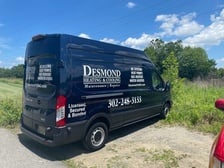 Desmond Heating & Cooling Solutions
Great. No problems at all. He even had better ideas than me about hiding the cord.
 VIP Telecommunications LLC
Ed was responsive and friendly from the first call. I had a major hole in my ceiling from bathroom leaks. He was pleasant and easy to work with. He took care of everything, he took the time to do things right. I would highly recommend using Ed for any home repairs and larger projects.
 Vickers Carpentry LLC
They were very flexible when working with us in the repair of the bath tub pipes. Whenever additional work and upgrades were needed they were ready to help us where necessary. Am glad that we used them.
 Lone Star Pro Services
I moved my interior design business to another location, the place where we arrived with the move was deteriorated, there was mold on the walls and on the floor that was also dirty, they treated the mold for several days, then they cleaned everything, they shone the floor, I could decorate...
 Nationwide Cleaning & Restoration Services Inc
The project went well. I am happy with the new roof and the skylight. Both have been installed for awhile and I have not had any leaks from either. They worked with me to figure out what type of new roof I wanted based on insulation properties and cost and answered all of my questions along...
 Blue Collar Roofing
They were very good because I thought they would be able to do the outlet installation one way, however we’re not able to. But, they then figured out a way to do the insulation via a different method. I was pleasantly surprised.
 Generation 3 Electric & HVAC
From average costs to expert advice, get all the answers you need to get your job done.
Attic insulation removal costs in Philadelphia, PA, vary based on multiple factors, including why you're removing it and how easy it is to complete the task.
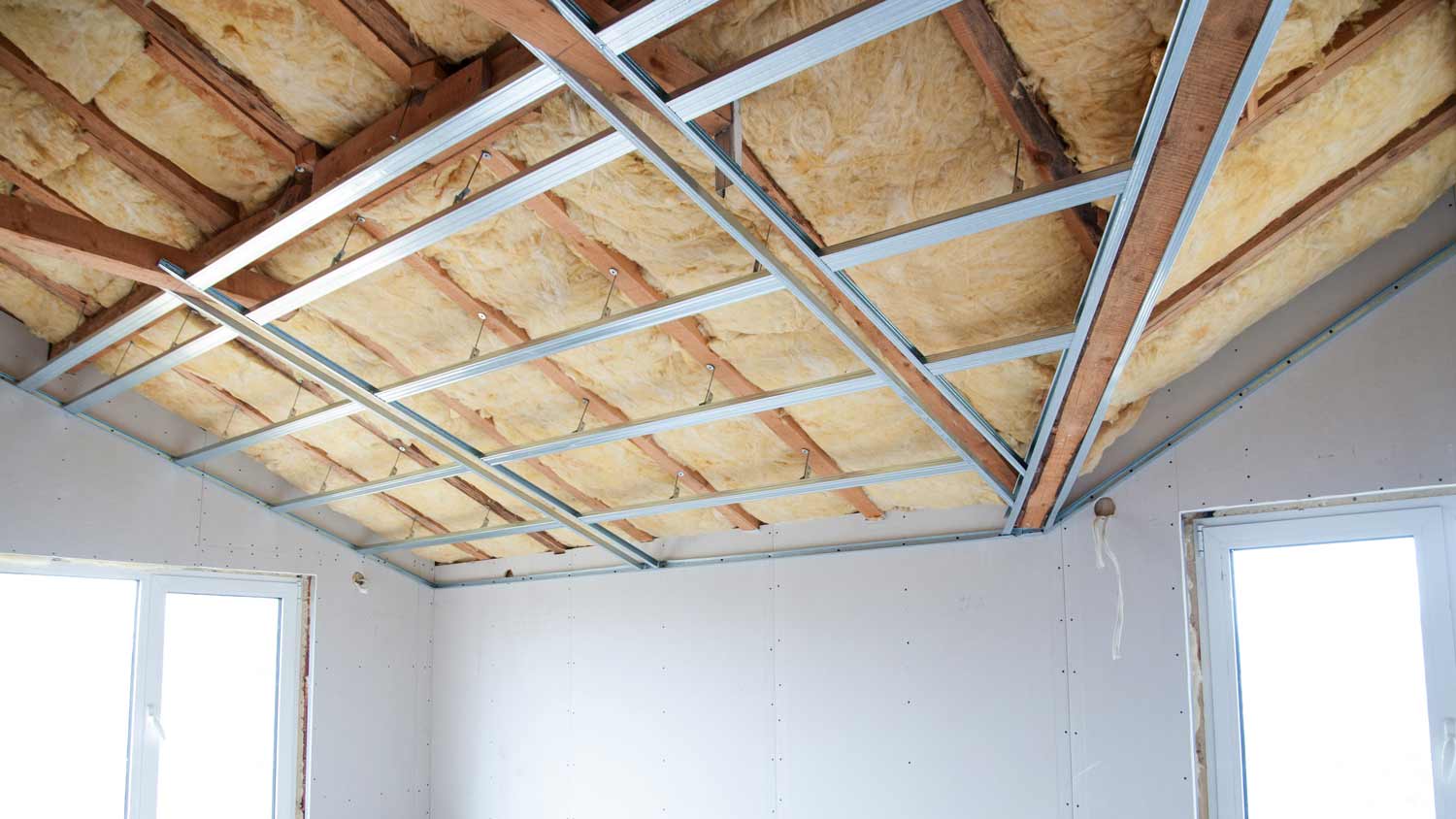
New insulation makes your home more comfortable and boosts energy efficiency. Use this guide to budget for insulation installation costs in Philadelphia, PA.
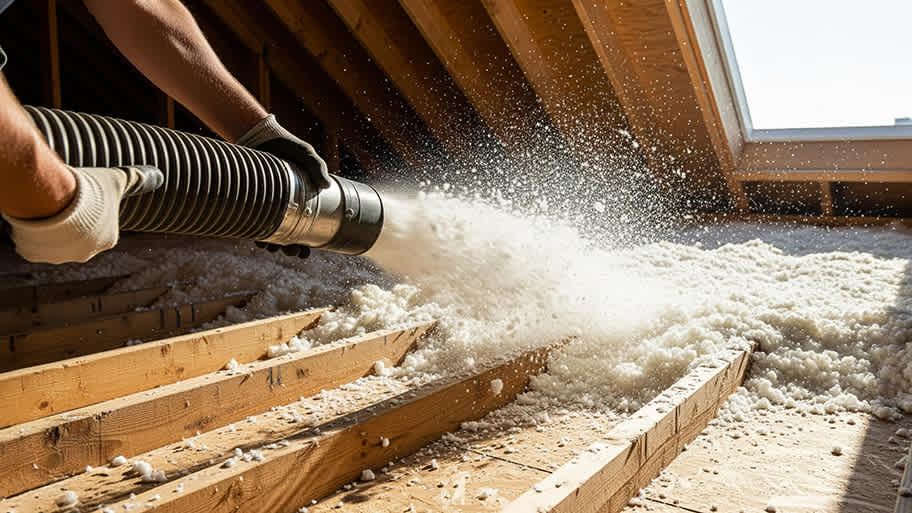
The cost of blown-in insulation in Philadelphia, PA, varies depending on the type of insulation, labor, prep work, and more. Learn more about the cost factors in this guide.
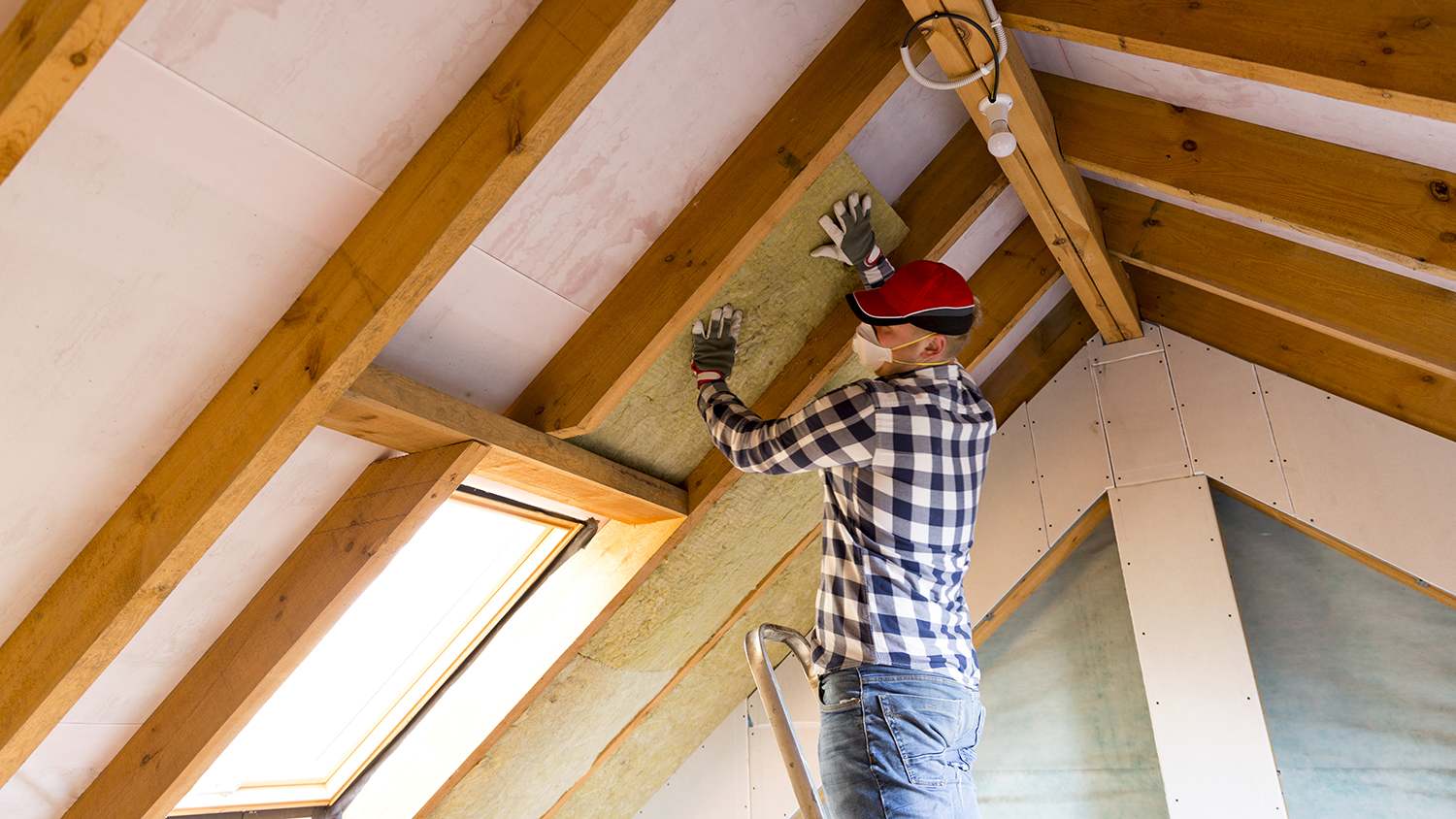
Wondering who to hire for attic insulation? Learn what insulation contractors do, how they work, and how to choose the right pro with confidence.
Your home likely loses most of its heat through your attic. This guide on different types of attic insulation can help you boost your home’s efficiency.

This guide breaks down what attic insulation is and its importance in keeping your home the temperature you want. Keep reading to learn more.