

The cost of a new AC unit depends on the size and type. Our guide breaks down AC replacement cost factors so you can decide which option matches your budget.
Here’s “watt” you need to know to stay cool this summer

Air conditioners use between 500 and 4,000 watts depending on size, but your actual energy consumption is lower because the unit cycles on and off.
Expect to pay around $0.14 to $0.92 per hour to run your air conditioner, with central air costing about $0.53 per hour at current electricity rates.
You can lower your cooling costs by sealing air leaks, using ceiling fans, installing thermal curtains, and upgrading to an ENERGY STAR certified air conditioner.
Hiring a local air conditioner installing professional helps you replace older units with energy-efficient models that reduce monthly utility bills and keep your home comfortable year-round.
Your home has many appliances, but when the dog days of summer arrive, there’s one that likely takes center stage: your air conditioner. While your primary goal is to stay cool, you’ll likely want to save a bit of money on your utility bills, too. If you’ve ever wondered, “How many watts does an AC use?” and how that translates to your monthly energy costs, keep reading.

Air conditioner usage heavily depends on the size of your AC unit and its frequency of use. In broad terms, a central air conditioner consumes 3,000 to 3,500 watts per hour. On the other hand, window units use 900 to 1,400 watts per hour, and portable AC units use 2,900 to 4,100 watts per hour.
A watt is the measurement of electricity usage. A kilowatt (kW) is 1,000 watts. Look at your electric bill and you’ll likely see that you’re charged by kilowatt hours (kWh).
It’s important to note that while your air conditioner has an overall wattage, it will be different from the number of watts representing the actual energy consumed. Here’s some good news: This second wattage is lower. That’s because even though you might have your central air or an individual unit powered on for hours, it’s not going at full power at all times.
Air conditioners go through cycles where they power up and down, usually at least twice per hour for around 15 to 20 minutes each cycle. This means that even though your AC is on, it’s not running at full power. In fact, it’s taking a break for anywhere between 30 and 40 minutes per hour. As a result, the actual energy usage is much lower than the stated wattage for your air conditioner.
For a 3,500-watt central air system, the actual usage is only 2,275 watts. Converted to kWh, this means that for an hour, it uses around 2.3 kWh of electricity. For an entire day, it’s around 55.
2.3 kWh x 24 hours = 55.2 kWh
For a window or wall AC unit, the wattage is much lower, usually between 500 and 1,400. But again, this is the total wattage, not the actual usage, which is even lower. An AC unit that has 950 W will typically only use 618 W, or .618 kWh.
For a mini-split system, it will use anywhere between 0.7 kWh to 4 kWh or more, depending on the size of the system.
While wattage is used to measure an appliance’s power, you’ll likely see kilowatt hours (kWh) on your energy bill. This measures how much wattage is used over time. According to EnergySage, the average cost of electricity in the U.S. as of February 2023 is $0.23 per kWh.
Let’s see how this adds up for the different types of AC systems:
A 3,500 W central air system using 2,275 watts, or around 2.3 kWh:
2.3 kWh x $0.23 = $0.53
This means it costs around $0.53 per hour to run central air.
A mini-split system uses anywhere between 0.7 to 4 kWh:
0.7 kWh x $0.23 = $0.16
4 kWh x $0.23 = $0.92
This means a mini-split system will cost between $0.16 and $0.92 per hour to operate.
A 950 W air conditioner unit using 618 W, or around 0.62 kWh:
0.62 kWh x $0.23 = $0.1426
This means that it costs $0.14 per hour to run a wall/window unit.

Heating and cooling needs vary depending on the weather and temperature in your region, as well as your preference in how cool you like to keep your home.
You might think that it’s better to turn your AC off completely at some point during the day to save money. But this isn’t the best move unless the outside temperature drops significantly. Otherwise, your AC will be working even harder to cool your home, and you could wind up spending even more money to cool your home than you would have if you kept the AC on consistently.
If hot weather is extreme in your area, here are some ways to keep energy costs low:
Turn your ceiling fans on to circulate the cool air.
Ensure that windows and door frames are sealed to stop warm air from entering.
Cover windows with thermal curtains to block the rays of the hot sun.
Plant trees to create cool, shady spots around your home.
It may also be time to hire a heating and cooling pro near you to replace older AC units and HVAC systems with more energy-efficient models. Look for the ENERGY STAR® label, which is granted to appliances that run more efficiently and cost less to run than other regular models. While new appliances might be quite an investment, they will save you money in the long run.
Want to reduce your electricity bills? The cost of running your AC unit frequently can increase your monthly utility usage and payments. Save on air conditioning costs by implementing the following tips:
Run ceiling fans instead
Seal off air leaks in windows, cracks, and doors
Install a smart thermostat to regulate temperature
Regularly service your AC unit
Inspect home insulation for potential gaps
If you’re looking to save money on your utility bills by reducing your air conditioner usage, you may consider keeping it off entirely. However, this is not an ideal solution. While the AC unit won’t use electricity when it’s off, when you turn it back on, the system will have to work overtime to cool the now-higher internal temperatures, consuming more energy to do so.
With that in mind, it’s best to leave your air conditioner on, but regulate the temperature to be higher when you’re not home and slightly lower when you are. A smart thermostat is perfect for keeping tabs on your air conditioner usage and regulating it to fit your schedule.
I have used Columbus Worthington Air for years and recommend them whenever I have a chance. The staff is quick, courteous, and well-trained.
 ARS Columbus Worthington Air
If you’re good people wanting to do business with good people, hire Matt. He is a consummate professional and utterly competent. He installed a water heater in my home at a price that beat competitors by hundreds of dollars with a promise to support the unit for its life (even after its 6 yr...
 Greene's Plumbing Services
Corey Carr was great. I had damage from a recent storm and needed to have my mast and other components replaced. The project entailed coordinating with AEP, and Corey helped make a stressful situation a lot less stressful. I really appreciated his dedication to service and the job very well done.
 Mr. Electric of Columbus
This service was great. My air conditioner went out during the heat spell that we had. My husband has health issues and they came out that night and at 9:30pm the air conditioner was fixed and running. We are sooo very thankful, this is the company I will be using from now on and would...
 Mr. Mechanical Ohio
Great company! Price was competitive, technician showed up on time and completed the job (exterior electric Radon fan replacement) quickly. Would hire them again.
 MaGen Property Inspections and Radon Mitigation
Raven and crew does absolutely fantastic job. They are very professional if any concerns were to occur with any of her work she always took responsibility and finished out with a great job. I have worked with her business for a year and have always been satisfied. Very trusted business and...
 Creations of Transformation LLC
I would recommend this company to anyone! He showed up on time, was friendly, completed a very difficult repair on our dryer vent cover, was responsive, and pricing was extremely fair and competitive. I would have him back to do any of our repairs or cleanings without hesitation!
 U.S.A. Dryer Vent, LLC
Ace Fireplace Services' chimney sweep service is truly exceptional. They used advanced technology to ensure a thorough cleaning process, and my chimney has never looked better. I highly recommend their services.
 Ace Fireplace Services
The technician was very professional and friendly. He answered all my questions and was very thorough. He left the fireplace area very clean . He inspected from the roof and advised me as to other work that might need to be done. There was no pressure there. I was very satisfied with the...
 Supreme brick & chimney
On time, clean and finished fast. Windows seem sturdy and the finish is good. Caulking was done with no smudges. Would recommend.
 Window Depot USA of Central Ohio
From average costs to expert advice, get all the answers you need to get your job done.
The cost of a new AC unit depends on the size and type. Our guide breaks down AC replacement cost factors so you can decide which option matches your budget.
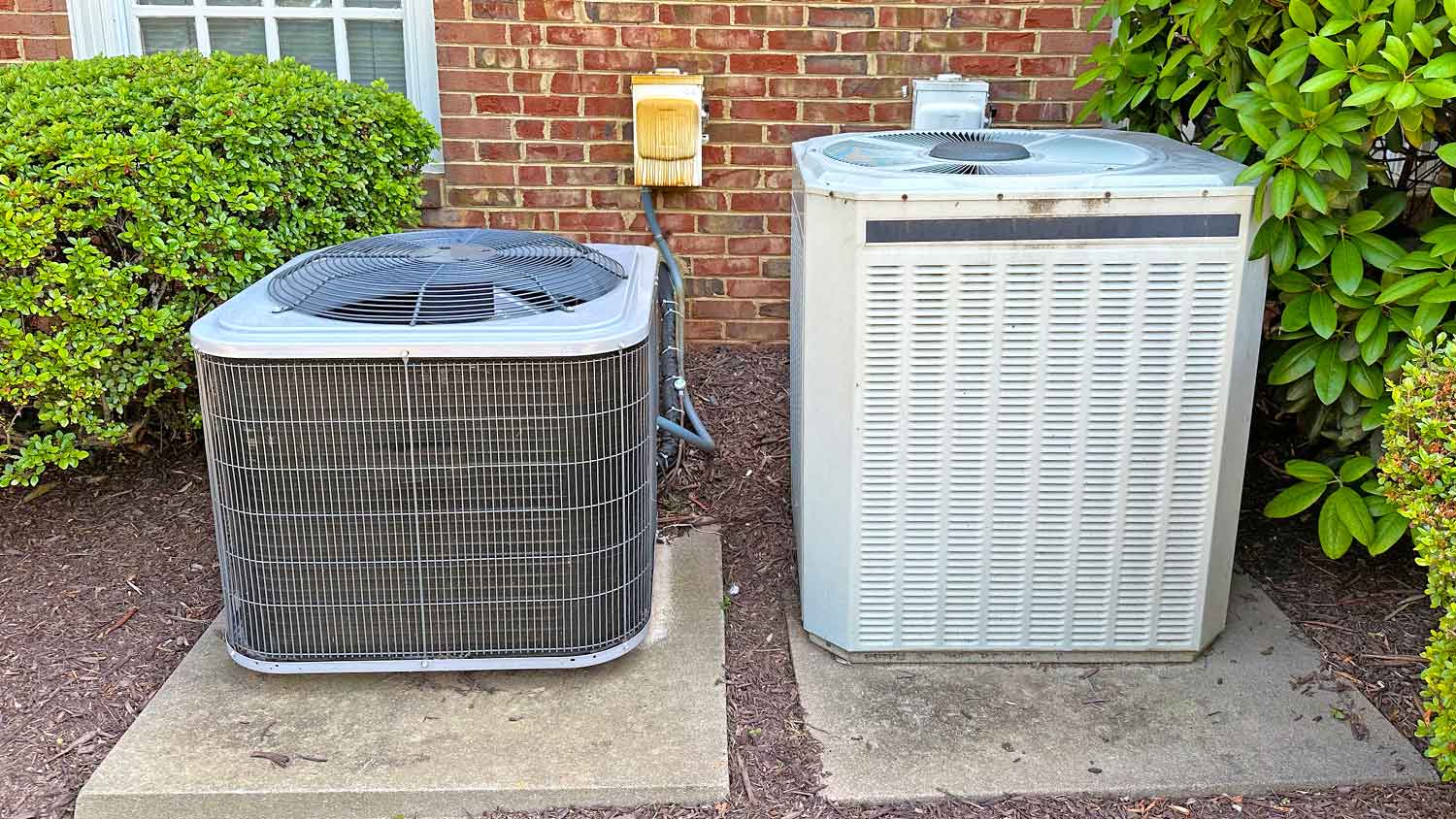
When determining your AC coil cleaning cost, you’ll need to factor in the type, cleaning method, and more. Our cost guide will show you what to expect.

If your air conditioning unit isn’t functioning properly, you might need an AC recharge. Our guide will detail what a typical AC recharge cost looks like.

How many watts does a house use? Understanding what a watt is and where they go can help you know how to cut energy costs.

Knowing the right tonnage for an AC unit can make or break your HVAC system’s ability to cool your home. Keep reading to learn more about AC tonnage.

Knowing how many amps your fridge uses helps monitor your electric bill and ensures you use the proper circuit. Learn how many amps your fridge uses.