
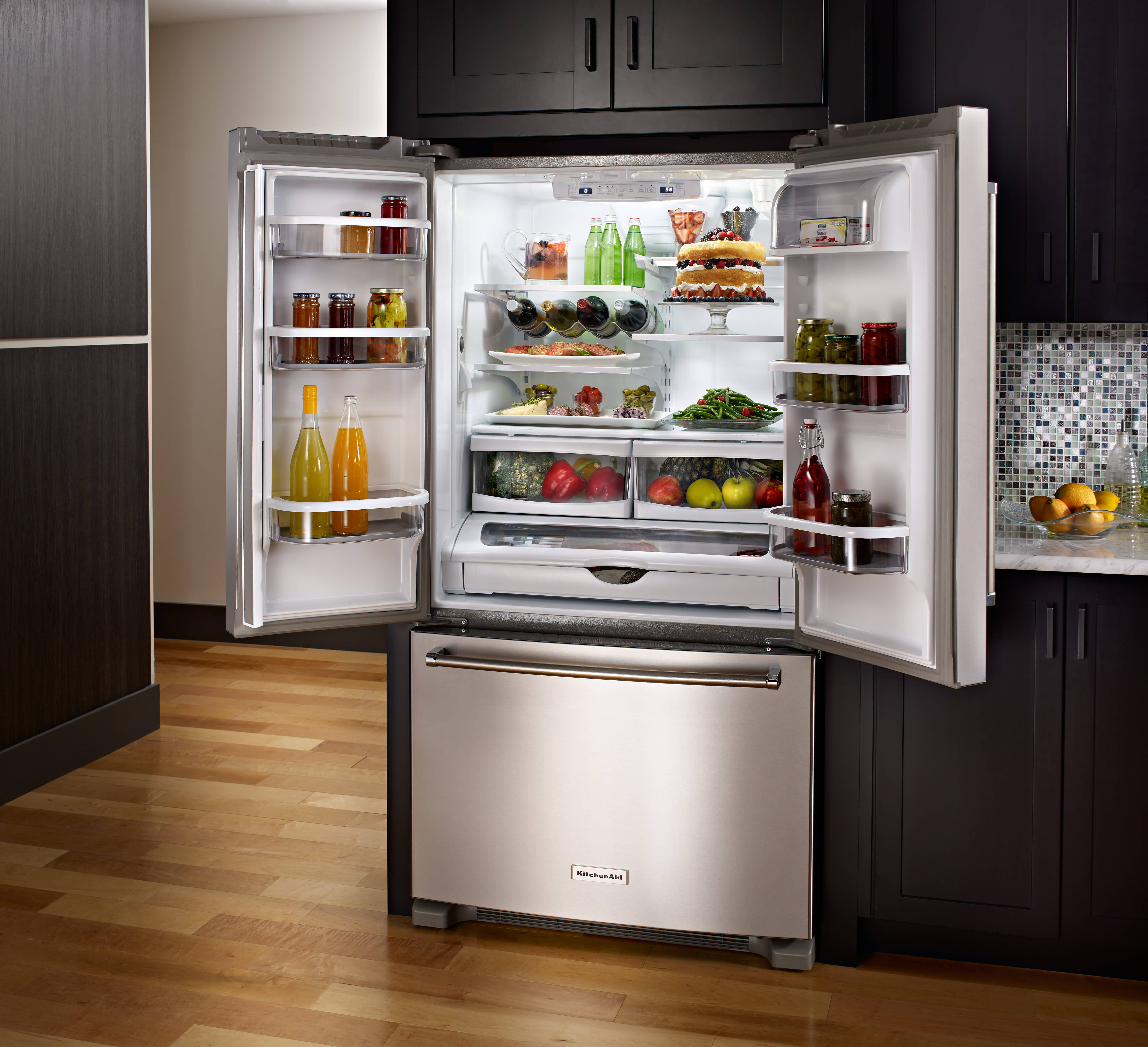
One of the most common fridge problems is a blown compressor motor. Use this guide to determine the cost of replacing the compressor and to estimate the total cost of your repair.
Know exactly watt your fridge needs

Your fridge's amperage draw depends on size and model, with full-size refrigerators using 3 to 6 amps and some reaching 15 amps.
Typical costs range from $570 to $1,100 to add a dedicated 20-amp circuit for your refrigerator, with average costs around $700.
You can calculate your fridge's amp usage by dividing daily watt hours by voltage, or measure it directly with a portable power meter.
Hiring a local electrical professional provides reliable support when adding a dedicated circuit or upgrading your home's electrical system for safe refrigerator operation.
A refrigerator is a major appliance that consumes a high amount of power. Knowing how many amps a fridge uses ensures you put it on the right circuit or use the proper generator. You can also better manage your electric bill if you know what your fridge requires. Learn how many amps a fridge uses and how to calculate amps for your fridge.
A full-size fridge and freezer combination uses 3 to 6 amps on average, but some refrigerators go as high as 15 amps. The amps depend on the fridge’s model, make, year, and size. Most modern standard-size refrigerators should be on a 20-amp 120-volt dedicated circuit.
The National Electrical Code (NEC) requires a dedicated circuit for refrigerators, meaning it's the only appliance or device running on that circuit breaker. A dedicated circuit prevents the fridge from overloading or tripping the breaker and reduces the risk of an electrical fire. Allow a new fridge to sit for 12 to 24 hours before plugging it in to let the fluids settle.
Newer appliances and fridges are typically more efficient than older models. Purchasing an updated, energy-efficient model can often pay off in the long run due to energy savings and the lower cost of repairs. You can also reduce your power consumption by staying up on refrigerator maintenance, such as regularly cleaning the condenser coils.

A mini refrigerator or beverage fridge uses anywhere from under 1 amp to 2 amps. Of course, it depends on the model, make, year, and size of the fridge. The energy requirements are much lower than a standard-size fridge. It’s best to plug a small fridge into a 15-amp dedicated circuit or on a circuit that only has a few devices or appliances running on it.
Amps refer to the strength of the electrical current that passes through the power supply unit of an appliance. Amperage tells you how much electricity your refrigerator or other appliance is consuming. In a refrigerator, the compressor is what keeps the fridge cool, but it isn't running all the time. It cycles on and off. When the compressor is running, the amperage of the fridge is at its highest. When it's not, your fridge isn't using as many amps.
On the other hand, wattage refers to the amount of power an electrical appliance uses to run. The wattage is a factory setting and is usually listed on the fridge label or in the manufacturer's manual. For reference, typical homes have a wattage of 1,083 to 1,375W. The higher wattage of the fridge, the higher the power consumption. Full-size refrigerators range from using 400 watts to 1300 watts, with 725 watts being the average.

Unsure of how many amps your fridge uses? Determine the amps of your fridge in a few cool ways.
Look up how many amps your fridge uses in your fridge’s owner manual or on the manufacturer’s website. Not all manuals and websites have this information, so you may need to calculate the amps a different way. If that’s the case, move onto our next suggested step.
You can calculate amps using the following formula:
Daily Watt Hours/Volts = Amps
You can find the voltage and typical energy usage (watts) on the fridge’s Energy Guide rating sheet, the owner’s manual, or the manufacturer’s website. Look for the watts or energy consumption measured in kWh. This measurement tells you how many watts the fridge uses in a year. Divide the watts by 365 to calculate the daily use. Most refrigerators in the United States and Canada run on 120 volts.
Here’s an example:
Your refrigerator uses 300 kWh per year, or 300,000 watt hours. Divide 300,000 watts by 365 to get 821.91 daily watt hours.
821.91 daily watt hours / 120 volts = 6.8 amps.
You can measure your fridge’s power consumption with a portable power meter. Plug it into the wall then plug your refrigerator into the meter to get an accurate measurement. Over time, you'll know exactly how much power your fridge uses.
If you don’t have a dedicated 20-amp circuit for your refrigerator, you should have a local licensed electrician add one to your home. Electrical work, especially adding a new circuit, can pose dangerous risks to you and your home. The cost to add a dedicated circuit averages $700, but can be as low as $570 and as high as $1,100.
A professional electrician can assess your electrical system and determine if you need an upgrade, especially if your home was built before 1975. Choose a licensed professional with the experience, tools, and knowledge to ensure your home is as safe as possible.
According to data from Angi customers, 34% of people have issues with their refrigerators not getting cold enough. This is a common problem when there isn’t sufficient power running to the fridge. If you’re experiencing this and other issues, like the ice maker not working (14%) or leaking (8%), call an electrician for help.
I recently had Mosby Electric perform an electrical installation on 8-14-2026, and I couldn’t be more satisfied with the service. From the moment I called, their team demonstrated fast arrival and professionalism. The electricians were highly knowledgeable, completing the installation...
 Mosby Electric
Great company! Price was competitive, technician showed up on time and completed the job (exterior electric Radon fan replacement) quickly. Would hire them again.
 MaGen Property Inspections and Radon Mitigation
I conferred with 2 other contractors before Armstrong Electric. Nick and his crew showed me that the project was not as convoluted as the other contractors made it appear to be. They completed the entire project on time. They were professional, friendly and cleaned up after at completion. I...
 ARMSTRONG ELECTRIC, LLC
The techs on my project, Shawn and Cliff, were great. They were prompt, courteous, and efficient. I am very happy with the results and would definitely contact Mr. Electric for any future electrical projects.
 Mr. Electric of Columbus
Victor was wonderful. He was on time, professional, and explained everything he was doing. He was thorough and figured out that the problem was electrical instead of with my HVAC system. Very knowledgeable. I will be using this company in the future for any HVAC needs. Thanks!
 Hubbs Heating & Air LLC
They were excellent. They did a great job. I was totally satisfied. They put tremendous effort in making sure the work was completed. They were great. They provided immediate response to any inquires I made. I would hire them again. I would recommend them to anyone who needs electrical work....
 JCB & Associates, LLC DBA Property-Tech Industries
Initially, the repairman could not find the problem. Apparently, there was some electrical shortage, but he could not find the definite problem. He left, but called back later to say he had a new idea. He returned and replaced the light switches on the doors. The refrigerator seemed to return...
 Appliance Pro LLC
The initial quoted price from a walk-through seemed high, but we discussed that the quote represented worst case scenario (re-wiring to two floors) and we were excited about the opportunity to have the work done in a timely manner with closing for fire safety reasons, etc. When the job was...
I have to tell you I am all about customer service - I will go out of my way and even pay more for it if you give me great customer service. <br> <br>In a world where this is hard to find, these guys were awesome! I can not sing their praises enough. They were prompt, personable, funny, got...
 Waibel Electric
When I challenged the markup on the generator, Bruder Electric withdrew its bid. They only want naïve customers.
From average costs to expert advice, get all the answers you need to get your job done.
One of the most common fridge problems is a blown compressor motor. Use this guide to determine the cost of replacing the compressor and to estimate the total cost of your repair.

Watts measure the power consumed by appliances like your refrigerator. Find out your refrigerator wattage to save time and money, and use the right generator.

These easy-to-use tips will help you understand how to tell what amp service is in your house, so you can figure out if you need an electrical panel upgrade.

How many watts does a house use? Understanding what a watt is and where they go can help you know how to cut energy costs.

Learn how many amps you'll need to have for your water heater to operate. Some homeowners will need to upgrade amperage before installing new water heaters to avoid electrical outages and fires.

Figuring out how many outlets on a 20-amp circuit comes down to the electrical load on the circuit. Learn how to plan for a 20-amp circuit.